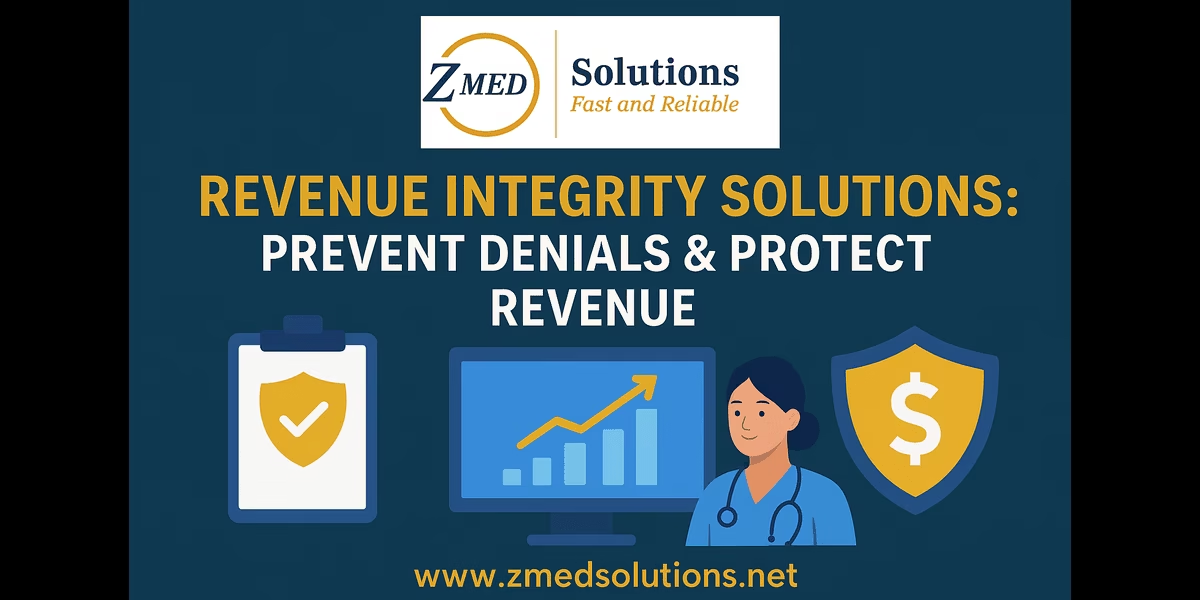
In today’s margin-compressed healthcare environment, revenue integrity solutions have evolved from a back-office function to a critical strategic imperative. The average hospital loses between 3-5% of net patient revenue to denial write-offs and underpayments—a staggering figure that can mean millions forfeited annually. This comprehensive guide moves beyond reactive claims denial management to explore a proactive, integrated framework. True revenue integrity solutions are not merely about recovery; they are about building an impenetrable financial foundation that prevents claim denials at their source, ensures charge capture integrity, and preserves the lifeblood of your organization.
The journey to financial performance in healthcare excellence requires a 360-degree approach, merging people, processes, and predictive technology. We will dissect the modern revenue cycle management (RCM) ecosystem, providing actionable strategies to reduce claim denials, automate key workflows, and deploy predictive analytics denials tools that transform your revenue cycle from a cost center into a driver of sustainability and growth.
The Foundation – Understanding Denials and Revenue Leakage
The True Cost of a Denied Claim
A denied claim is far more than a temporary delay. It represents a multifaceted financial drain. The initial rejection is just the first cost; the real expense lies in the labor-intensive appeal process automation, the delayed cash flow, and the administrative burden that pulls staff from value-added tasks. Industry data reveals that the cost to rework a single denied claim averages $25, and only about 65% of denials are ever successfully overturned. This systemic revenue leakage prevention failure directly attacks net revenue preservation.
Common denial reasons form a familiar, painful catalog: lack of prior authorization, ineligible coverage at the time of service, coding errors (incorrect CPT/ICD-10 codes), missing or insufficient documentation to support medical necessity, and timely filing lapses. Each represents a breach in the revenue integrity program. A robust system doesn’t just react to these denials; it analyzes them through denial root cause analysis to identify and plug the procedural holes causing the leaks.
Mapping the Revenue Cycle: Where Integrity is Won or Lost
Revenue cycle optimization requires viewing the patient journey as a continuous financial continuum. Integrity must be enforced at every touchpoint:
- Pre-Service: This is the first and most crucial line of defense for front-end denial prevention. Failure in eligibility verification or authorization guarantees a denial. Point-of-service collections strategies also belong here, establishing patient financial responsibility early.
- Point-of-Service: Accurate charge capture integrity is non-negotiable. Missing a charge here means losing revenue permanently. Concurrent clinical documentation review can prevent downstream clinical denial management battles.
- Post-Service: This phase involves claim generation, scrubbing, submission, and payment posting. Real-time claim edits via advanced claims scrubbing software are essential to catch errors before submission, directly improving your clean claims rate. Post-payment, charge reconciliation and underpayment recovery activities ensure you are paid correctly according to complex payer contract management terms.
A breakdown at any stage creates a cascade effect, making holistic revenue integrity solutions that span the entire cycle not just beneficial but essential for survival. For a deeper dive into optimizing the front-end, our cornerstone article on [Patient Access Optimization: The First Step to Revenue Integrity] provides a detailed framework.
Proactive Denial Prevention – A Strategic Framework
Front-End Defense: Stopping Denials Before They Start
The most effective denial prevention solutions are deployed before the patient arrives. This requires transforming your patient access department into a revenue protection engine.
Eligibility Verification Solutions must move beyond basic coverage checks. Advanced systems now verify plan-specific benefits for the scheduled service, deductibles, co-insurance, and prior authorization requirements in real-time, flagging potential issues for staff intervention. Prior authorization automation tools integrate directly with EHRs and payer portals, using intelligent rules engines to gather necessary clinical documentation and submit requests electronically, drastically reducing manual errors and delays.
The goal is patient access optimization—creating a seamless, informed registration process that secures financial clearance while enhancing the patient experience. This upfront work is the single most impactful step to prevent claim denials and ensure a healthy, predictable cash flow.
The Power of Mid-Cycle Clinical and Coding Integrity
Denials rooted in clinical documentation and coding are among the most complex and expensive to appeal. Clinical denial management must therefore be proactive. Integrating mid-cycle reviewers—often nurses or certified clinical documentation improvement (CDI) specialists—with billing teams creates a feedback loop. They can query providers for clarification before claim submission, ensuring the record robustly supports the level of service and medical necessity.
Concurrently, coding accuracy improvement initiatives are vital. This goes beyond basic CPT and ICD-10 code assignment; it involves understanding payer-specific Medicare/Medicaid billing rules and commercial payer requirements for code combinations and modifiers. Regular coder education and audits are a cornerstone of any revenue integrity program. Automated machine learning claim edits can flag unusual coding patterns for human review, catching potential errors that lead to denials.
Technological Enablers of Modern Revenue Integrity
The Rise of Intelligent Automation and AI
Technology is the force multiplier for modern revenue integrity solutions. AI in denial prevention is no longer futuristic; it’s operational. These systems analyze millions of historical claims and denial data to identify subtle, predictive patterns invisible to the human eye. They can forecast which claims are most likely to be denied based on payer, provider, procedure, and diagnosis codes, allowing teams to perform pre-submission, hyper-targeted reviews.
This predictive analytics denials capability is integrated into comprehensive denial management software and revenue integrity platform offerings. These platforms centralize data, providing business intelligence dashboards that offer a real-time view of denial drivers, clean claims rate performance, and coder productivity. This moves management from reactive firefighting to proactive strategy.
Integration: Creating a Cohesive Ecosystem
The true power of RCM technology solutions is unlocked through seamless integration with EHR/EMR. Siloed systems create data gaps and manual workarounds that breed errors. An integrated platform ensures that information captured at registration flows automatically to the charge capture module, that clinical documentation is instantly available to coders, and that payer remittances are electronically posted and matched to claims.
This workflow automation RCM eliminates redundant data entry, reduces human error, and accelerates cycle times. It allows staff to focus on exception handling and complex cases rather than routine tasks. For an exploration of how to build this connected technology stack, see our guide on [Selecting an RCM Technology Platform for Maximum ROI].
Building and Sustaining a Culture of Revenue Integrity
From Project to Program: Organizational Structure
Sustained success requires formalizing efforts into a standing revenue integrity program. This is a cross-functional initiative typically led by a Director of Revenue Integrity or similar, with dotted-line responsibility over Patient Access, HIM/Coding, Patient Financial Services, and even Clinical departments.
The program’s mandate includes ongoing denial trending and reporting, ownership of the denial root cause analysis process, management of payer communication strategies, and serving as the internal expert on payer policy adherence. This structure ensures accountability, breaks down departmental silos, and makes financial performance in healthcare a shared, measured goal across the organization.
Data-Driven Management and Continuous Improvement
A mature program is fueled by data. Key performance indicators (KPIs) must be tracked relentlessly:
- Clean Claims Rate: The percentage of claims paid on first submission.
- Denial Rate by Reason & Payer: To identify specific payer denial patterns.
- Aging of Denials: Speed is critical in appeals.
- Underpayment Recovery Rate: Measuring success in identifying and collecting underpayments.
- Cost to Collect: Measuring the efficiency of the entire RCM process.
Regular meetings should review these metrics, celebrating wins and launching focused improvement projects on lagging areas. This cycle of measure, analyze, act, and re-measure is the engine of continuous revenue cycle optimization.
The Back-End: Recovery, Appeals, and Contract Management
Optimizing the Appeals Process
Despite best efforts, some denials are inevitable. A streamlined, efficient back-end operation is crucial for back-end revenue recovery. Standardizing the appeal process with clear guidelines, templates, and deadlines improves the denial appeal success rate.
Appeal process automation tools can help by routing denials to the appropriate specialist based on reason code, auto-populating appeal letters with clinical and billing data, and tracking appeal status through resolution. The focus should be on appealing winnable, high-dollar denials with a strong return on investment for the effort expended.
Mastering Payer Contracts and Underpayments
A significant source of revenue leakage is silent—underpayments where the payer pays, but less than the contracted rate. Effective payer contract management is vital. This involves loading complex fee schedules into the billing system accurately and using automated underpayment recovery tools to compare every payment against the contractual obligation.
These tools flag underpayments for review and generate automated prompts to the payer for reconciliation. This process, often overlooked, can recover 1-2% of additional revenue and is a hallmark of sophisticated revenue integrity solutions. It ensures you are not only paid, but paid in full, solidifying net revenue preservation.
Frequently Asked Questions
What is the single most effective first step to improve revenue integrity?
Implement a rigorous, data-driven denial root cause analysis program. You cannot fix what you don’t measure. By categorizing every denial by reason, payer, and department, you can identify your top 3-5 denial drivers and launch targeted denial prevention solutions that yield the fastest, highest return on investment.
How does AI truly help with denial prevention compared to traditional rules-based software?
Traditional claims scrubbing software uses static “if-then” rules (e.g., “flag if CPT 99214 is bill without modifier 25”). AI in denial prevention and machine learning claim edits go further by analyzing millions of data points to find complex, non-obvious patterns (e.g., “Provider A’s claims for this specific procedure with Payer B have a 40% denial risk when documented with these specific clinical terms”). It predicts denials before submission, enabling pre-emptive correction.
We have a denial management team. Isn’t that enough for revenue integrity?
A denial management team is crucial, but it’s typically a reactive function focus on back-end revenue recovery. A comprehensive revenue integrity program is proactive and cross-functional. It works upstream in Patient Access and HIM/Coding to prevent claim denials, manages payer contract management to avoid underpayments, and uses data analytics to drive systemic change, making the denial team’s job easier over time.
What is the role of clinical staff in revenue integrity?
Clinical staff, especially physicians and advanced practice providers, are foundational. Clinical denial management often hinges on the quality of documentation. Engaging clinicians through education on the impact of specific documentation gaps, providing templates, and creating efficient query processes are essential for coding accuracy improvement and preventing medical necessity denials.
How long does it take to see results from a focused revenue integrity initiative?
Some results, particularly from front-end denial prevention fixes like improving eligibility verification solutions, can be seen within 30-60 days as clean claim rates rise. System-wide cultural and technological transformation for full revenue cycle optimization is a 12-18 month journey. The key is to track and communicate quick wins early while building the foundation for sustained, long-term improvement in financial performance in healthcare.
Final Thoughts
The pursuit of revenue integrity solutions is a continuous journey, not a one-time project. It demands a holistic view that seamlessly connects front-end denial prevention. With back-end revenue recovery, empowered by predictive analytics denials and workflow automation RCM. The goal is to create a resilient financial operation where charge capture integrity is assure. Denial write-offs are minimize, and net revenue preservation is maximize.
By implementing the integrated framework outlined in this guide—forging a strong revenue integrity program. Leveraging intelligent technology, and fostering a data-driven culture—healthcare organizations can transform. Their revenue cycle from a vulnerable cost center into a strategic, robust asset. In an era of rising costs and downward pressure on reimbursements. These revenue integrity solutions provide the roadmap not just to survive. But to thrive, ensuring resources are available to fulfill the fundamental mission of delivering exceptional care.
Key Market Player
Ready to optimize your medical billing and boost your revenue? Look no further. Zmed Solutions LLC is your trusted partner in professional Medical Billing Services.
Join hundreds of satisfied healthcare providers who have already elevated their revenue with our expert services. Don't miss out on what could be your practice's most profitable decision.
Schedule a Consultation Today!
Contact Us Now, and experience the difference. Your financial success starts here!