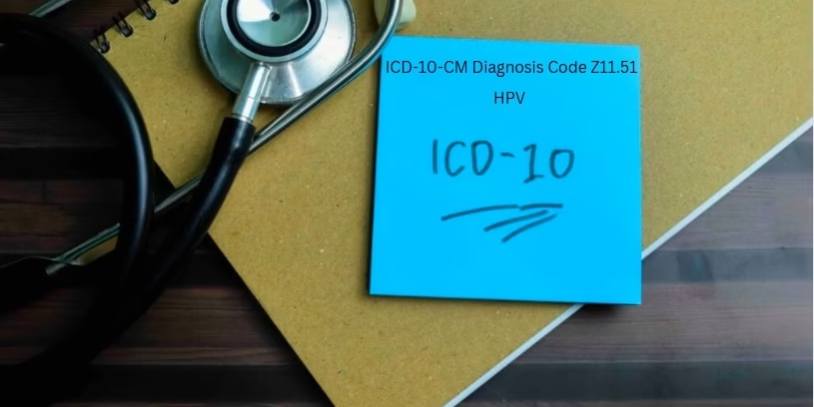
The ICD-10-CM code for tuberculosis screening is Z11.1 (Encounter for screening for respiratory tuberculosis) for active TB, and Z11.7 (Encounter for testing for latent tuberculosis infection) for latent TB. Z11.51 is not a TB code; it is screening for human papillomavirus (HPV). Screening codes apply only to patients without symptoms or a TB diagnosis.
TB screening codes: Quick reference
| Code | Description | Use when |
| Z11.1 | Encounter for screening for respiratory tuberculosis | Screening an asymptomatic patient for active TB disease |
| Z11.7 | Encounter for testing for latent tuberculosis infection | Testing for latent TB infection (e.g., before biologics, some employee programs) |
| Z20.1 | Contact with and (suspected) exposure to tuberculosis | Testing after a known or suspected exposure |
| R76.11 | Nonspecific reaction to TB skin test without active TB | Positive skin test, active TB not found |
| R76.12 | Nonspecific reaction to IGRA without active TB | Positive blood test, active TB not found |
| Z11.51 | Encounter for screening for HPV | Not for TB. HPV screening only. |
TB Screening ICD-10 Billing Guide: Code Selection, Denials & Documentation
Tuberculosis screening codes sit in category Z11, tuberculosis screening icd 10, encounter for screening for infectious and parasitic diseases. The two TB codes in this category are Z11.1 for active TB screening and Z11.7 for latent TB infection testing. Both codes are billable and have remained unchanged in recent annual updates. Z11.1 has been part of the ICD-10-CM code set since its introduction in 2015, while Z11.7 entered the code set in October 2018.
TB screening billing is more complex than most screening codes because outside requirements, such as employment, school enrollment, or immigration exams, often drive these visits rather than clinical concerns. This context often determines who should receive the bill and which code to use.
Z11.51 Is HPV Screening, Not Tuberculosis
Do not confuse Z11.51 with TB screening; Z11.51 means “Encounter for screening for human papillomavirus (HPV).”It belongs to Z11.5, Encounter for screening for other viral diseases, alongside Z11.52 (COVID-19) and Z11.59 (other viral diseases). It is typically reported with HPV testing, for example alongside cervical cancer screening.
Reporting Z11.51 on a TB skin test or IGRA claim creates a diagnosis that does not support the service, which is a common reason for denial. For other codes in this category, see our guides to Z11.3 (screening for sexually transmitted infections) and Z11.4 (HIV screening).
Choosing the Right Screening Code — Verify Current Subcode
- Z11.1: screening for active respiratory TB disease in a patient with no symptoms. Its inclusion term is “Encounter for screening for active tuberculosis disease”.
- Z11.7: testing for latent TB infection, where the person may carry TB bacteria without active disease, for example before starting immunosuppressive drugs.
- Z20.1: add or use when testing follows a known or suspected exposure to TB.
Skin tests and IGRA blood tests detect TB infection but cannot tell latent from active disease on their own, and payers and coding references do not all agree on which code fits a routine skin test. Check the payer’s policy, and follow it consistently.
The most common error: using a screening code for a patient who already has symptoms or a TB diagnosis. The Z11 category excludes diagnostic examinations; if symptoms are present, code the signs and symptoms instead.
Example: a routine pre-employment test for an asymptomatic healthcare worker uses a screening code, even if the employer’s form calls it a “TB test”.
For example, a routine pre-employment screening visit for an asymptomatic healthcare worker should use the screening-specific code, not a code from the active-disease family, even if the employer’s paperwork uses the word “test” rather than “screening.”
What to Document at Screening?
Document the reason for screening, such as an occupational requirement, known exposure, pre-employment or immigration exam, high-risk status, or planned immunosuppressive therapy. Confirm that the patient has no symptoms, record the test performed (TST/PPD or IGRA), and note any history of BCG vaccination, which can affect skin test interpretation.
Example note: “Patient presents for pre-employment TB screening per employer requirement. Asymptomatic, no known TB exposure, no prior BCG. TST placed left forearm; read scheduled in 48–72 hours.”
TB-Related Codes to Know
Use this table to double-check that the most specific, correct code has been selected before submission:
| Code | Description | Use when |
| Z11.1 | Encounter for screening for respiratory tuberculosis | Active TB screening, no symptoms |
| Z11.7 | Encounter for testing for latent tuberculosis infection | Latent TB infection testing |
| Z20.1 | Contact with and (suspected) exposure to tuberculosis | Known or suspected exposure |
| Z02.1 | Encounter for pre-employment examination | Test is part of a pre-employment exam |
| R76.11 | Nonspecific reaction to tuberculin skin test without active tuberculosis | Positive TST, no active TB |
| R76.12 | Nonspecific reaction to cell mediated immunity measurement of gamma interferon antigen response without active tuberculosis | Positive IGRA, no active TB |
| Z22.7 | Latent tuberculosis | Provider has diagnosed latent TB |
| Z86.15 | Personal history of latent tuberculosis infection | Past latent TB, treated or resolved |
| A15–A19 | Tuberculosis (active disease) | Active TB has been diagnosed |
CPT Codes for TB Tests
NEW The diagnosis code explains why the test was done; the CPT code describes the test itself. Read more about how ICD-10 and CPT codes work together.
| CPT code | Test |
| 86580 | Tuberculosis skin test (TST/PPD), intradermal |
| 86480 | TB test, cell-mediated immunity, gamma interferon (IGRA such as QuantiFERON-TB Gold) |
| 86481 | TB test, enumeration of gamma interferon-producing T-cells (such as T-SPOT.TB) |
| 71045 / 71046 | Chest X-ray, 1 view / 2 views (follow-up after a positive result) |
There is no separate CPT code for reading a skin test. Do not bill an E/M visit only for the reading.
Two-Step and Serial Testing Requirements
Many healthcare-worker and long-term care programs use two-step baseline testing: a second skin test placed 1–3 weeks after the first for people without a documented recent negative test. Annual serial testing may follow.
Bill the first and second steps as separate screening tests, and document that the second test is the second step of a two-step protocol so it does not look like a duplicate claim. For annual testing at scale, track test dates so each test falls inside the expected yearly window.
Common Reasons These Claims Fail
Wrong code: reporting Z11.51 (HPV) or another non-TB code on a TB test claim.
Screening code on a symptomatic patient: a patient with symptoms needs symptom or diagnosis codes, not Z11.1 or Z11.7.
Missing medical necessity: some payers only cover TB testing with a documented risk factor, exposure, or clinical reason. See our tips to
Separate E/M for the reading: billing an office visit when the only service was reading the skin test.
Code set not updated: using an outdated EHR pick-list after the October 1 update. Run claims through a
TB Screening Billing Checklist
- Confirm the patient has no symptoms or TB diagnosis before using a screening code.
- Choose Z11.1 or Z11.7 (per payer policy) and add Z20.1 or Z02.1 when they apply. Never use Z11.51 for TB.
- Document the reason for screening and the test performed (TST or IGRA).
- Bill the correct CPT code: 86580, 86480, or 86481.
- Confirm who is paying: insurance, employer, school, or program.
- If the result is positive, switch to R76.11, R76.12, or Z22.7 for follow-up visits.
Final Thoughts
TB screening claims stay clean when three things align: the correct code (Z11.1 or Z11.7, never Z11.51), documentation confirming that the patient has no symptoms and explaining why they were tested, and the correct payer. Get those right and these low-dollar, high-volume claims stop eating staff time.
Frequently Asked Questions
What is the ICD-10 code for TB screening?
Use Z11.1 (Encounter for screening for respiratory tuberculosis) when screening an asymptomatic patient for active TB disease, and Z11.7 (Encounter for testing for latent tuberculosis infection) when testing for latent TB infection. Some payers state which one they expect for routine skin or blood tests, so check the payer policy.
NEW Is Z11.51 the ICD-10 code for tuberculosis screening?
No. Z11.51 is Encounter for screening for human papillomavirus (HPV). Billing it for a TB test will not match the service and is likely to be denied. TB screening uses Z11.1 or Z11.7.
What is the difference between Z11.1 and Z11.7?
Z11.1 covers screening for active respiratory TB disease in a patient with no symptoms. Z11.7 covers testing for latent TB infection, where the person carries the bacteria but has no active disease. Neither code should be used once the patient has symptoms or a TB diagnosis.
Is TB screening billed differently for asymptomatic vs. symptomatic patients??
Yes. Screening codes apply only to patients without symptoms. If the patient has symptoms such as a persistent cough, fever, or weight loss, code the signs and symptoms, or the confirmed diagnosis, instead of a screening code.
Does Medicare cover routine TB screening?
Medicare does not have a general preventive benefit for routine TB screening.Payers usually cover TB testing when medical necessity supports it, such as after exposure or before starting immunosuppressive treatment. Check your Medicare Administrative Contractor’s policy before billing.
Does the test type (TST/PPD vs. IGRA) affect coding?
The diagnosis code stays the same, but the CPT code changes: 86580 for a tuberculin skin test, 86480 for an interferon-gamma release assay such as QuantiFERON, and 86481 for a T-cell enumeration test such as T-SPOT.TB.
How often do TB screening subcodes change?
ICD-10-CM updates annually, typically effective each October, so subcodes should be re-verified at least yearly.
Can occupational screening use the same code as clinical screening?
Often yes, but the note should state the reason (occupational requirement vs. clinical suspicion) for payer clarity.
What code is used when a TB screening test comes back positive?
A nonspecific positive skin test without active TB is R76.11, and a nonspecific positive IGRA without active TB is R76.12. Once the provider diagnoses latent TB, use Z22.7. Active TB is coded in A15–A19.
Can occupational TB screening use the same code as clinical screening?
Yes, the screening code is the same. When a test forms part of a pre-employment exam, providers can also report Z02.1 (Encounter for pre-employment examination). Many employers pay for occupational testing directly, so confirm who is paying before billing insurance.
Does a negative result need different coding than a positive one?
The initial encounter code is typically the same regardless of outcome. A positive result usually prompts a separate follow-up encounter with different coding.
Does prior BCG vaccination change TB screening coding?
It doesn’t change the screening code itself, but it’s clinically relevant context. Worth documenting, especially since it can affect test interpretation.
Is a follow-up chest X-ray billed separately?
Yes. A chest X-ray ordered after a positive screening test is a separate service, billed with its own CPT code (for example 71045 or 71046) and linked to the positive test result code, not to the screening code.
Is the TST reading billed separately?
Generally no. CPT 86580 covers the skin test, and there is no separate code for reading it. Do not bill an E/M visit just for the reading; bill an E/M only if a significant, separately identifiable service is performed and documented.
Can TB screening be billed as part of a broader annual physical?
It can be documented within the same visit. But many practices still bill it as a distinct line item to keep the screening-specific documentation clear.
How Zmed Solutions Can Help
Zmed Solutions handles coding, claim scrubbing, and denial follow-up for primary care, urgent care, occupational health, and infectious disease practices. Learn about our infectious disease medical billing services, primary care billing, urgent care billing, or full revenue cycle management services.
Key Market Player
Ready to optimize your medical billing and boost your revenue? Look no further. Zmed Solutions LLC is your trusted partner in professional Medical Billing Services.
Join our growing network of healthcare providers who have already elevated their revenue with our expert services. Don't miss out on what could be your practice's most profitable decision.
Schedule a Consultation Today!
Contact Us Now, and experience the difference. Your financial success starts here!