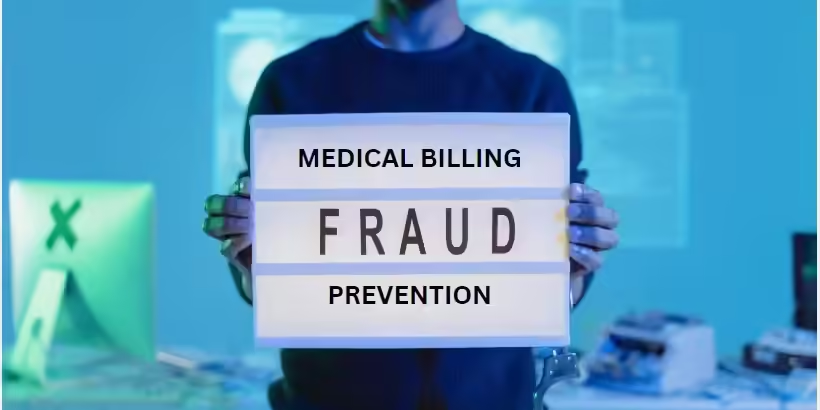
Healthcare fraud is a persistent issue that costs the healthcare industry billions of dollars annually. It not only affects insurance companies but also increases the cost of healthcare services for patients and undermines the trust in the healthcare system. Healthcare Fraud Prevention significant area where fraud can occur is within the medical billing process. Medical billing is a complex system that involves submitting and following up on claims with health insurance companies to receive payments for services provided. Unfortunately, the intricate nature of medical billing can be exploited for fraudulent activities such as upcoding, phantom billing, and unbundling.
Given the prevalence of healthcare fraud, medical billing plays a crucial role in preventing and detecting such activities. By implementing proper checks and balances, ensuring transparency, and leveraging advanced technology, medical billing professionals can help reduce instances of fraud. This article explores how medical billing contributes to healthcare fraud prevention, the types of fraud commonly associated with billing, and the best practices that can be adopted to combat fraud in the healthcare sector.
Understanding Healthcare Fraud and Its Impact
What is Healthcare Fraud?
Healthcare fraud occurs when someone intentionally deceives or misrepresents information for financial gain related to healthcare services. It can take various forms, and both healthcare providers and patients can be involved in fraudulent activities. Common types of healthcare fraud include submitting false claims, billing for services not rendered, inflating the cost of services, and falsifying patient diagnoses to justify unnecessary procedures or treatments.
The Financial Impact of Healthcare Fraud
The financial impact of healthcare fraud is enormous. According to estimates from the National Health Care Anti-Fraud Association (NHCAA), fraud costs the healthcare industry between $68 billion and $230 billion annually in the United States alone. This cost is passed on to patients in the form of higher insurance premiums, increased healthcare expenses, and reduced quality of care.
In addition to financial losses, healthcare fraud has serious ethical implications. It can result in patients receiving unnecessary treatments or, conversely, being denied necessary care. Fraudulent practices erode public trust in the healthcare system and can lead to legal consequences for providers involved in fraudulent activities.
Common Types of Fraud in Medical Billing
Upcoding
Upcoding occurs when a healthcare provider bills for a more expensive service than what was actually provided. For example, a provider may perform a simple procedure but bill for a more complex and costly one. This practice inflates the cost of healthcare services and leads to higher reimbursements from insurance companies. Upcoding is one of the most common forms of healthcare fraud and can be difficult to detect without proper auditing procedures.
Phantom Billing
Phantom billing refers to the practice of billing for services that were never provided. This can include charging for appointments that did not take place, tests that were never conducted, or procedures that were not performed. In some cases, providers may even create fake patient records to submit fraudulent claims. Phantom billing is especially harmful because it diverts funds away from legitimate patient care.
Unbundling
Unbundling occurs when a provider separates procedures that should be billed together under a single code into multiple codes to increase the total reimbursement. For instance, a surgical procedure that includes several related steps may be billed as separate procedures, even though they were performed in the same session. Unbundling is a deliberate attempt to maximize profits by exploiting the billing system.
Double Billing
Double billing happens when a provider submits multiple claims for the same service. This can occur either intentionally or due to administrative errors. Double billing is a fraudulent practice that results in overpayment from insurance companies or patients. While some cases of double billing may be accidental, they still need to be addressed to prevent financial losses.
Falsifying Diagnoses
Some providers may falsify diagnoses to justify treatments or procedures that are not medically necessary. For example, a patient may be diagnosed with a condition they do not have in order to qualify for a certain treatment, medication, or surgery. Falsifying diagnoses can lead to patients receiving inappropriate care, which may harm their health and well-being.
The Role of Medical Billing in Fraud Prevention
Healthcare Fraud Prevention–Accurate Coding and Documentation
One of the primary roles of medical billing in fraud prevention is ensuring accurate coding and documentation. Every medical service provided to a patient must be appropriately coded using standardized systems such as the Current Procedural Terminology (CPT) and International Classification of Diseases (ICD) codes. Proper coding ensures that healthcare providers are reimbursed accurately for the services they render.
Accurate documentation also plays a key role in preventing fraud. Detailed medical records that clearly outline the services provided, the patient’s condition, and the necessity of treatments help prevent fraudulent billing practices like upcoding or phantom billing. Billing professionals should work closely with healthcare providers to ensure that all services are properly documented and coded.
Implementing Billing Audits
Regular billing audits are an essential tool for detecting and preventing fraud. Audits can be conducted internally or by third-party auditors to review claims for accuracy and compliance with billing regulations. Audits can help identify discrepancies, such as billing for services not provided, incorrect coding, or inflated charges.
Medical billing professionals play a critical role in the auditing process by ensuring that all claims submitted are accurate and justified. They should also be familiar with the latest billing regulations and compliance standards to avoid unintentional errors that could be flagged as fraudulent.
Training and Education for Billing Staff
Fraud prevention starts with educating billing staff about the importance of compliance and the potential risks of fraudulent activities. Regular training on coding standards, insurance policies, and legal requirements helps ensure that billing professionals are equipped to spot potential fraud. Billing staff should also be aware of common fraud schemes and red flags to watch for in the billing process.
In addition to training, creating a culture of transparency and accountability within the billing department can reduce the risk of fraud. Billing professionals should feel comfortable reporting any suspicious activity or discrepancies they encounter during the billing process.
Utilizing Advanced Technology and Software
Modern billing software can significantly reduce the risk of healthcare fraud by automating the billing process & flagging potential issues. For example, billing systems can be programmed to detect duplicate claims, identify unbundled procedures, or flag unusually high charges for certain services.
Artificial intelligence (AI) and machine learning (ML) algorithms are increasingly being used to analyze billing data for patterns of fraud. These technologies can identify suspicious billing behaviors that may go unnoticed by human auditors, such as providers who consistently upcode services or bill for phantom appointments.
By leveraging technology, healthcare providers and billing professionals can streamline the billing process, improve accuracy, and reduce the likelihood of fraudulent claims.
Best Practices for Preventing Fraud in Medical Billing
Establish Strong Internal Controls
Healthcare providers should establish strong internal controls to minimize the risk of fraud within their billing processes. This includes implementing checks and balances, such as separating the responsibilities of billing, coding, and payment collection to prevent any one individual from having control over the entire process.
Providers should also have clear policies in place for reporting and investigating suspected fraud. An anonymous reporting system can encourage employees to report any concerns without fear of retaliation.
Conduct Regular Compliance Reviews
Regular compliance reviews are essential for ensuring that billing practices align with industry standards and legal requirements. Providers should conduct periodic reviews of their billing processes to identify potential vulnerabilities and areas where improvements can be made. These reviews should include an assessment of coding accuracy, documentation completeness, and adherence to regulatory guidelines.
Compliance reviews can also help providers stay informed about changes in billing regulations. Such as updates to CPT codes or new insurance policies, and adjust their billing practices accordingly.
Foster a Culture of Compliance and Ethics
A strong organizational culture that prioritizes compliance and ethics is one of the most effective ways to prevent healthcare fraud. Providers should foster an environment where ethical behavior is encouraged, and compliance with billing regulations is a top priority. This can be achieved through regular training sessions, clear communication of compliance policies, and a commitment to transparency at all levels of the organization.
When employees understand the importance of accurate billing and the consequences of fraud, they are more likely to follow best practices and avoid fraudulent behavior.
Engage in Continuous Training and Education
The healthcare billing landscape is constantly evolving, with frequent changes to coding standards, insurance policies, and legal requirements. Continuous training and education for billing professionals are critical to keeping them up to date with the latest industry developments. Providers should invest in ongoing education for their billing staff, ensuring that they are well-versed in the current regulations and best practices for fraud prevention.
The Role of Government and Regulatory Bodies in Fraud Prevention
Healthcare Fraud Prevention–Government Programs and Oversight
Government programs such as Medicare and Medicaid are particularly vulnerable to fraud due to their size and complexity. To combat fraud within these programs, federal agencies such as the Centers for Medicare & Medicaid Services (CMS) have implemented various oversight measures. These include pre-authorization requirements, fraud hotlines, and auditing programs designed to identify fraudulent claims.
The government also plays a key role in enforcing fraud prevention through regulations like the False Claims Act. Which holds providers accountable for submitting false or fraudulent claims. Providers found guilty of violating this law may face severe penalties. Such as including fines, exclusion from federal healthcare programs, and even imprisonment.
The Role of the Office of Inspector General (OIG)
The Office of Inspector General (OIG) is responsible for overseeing healthcare fraud investigations and enforcing laws related to healthcare billing fraud. The OIG conducts audits, investigations, and inspections to identify and prevent fraud in government-funded healthcare programs. The OIG also issues compliance guidelines that healthcare providers must follow to avoid engaging in fraudulent activities.
Providers can work proactively with the OIG by participating in voluntary compliance programs and adopting the OIG’s recommended best practices for fraud prevention. These programs can help providers reduce their risk of fraud and avoid costly legal consequences.
Collaborating with Private Insurers–Healthcare Fraud Prevention
In addition to government oversight, healthcare providers must collaborate with private insurance companies to prevent fraud. Many insurers have their own fraud prevention programs and use advanced technology to detect suspicious billing patterns. Providers should work closely with insurers to ensure that their billing practices meet the insurers’ standards and avoid submitting fraudulent claims.
By maintaining open lines of communication with insurance companies and participating in fraud prevention initiatives. Healthcare providers can reduce their risk of involvement in fraudulent activities.
The Role of Patients in Healthcare Fraud Prevention
Patients also play a role in preventing healthcare fraud by staying informed about the services they receive and reviewing their billing statements for accuracy. Providers can help patients become more aware of healthcare fraud by educating them about common red flags. Such as being billed for services they did not receive or noticing charges for procedures they do not recognize.
Encouraging patients to ask questions about their bills and report any discrepancies can help identify fraudulent activity early on. Additionally, providers should offer resources for patients to report suspected fraud, such as fraud hotlines or online reporting systems.
The Future of Fraud Prevention in Medical Billing
The Growing Role of Artificial Intelligence (AI) and Data Analytics
As healthcare fraud becomes more sophisticated, so too must the methods used to detect and prevent it. AI and data analytics are emerging as powerful tools in the fight against fraud. These technologies can analyze vast amounts of billing data to identify patterns and anomalies that may indicate fraudulent activity.
For example, AI algorithms can detect providers who consistently bill for unnecessary services or submit claims for services not rendered. Data analytics can also help providers identify areas of vulnerability within their billing processes and implement targeted fraud prevention measures.
Blockchain Technology in Medical Billing
Blockchain technology is another innovation with the potential to revolutionize medical billing and fraud prevention. It provides a decentralized and transparent ledger that records transactions in a secure and immutable manner. This technology can enhance the integrity of the billing process by ensuring that all claims and payments are accurately recorded and cannot be altered.
By providing a transparent and tamper-proof system for tracking billing transactions, blockchain could significantly reduce the risk of fraud in the healthcare industry.
Frequently Asked Questions
Healthcare Fraud Prevention
What is healthcare fraud?
Healthcare fraud refers to intentional deception or misrepresentation made for financial gain in the healthcare sector. It can involve false claims for services not rendered, upcoding, phantom billing, and other fraudulent practices.
How does medical billing help prevent healthcare fraud?
Medical billing helps prevent healthcare fraud by ensuring accurate coding and documentation of services. Implementing regular audits, providing staff training on compliance, and utilizing advanced technology to detect anomalies in billing patterns.
What are some common types of healthcare fraud related to billing?
Common types of healthcare fraud related to billing include upcoding, phantom billing, unbundling, double billing, and falsifying diagnoses to justify unnecessary services.
Why is accurate coding important in medical billing?
Accurate coding is essential because it ensures that healthcare providers are reimbursed correctly for the services rendered. It also helps prevent fraudulent activities like upcoding or billing for services not performed.
What role do audits play in preventing healthcare fraud?
Audits play a crucial role in fraud prevention by reviewing claims for accuracy and compliance with billing regulations. Regular audits help identify discrepancies and vulnerabilities within the billing process.
How can healthcare providers foster a culture of compliance?
Healthcare providers can foster a culture of compliance by prioritizing ethics in their organization, providing regular training on billing regulations, and encouraging transparency and accountability among staff.
What technologies are being used to combat healthcare fraud?
Technologies such as artificial intelligence (AI), data analytics, and blockchain are increasingly being used to detect fraudulent billing patterns, streamline billing processes, and enhance the integrity of healthcare transactions.
How can patients help prevent healthcare fraud?
Patients can help prevent healthcare fraud by reviewing their billing statements for accuracy, asking questions about the services they receive. Reporting any discrepancies or suspicious billing practices to their healthcare provider or insurance company.
What are the legal consequences of healthcare fraud?
Legal consequences of healthcare fraud can include hefty fines, exclusion from federal healthcare programs, civil lawsuits, and even imprisonment for individuals found guilty of committing fraud.
How is the government involved in preventing healthcare fraud?
The government plays a significant role in preventing healthcare fraud through oversight programs, regulations like the False Claims Act. Organizations such as the Office of Inspector General (OIG), which conducts audits and enforces laws related to healthcare fraud.
Final Thoughts
Healthcare fraud is a pervasive issue that poses significant financial and ethical challenges to the healthcare industry. Medical billing plays a critical role in preventing and detecting fraud by ensuring accurate coding, thorough documentation, and compliance with industry regulations. By implementing best practices such as regular audits, continuous training, and leveraging advanced technology, healthcare providers can reduce the risk of fraudulent activities.
As technology continues to evolve, tools such as AI, data analytics, and blockchain hold promise for enhancing fraud prevention efforts. However, it is equally important for healthcare providers to foster a culture of compliance and transparency within their organizations. By working collaboratively with regulatory bodies, private insurers, and patients, the healthcare industry can take meaningful steps toward reducing fraud and improving the integrity of the billing process.
In summary, the role of medical billing in healthcare fraud prevention cannot be understated. It is a key component in ensuring that healthcare resources are used efficiently and ethically, ultimately benefiting both providers and patients.
Key Market Player
Ready to optimize your medical billing and boost your revenue? Look no further. Zmed Solutions LLC is your trusted partner in professional Medical Billing Services.
Join our growing network of healthcare providers who have already elevated their revenue with our expert services. Don't miss out on what could be your practice's most profitable decision.
Schedule a Consultation Today!
Contact Us Now, and experience the difference. Your financial success starts here!