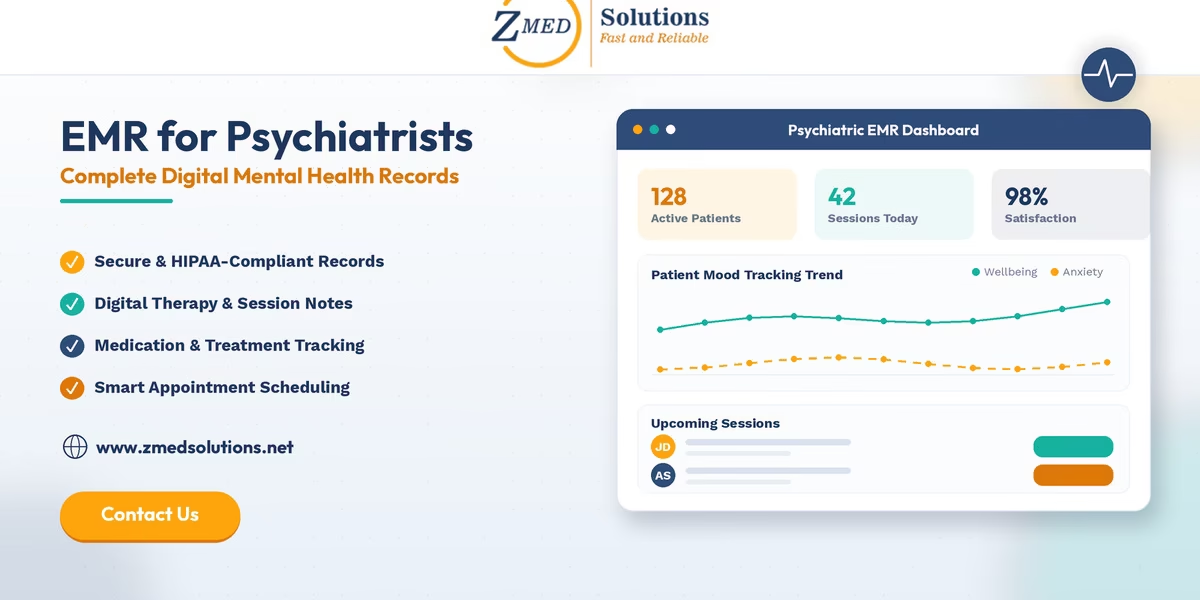
EMR for psychiatrists is specialized electronic medical records software designed to meet unique needs of mental health practices. These systems streamline clinical documentation, improve therapy notes management, and ensure HIPAA compliance while reducing administrative burden on psychiatric professionals.
EMR for Psychiatrists-The mental health landscape has undergone dramatic transformation in recent years. Modern psychiatrists face unprecedented demands managing patient care. Traditional paper-based documentation systems no longer meet today’s requirements. Psychiatry EMR software represents a fundamental shift in how practitioners document and manage patient information. This comprehensive guide explores everything you need to know about selecting and implementing electronic medical records for psychiatrists.
Understanding the Evolution of Mental Health Records
Psychiatric practices have historically relied on paper documentation methods. These approaches presented significant challenges for modern healthcare delivery. Patient information remained scattered across multiple locations and formats. Clinical staff spent excessive time on administrative tasks rather than patient care. Documentation errors occurred frequently without proper verification systems in place. Compliance with regulatory requirements became increasingly difficult to maintain consistently.
The introduction of mental health EMR platforms changed this landscape completely. Digital systems now provide centralized locations for all patient information. Practitioners access critical data within seconds from any authorized location. These advances allow psychiatrists to focus more attention on therapeutic relationships and clinical outcomes. Modern psychiatric practice management software integrates multiple functions into unified systems. The transition from paper to digital continues to accelerate across behavioral health organizations.
Optimizing revenue cycle performance is one of the most critical, complex and challenges facing healthcare practices today. Zmed Solutions delivers end-to-end medical billing solutions designed to reduce claim denials, accelerate reimbursements and strengthen your practice’s financial foundation. Learn more about who we are and explore our full range of specialized billing services.
Key Benefits of Implementing EMR for Psychiatrists
Mental health records systems offer transformative advantages for psychiatric practices. These advantages extend beyond simple documentation improvements. Organizations experience measurable improvements in operational efficiency and patient outcomes. Understanding these benefits helps practitioners make informed technology decisions for their practices.
Improved Clinical Documentation: Modern clinical documentation for psychiatrists has become more efficient and accurate. Practitioners use structured templates that ensure consistent information capture. These templates reduce the likelihood of missing critical clinical details. Real-time clinical data access improves diagnostic accuracy and treatment planning. Documentation becomes searchable, making case review and continuity of care significantly easier. Electronic systems provide audit trails documenting all clinical decisions and interventions. This creates comprehensive records that support both patient care and legal protection.
Enhanced Patient Safety: Behavioral health EMR systems contribute substantially to improved patient safety metrics. Electronic alerts warn practitioners about potential drug interactions before prescriptions are issued. Clinical decision support tools recommend evidence-based treatment protocols. These systems flag critical findings that require immediate attention from clinical staff. Patient allergies and contraindications display prominently in all relevant sections. Barcode scanning reduces medication administration errors in clinical settings. Automated systems reduce human error in documentation and clinical processes.
Streamlined Workflow Efficiency: Psychiatric practices implementing therapy notes software report significant time savings. Administrative staff spend less time searching for patient information or managing files. Clinicians complete documentation during patient encounters rather than after hours. Electronic scheduling systems reduce no-shows through automated appointment reminders. Billing becomes more efficient with integrated insurance verification and claim submission. Staff productivity increases as administrative burden decreases. Organizations report improved staff satisfaction and reduced turnover rates following implementation.
Selecting the Right Psychiatric EMR Solution-EMR for Psychiatrists
Choosing appropriate EMR system for mental health practices requires careful evaluation. Organizations must assess their specific needs and operational requirements. Different practices have varying priorities based on size, specialty focus, and patient population. A thorough evaluation process ensures successful implementation and optimal return on investment.
HIPAA-Compliant Psychiatric EMR Features: Mental health data requires exceptional security protections. Regulatory requirements for HIPAA-compliant psychiatric EMR systems exceed those for general medical records. Patient information in psychiatry contains especially sensitive data regarding mental health conditions. Psychiatry EHR solutions must employ advanced encryption both in transit and at rest. Role-based access controls limit information visibility to authorized personnel only. Audit logs track every access to patient records with full accountability. Multifactor authentication protects accounts from unauthorized access. Data backup and disaster recovery systems ensure business continuity regardless of circumstances.
Psychiatry-Specific Functionality: Generic medical EMR systems often fail to address psychiatric practice needs. Psychiatry-specific electronic health records include templates for mental status exams. These systems capture detailed information about substance use and abuse history. Suicide risk assessment tools integrate into clinical workflows systematically. Treatment consent documentation tracks informed consent requirements thoroughly. Commitment and involuntary hold tracking manages legal requirements appropriately. Medication monitoring tools track patient responses and side effect profiles. Therapy codes and billing information specific to psychiatry integrate throughout the system.
Integration with Practice Management: Modern mental health practice management EMR systems integrate seamlessly with business operations. Scheduling systems coordinate with patient records for efficient workflows. Billing and coding functions automate insurance claim submission. Patient portal functionality enables secure communication and appointment management. Lab and imaging integration displays external results within patient records. Prescription management includes e-prescribing capabilities for controlled substances where permitted. Interfacing with external pharmacies and healthcare systems ensures comprehensive care coordination.
Specialized Features for Behavioral Health Documentation
Behavioral health EMR systems include features addressing unique mental health documentation requirements. These specialized functions distinguish psychiatric EMR from general medical records systems. Practitioners working in this field understand the importance of capturing comprehensive clinical information. Modern systems support the complex documentation needs of psychiatric practice efficiently.
Advanced Clinical Notes Capabilities: Clinical notes software for psychiatry must capture nuanced clinical information effectively. Structured templates guide documentation of presenting problems and chief complaints. History of present illness documentation captures symptom progression and severity changes. Past psychiatric history sections organize previous diagnoses and treatment responses. Family psychiatric history tracking identifies genetic predisposition and environmental factors. Mental status examination forms guide systematic assessment of cognitive and emotional functioning. Substance use assessment tools evaluate addiction history comprehensively. Assessment and plan sections document clinical thinking and proposed interventions clearly.
Therapy Documentation Requirements: Therapy notes software addresses documentation specific to counseling and psychotherapy sessions. Session attendance tracking maintains continuity of treatment records. Progress notes document therapeutic work and patient responses to interventions. Goal tracking monitors achievement of treatment objectives over time. Treatment modality documentation specifies therapy types and theoretical approaches. Therapist-patient relationship dynamics can be noted within appropriate boundaries. Session-by-session outcome measurement integrates into routine documentation. Supervision and consultation notes track clinical oversight and guidance provided.
Psychiatric Medication Management: EMR templates for psychiatric notes include comprehensive medication tracking functionality. Psychiatric medication history captures all agents tried and their efficacy. Dosing information tracks medication adjustments and rationale for changes. Side effect monitoring documents adverse effects and management strategies. Drug interaction checking alerts prescribers to potentially dangerous combinations. Medication adherence tracking identifies compliance challenges and interventions. Psychiatric medication monitoring lab values like lithium levels track automatically. Polypharmacy justification documentation explains rationale for multiple concurrent medications.
Telehealth Integration for Modern Psychiatric Practice
Telehealth EMR for psychiatrists has become essential in contemporary mental health delivery. Remote care capabilities expanded dramatically following recent global events. Patient access to psychiatric services increased significantly with telehealth options. Mental health documentation software must support both in-person and remote encounters seamlessly.
Virtual Visit Capabilities: Modern EMR for psychiatrists integrates telehealth functionality directly into clinical workflows. Secure video conferencing connects practitioners with patients in home or office settings. Audio-only options accommodate patients with limited technology resources or privacy concerns. Session recording capabilities document clinical encounters for quality assurance purposes. Virtual waiting room functionality manages patient check-in processes remotely. Prescription delivery to pharmacies occurs electronically following remote evaluations. E-signature capabilities facilitate consent and administrative documentation signing. Technical support ensures successful connections for less technology-savvy patients.
Documentation for Remote Encounters: Virtual session documentation requirements differ slightly from in-person visits. Clinicians document patient appearance and home environment visible on video. Technology quality notes indicate if audio or video issues affected the encounter. Patient-reported vital signs supplement clinical observations when in-person measurement isn’t possible. Secure messaging between visits maintains continuity between remote encounters. Appointment no-show tracking identifies technology barriers for some patients. Distance-appropriate assessment modifications document limitations of remote evaluation. Continuity plans address situations requiring in-person evaluation following virtual encounters.
Regulatory Compliance and Psychiatric EMR
Psychiatry compliance requirements exceed those of most medical specialties. Mental health information receives additional protections beyond standard HIPAA regulations. State-specific requirements vary significantly for psychiatric practice. Secure psychiatric records management ensures compliance with all applicable regulations.
Federal Regulatory Requirements: Mental health compliance software must support compliance with multiple federal standards. HIPAA privacy and security rules establish baseline protections for all patient information. State mental health laws impose additional restrictions on psychiatric records. Substance use disorder treatment records receive enhanced protections under 42 CFR Part 2. Medicare and Medicaid documentation requirements include specific elements. Insurance billing compliance documentation verifies medical necessity for all services. CMS compliance ensures proper coding and documentation for reimbursement. Quality reporting requirements necessitate data capture and analysis capabilities.
State and Local Compliance: Psychiatric practice compliance extends to state-specific regulations. Commitment and involuntary hold laws vary considerably by jurisdiction. Mandatory reporting requirements for threats and abuse differ by state. Prescribing limitations for controlled substances vary by state regulations. Licensure requirements for practitioners specify credential documentation needs. Patient rights legislation varies by state regarding records access and amendment. Consent requirements for treatment differ across jurisdictions significantly. Professional ethics standards specify documentation expectations for psychiatric practitioners.
Insurance and Billing Compliance: Insurance billing for mental health practices involves complex documentation requirements. Medical necessity documentation justifies continued treatment and specific interventions. Diagnostic coding accuracy ensures appropriate reimbursement and supports quality reporting. Procedure coding for psychiatric services requires knowledge of specific requirements. Billing compliance audits verify appropriate documentation and coding practices. Insurance pre-authorization tracking manages authorization requirements systematically. Denial management processes address rejected claims effectively and efficiently. Revenue cycle optimization improves financial performance through accurate documentation.
Core Functionality of EMR for Psychiatrists
EMR for Psychiatrists-Patient Information Management
Comprehensive patient information organization forms the foundation of effective psychiatric patient records systems. Central information repositories eliminate information fragmentation across multiple systems. Demographics, contact information, and insurance details remain current and accessible. Emergency contact information facilitates communication during critical situations. Language preferences and accessibility needs ensure appropriate accommodations. Cultural and religious considerations inform sensitive practice approaches. Relationship information documents family contacts and authorized representatives appropriately.
Clinical Assessment and Planning
Psychiatry EHR solutions include robust assessment and planning functionality. Initial psychiatric evaluations capture comprehensive historical information. Mental status examinations assess current emotional and cognitive functioning. Diagnostic formulation explains clinical thinking regarding patient diagnoses. Treatment planning documents specific interventions and expected outcomes. Risk assessment and safety planning address acute safety concerns. Strengths-based approaches balance problem-focused documentation appropriately. Family dynamics assessment informs understanding of patient context and support systems.
Visit Notes and Encounter Documentation
Therapy documentation system functionality supports efficient clinical documentation. Progress note templates guide systematic documentation of clinical encounters. Session attendance tracking maintains continuity and identifies attendance patterns. Clinical observations document relevant information from current encounter. Treatment response assessment evaluates intervention effectiveness and needed adjustments. Medication changes documentation records prescribing adjustments and rationale. Patient education documentation notes information provided and understanding demonstrated. Plan documentation specifies next steps and follow-up scheduling.
Prescription Management and E-Prescribing
Electronic prescribing capabilities streamline medication management significantly. E-prescribing psychiatric medications includes drug interaction checking and contraindication alerts. Prescription history displays previous medications and patient response information. Dosing information and duration guidance supports safe prescribing decisions. Controlled substance tracking manages Schedule II-V medication prescriptions. Patient medication allergies display prominently in prescribing interfaces. Pharmacy integration enables electronic transmission to dispensing locations. Refill request management tracks patient medication needs systematically.
Practical Implementation of EMR for Psychiatrists
Transition from Paper to Digital Records
Successful implementation requires strategic planning and careful execution. Change management strategies address staff concerns and resistance constructively. Training programs ensure all staff understand system functionality and workflows. Data migration from paper records to electronic format requires careful planning. Parallel operations period allows transition without service disruption. User support during early implementation resolves issues quickly and effectively. Performance monitoring identifies operational problems requiring attention and adjustment. Success metrics track implementation progress and identify achievement of goals.
Staff Training and Adoption-EMR for Psychiatrists
Effective training programs ensure successful user adoption across the organization. Role-specific training addresses different user needs for clinical and administrative staff. Hands-on practice with realistic scenarios builds confidence and competence. Super users within the organization provide ongoing peer support to colleagues. Documentation and reference materials support independent problem-solving. Feedback mechanisms identify ongoing training needs and improvements needed. Incentive programs encourage timely adoption and proficiency achievement. Change champions model enthusiasm and successful system utilization.
Quality Assurance and Performance Monitoring
Ongoing quality assurance ensures system performance meets organizational needs. Documentation audits verify completeness and compliance with standards. System performance monitoring identifies technical issues requiring resolution. User satisfaction surveys gather feedback on system functionality and improvements. Clinical outcome tracking measures impact on patient care and safety. Operational efficiency metrics identify process improvement opportunities. Compliance audits verify adherence to regulatory and policy requirements. Regular system updates address security issues and add new functionality.
Addressing Common Challenges in Psychiatric EMR Implementation
EMR for Psychiatrists-Workflow Integration and User Acceptance
Successful implementation requires fitting EMR into existing workflows naturally. Over-customization creates complexity that reduces user adoption. Standardized workflows reduce confusion and improve consistency. Physician preference items allow appropriate flexibility within standard frameworks. Alert fatigue reduction through thoughtful alert configuration improves user satisfaction. Downtime procedures ensure continuity when technical issues occur. Feedback loops identify workflow problems for resolution and refinement. Phased implementation reduces disruption while allowing adjustment between phases.
Security and Privacy Protection
Mental health information requires exceptional security and privacy protection. Staff training addresses appropriate information handling and confidentiality maintenance. Access controls limit information visibility to authorized personnel appropriately. Encrypted communication protects information in transit and at rest. Business associate agreements specify security requirements for external vendors. Incident response procedures address breaches quickly and appropriately. Regular security updates patch vulnerabilities systematically. Vulnerability assessments identify security risks requiring remediation.
Technical Support and System Maintenance
Reliable technical support ensures minimal disruption to clinical operations. Help desk availability during operating hours addresses user problems quickly. Remote support capabilities resolve many issues without on-site intervention. System maintenance scheduled during non-clinical hours minimizes patient impact. Backup systems ensure data availability during planned maintenance. Disaster recovery procedures restore operations following unexpected outages. Performance optimization maintains system responsiveness as data volumes grow. Regular updates introduce new features and security enhancements.
Future Trends in Psychiatric EMR Technology
Artificial Intelligence and Clinical Decision Support
Artificial intelligence increasingly supports psychiatric practice decision-making. Clinical notes software with AI assistance suggests relevant historical information and treatment options. Predictive analytics identify patients at risk for adverse outcomes. Machine learning algorithms improve diagnostic accuracy over time. Natural language processing extracts relevant clinical information automatically. Clinical outcome prediction supports evidence-based treatment selection. Medication response prediction personalizes treatment approaches. Population health analytics identify community mental health needs and trends.
Integration with Community Mental Health Resources-EMR for Psychiatrists
Modern mental health records system extends beyond individual practices. Care coordination across providers improves patient outcomes significantly. Integration with community mental health centers facilitates collaborative care. Peer support program tracking documents mutual aid participation. Social determinants of health documentation identifies non-medical factors affecting wellbeing. Housing and basic needs assessment connects patients with community resources. Employment support program tracking documents vocational rehabilitation efforts. Educational resources sharing supports patient learning and self-management.
Mobile Applications and Patient Engagement
Patient-facing mobile applications increase engagement with psychiatric treatment. Appointment scheduling and reminder functionality reduces no-shows significantly. Medication reminder notifications support medication adherence. Symptom tracking between appointments provides valuable clinical information. Secure messaging enables communication with clinical teams conveniently. Treatment progress visualization demonstrates improvement and motivates continued effort. Resource access provides educational materials and support information. Crisis resources integrate emergency contact information and crisis services.
Interoperability and Data Exchange
Seamless information exchange between systems improves care coordination. Behavioral health IT solutions increasingly support standard data exchange formats. Health information exchange networks connect disparate systems. API integrations enable real-time data sharing between platforms. Unified patient records across provider systems improve care continuity. Medication reconciliation across systems prevents dangerous drug interactions. Lab and imaging result integration provides comprehensive clinical pictures. Referral tracking across systems coordinates specialty care effectively.
Selecting the Right EMR Vendor for Your Psychiatric Practice
EMR for Psychiatrists-Vendor Evaluation Criteria
Comprehensive vendor evaluation ensures appropriate selection for your organization. Functionality assessment verifies that all required features are present. User interface evaluation confirms that the system will be easy to use. Scalability assessment ensures the system grows with your practice. Vendor financial stability indicates long-term viability and support availability. Reference checking with current users provides honest feedback about system performance. Certification status for psychiatric-specific features demonstrates specialization. Support quality evaluation indicates responsiveness to user issues and requests.
Implementation and Transition Planning
Successful implementation requires careful planning before system go-live. Project management ensures timely completion and budget control. Stakeholder engagement builds buy-in from all affected parties. Workflow redesign optimizes processes for the new system. Data migration validation ensures accuracy of historical information. User acceptance testing confirms system meets organizational needs. Go-live support provides intensive assistance during initial operations. Post-implementation optimization refines processes and addresses identified issues.
Cost Analysis and Return on Investment
Financial analysis supports investment decision-making. Software licensing costs typically include recurring annual fees. Implementation costs cover training, customization, and data migration. Hardware infrastructure may require upgrades to support the system. Ongoing support and maintenance costs continue after implementation. Productivity improvements through reduced administrative time generate value. Improved billing accuracy increases reimbursement revenue. Reduced regulatory compliance violations minimize financial penalties. Clinical outcome improvements enhance reputation and patient satisfaction.
Frequently Asked Questions
EMR for Psychiatrists
What distinguishes psychiatric EMR from general medical EMR systems?
Psychiatric EMR software includes specialized features addressing unique mental health documentation requirements. Mental status examination templates guide systematic cognitive and emotional assessment. Therapy notes documentation captures psychotherapeutic interventions and patient responses. Psychiatric medication monitoring tracks agent-specific information like lithium levels. Suicide risk assessment tools integrate into clinical workflows. Treatment consent documentation manages informed consent requirements. Generic EMR systems often lack these specialized functions, making psychiatric-specific systems essential for proper mental health documentation. The choice of system significantly impacts documentation quality and clinical outcomes in psychiatric settings.
How does HIPAA compliance differ for psychiatric records?
HIPAA-compliant psychiatric EMR systems provide enhanced protections beyond standard medical records. Psychiatric information receives additional protections due to stigma and discrimination concerns. State laws often impose stricter requirements for mental health records than general medical information. Substance use disorder treatment records require special protections under 42 CFR Part 2. Patient confidentiality concerns extend to family members and support systems. Secure psychiatric records management systems implement robust access controls and audit logging. Encryption protects information both in transit and at rest. Regular security assessments and penetration testing verify system integrity.
What implementation timeline should we expect for psychiatric EMR?
Implementation timelines vary based on practice size, complexity, and existing infrastructure. Small practices might complete implementation in three to six months. Larger organizations typically require nine to eighteen months for full implementation. Planning and vendor selection phase typically requires two to three months. Data migration and customization phase takes three to six months. Staff training and go-live preparation phase requires one to three months. Post-implementation optimization and refinement continues for six to twelve months. Organizations should not rush implementation to ensure successful adoption and system optimization.
How does psychiatric EMR improve patient care and outcomes?
Mental health EMR platforms improve outcomes through multiple mechanisms. Comprehensive documentation provides complete clinical context for all practitioners. Medication interaction checking prevents dangerous prescribing errors. Suicide risk assessment tools ensure systematic safety evaluation. Treatment adherence monitoring identifies patients requiring intervention. Clinical decision support recommends evidence-based interventions. Care coordination across providers ensures continuity of treatment. Patient engagement tools increase treatment adherence and outcomes. Outcome tracking demonstrates effectiveness and supports treatment adjustment.
What ongoing costs should we anticipate for psychiatric EMR systems?
Psychiatry EHR solutions involve multiple ongoing cost components beyond initial implementation. Annual software licensing fees typically represent the largest ongoing expense. Maintenance and support contracts ensure system availability and vendor assistance. System security updates and patches address vulnerabilities regularly. Hardware maintenance and potential upgrades support system performance. Staff training for new users and updates continues throughout system life. Technical support staffing provides internal expertise and troubleshooting. System optimization and customization address evolving practice needs. Organizations should budget five to fifteen percent of initial implementation costs annually for ongoing expenses.
Final Thoughts
EMR for psychiatrists represents a fundamental transformation in how mental health professionals document and manage patient information. These comprehensive systems streamline clinical workflows while improving documentation quality and compliance. Psychiatric practice management software integrates multiple functions supporting both clinical care and business operations. Implementation requires careful planning and change management, but organizations consistently report significant improvements in efficiency and patient outcomes.
The selection of appropriate mental health EMR platforms should prioritize psychiatric-specific functionality over generic medical record systems. HIPAA-compliant psychiatric EMR solutions ensure protection of sensitive mental health information. Integration with telehealth EMR for psychiatrists capabilities expands access to care for geographically isolated populations. Secure psychiatric records management supports regulatory compliance across federal and state requirements.
As mental health field continues evolving, technology continues playing increasingly important roles. Behavioral health EMR systems increasingly incorporate artificial intelligence and advanced analytics. Integration with community resources and patient engagement tools expands impact beyond clinical encounters. Mobile applications and patient portals support treatment adherence and engagement. Data interoperability facilitates seamless care coordination across provider settings.
The investment in modern electronic medical records for psychiatrists delivers measurable returns through improved efficiency, better patient outcomes, and reduced compliance risks. Organizations willing to invest in proper implementation and staff training consistently achieve their goals. Technology continues advancing to better serve the unique needs of psychiatric professionals and their patients. The transition from paper to digital documentation represents not just an operational change, but a fundamental improvement in how mental health services are delivered.
Key Market Player
Ready to optimize your medical billing and boost your revenue? Look no further. Zmed Solutions LLC is your trusted partner in professional Medical Billing Services.
Join our growing network of healthcare providers who have already elevated their revenue with our expert services. Don't miss out on what could be your practice's most profitable decision.
Schedule a Consultation Today!
Contact Us Now, and experience the difference. Your financial success starts here!