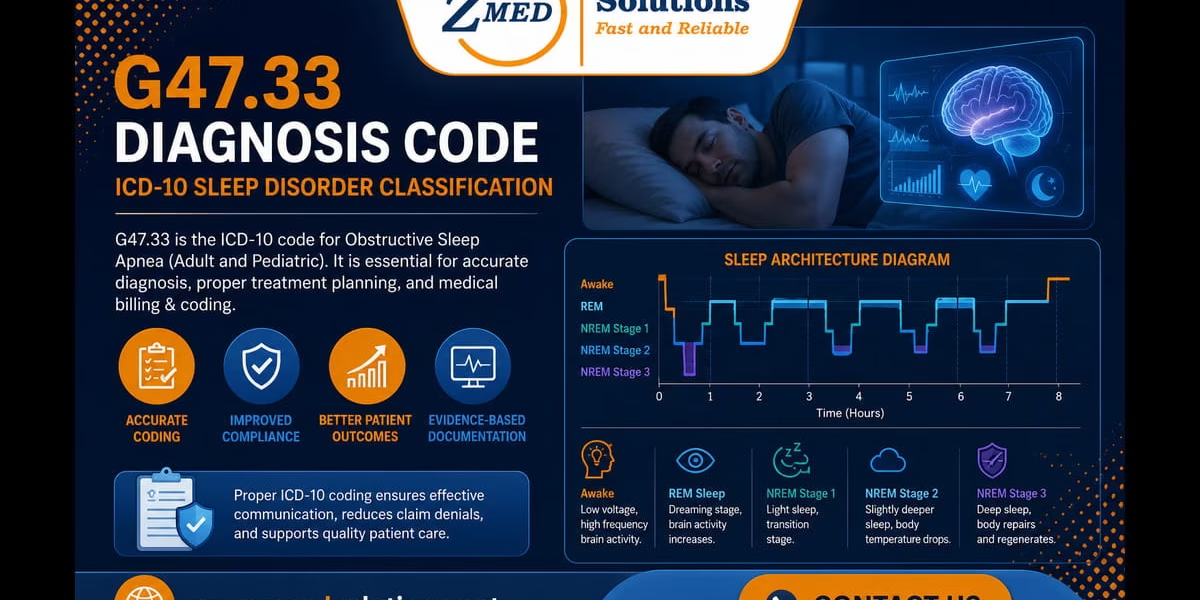
Featured Snippet Paragraph: The G47.33 diagnosis code is an ICD-10 classification designating specific sleep disorders characterized by excessive daytime sleepiness. This medical coding standard ensures accurate documentation and appropriate healthcare billing. Understanding proper ICD-10 G47.33 code application requires clinical knowledge and adherence to documentation standards. Healthcare providers must validate patient presentation against clinical criteria. Accurate coding improves patient care quality while ensuring billing compliance.
The g47.33 diagnosis code represents a critical component of modern healthcare documentation. This ICD-10 classification system ensures standardized communication among healthcare providers. Medical coding accuracy directly impacts patient care outcomes and billing processes. Healthcare organizations must implement comprehensive training programs for coding staff.
Understanding the G47.33 ICD-10 code requires knowledge of sleep medicine principles. Clinical professionals need familiarity with sleep disorder pathophysiology. Insurance companies depend on accurate coding for coverage determination. This comprehensive guide addresses all aspects of proper classification implementation.
Overview to Medical Coding Standards
Medical coding systems have evolved significantly over the past two decades. The transition from ICD-9 to ICD-10 standards improved clinical specificity dramatically. Modern healthcare relies on accurate diagnostic codes for multiple essential functions. Patient safety, research accuracy, and billing integrity all depend on proper coding practices.
The sleep disorder diagnosis code classification system helps identify specific conditions affecting patient populations. Healthcare administrators use this data for resource allocation decisions. Research institutions depend on standardized coding for epidemiological studies. Insurance companies require accurate codes for determining medical necessity and coverage eligibility.
Healthcare providers face increasing pressure to maintain coding compliance standards. Regulatory agencies conduct regular audits of documentation and billing practices. Penalties for coding errors can be substantial and damage organizational reputation. Therefore, comprehensive training and quality assurance programs are essential components of successful healthcare operations.
Optimizing revenue cycle performance is one of the most critical, complex and challenges facing healthcare practices today. Zmed Solutions delivers end-to-end medical billing solutions designed to reduce claim denials, accelerate reimbursements and strengthen your practice’s financial foundation. Learn more about who we are and explore our full range of specialized billing services.
Understanding G47.33 Diagnosis Code Classification
What is G47.33 Code?
The G47.33 diagnosis code falls within the broader category of sleep disorder classifications. This specific code addresses conditions characterized by persistent sleep disturbance patterns. The code represents a subcategory within the G47 range of ICD-10 classifications. Healthcare providers must understand the specific clinical criteria qualifying for this coding assignment.
The ICD-10 G47.33 designation indicates a particular sleep-related condition requiring specialized medical evaluation. This code is distinct from other sleep disorder classifications within the G47 category. Accurate assignment requires careful clinical assessment and documentation. Coding specialists must verify that patient symptoms align with established diagnostic criteria.
Sleep medicine specialists have developed standardized diagnostic procedures for identifying conditions warranting G47.33 ICD-10 code assignment. These procedures typically involve polysomnographic testing and clinical evaluation. Patient history documentation forms the foundation for diagnostic determination. Healthcare providers must establish clear connections between clinical findings and coding decisions.
Historical Context of Sleep Disorder Coding
Sleep medicine has undergone dramatic transformation over the past fifty years. Early classification systems lacked the specificity of modern coding standards. The development of polysomnography revolutionized sleep disorder diagnosis and classification. Today’s coding systems reflect decades of clinical research and medical advancement.
The ICD-10 system implemented in the United States improved diagnostic specificity considerably. Previous versions grouped diverse sleep conditions under broad categories. Modern coding allows identification of specific sleep pathology types and severity levels. This enhanced specificity benefits patient care and research initiatives significantly.
Healthcare organizations transitioned to ICD-10 implementation over several years. The transition period required extensive staff training and system modifications. Many providers experienced billing challenges during the adjustment period. Comprehensive understanding of new coding requirements became essential for organizational success.
Clinical Characteristics of Sleep Disorders
Excessive Daytime Sleepiness Diagnosis Framework
Excessive daytime sleepiness diagnosis represents a primary characteristic requiring careful clinical assessment. Patients experiencing this symptom report difficulty maintaining wakefulness throughout daily activities. This condition significantly impairs quality of life and occupational functioning. Healthcare providers must distinguish this symptom from fatigue or low motivation.
Clinical assessment instruments help quantify daytime sleepiness severity objectively. The Epworth Sleepiness Scale provides standardized measurement of daytime somnolence. Healthcare providers administer this validated tool during initial evaluations. Results guide treatment recommendations and establish baseline measurements for monitoring progress.
The distinction between pathological sleepiness and normal fatigue requires clinical expertise. Patient education helps individuals recognize abnormal sleep patterns requiring medical intervention. Many patients initially attribute their symptoms to stress or lifestyle factors. Healthcare providers must explore comprehensive medical histories to identify underlying causes.
Sleep Architecture Disorder Manifestations
Sleep architecture disorder refers to abnormal patterns in sleep stage progression and distribution. Normal sleep follows predictable patterns of different sleep stages. Disruptions in these patterns indicate underlying sleep pathology. Polysomnographic testing documents specific sleep architecture abnormalities objectively.
Sleep stages include non-rapid eye movement stages and rapid eye movement sleep. Each stage serves specific physiological functions essential for health. Disruptions in normal progression indicate various sleep disorders. Healthcare providers interpret polysomnographic findings within clinical context.
Patients with sleep architecture disorders often report unrefreshing sleep despite adequate sleep duration. They may experience frequent nighttime awakenings or incomplete sleep cycles. Daytime functioning suffers significantly despite spending appropriate time in bed. These distinctions help healthcare providers identify underlying sleep pathology.
ICD-10 Classification and G47.33 Code Placement
The G47 Code Category Structure
The sleep medicine diagnosis codes fall within the G47 ICD-10 category. This category encompasses diverse sleep and circadian rhythm disorders. Subcategories within G47 specify particular sleep conditions and characteristics. Understanding the hierarchical structure aids proper code selection.
G47 codes address organic sleep disorders with identifiable pathophysiological bases. This distinguishes them from behavioral sleep disturbances or adjustment-related sleep problems. The classification system recognizes sleep as a medical specialty with specific diagnostic criteria. Healthcare providers must understand these distinctions for accurate coding.
The G47 category includes codes for sleep-related hypoventilation and apnea conditions. Other codes address circadian rhythm sleep disorders and rapid eye movement sleep behavior disorders. The comprehensive system allows specific identification of various sleep pathologies. Proper code selection requires thorough clinical understanding.
Specific Criteria for G47.33 Assignment
The g47.33 diagnosis code meaning requires understanding specific diagnostic criteria. Healthcare providers must document clinical features supporting diagnostic assignment. Patient presentations must align with established diagnostic frameworks. The coding assignment reflects medical necessity for treatment interventions.
Diagnostic criteria typically include comprehensive sleep history and objective testing results. Healthcare providers evaluate symptom duration and severity during clinical interviews. Objective measures provide quantifiable data supporting diagnostic determination. Documentation should integrate both subjective and objective findings clearly.
Insurance companies require clear documentation establishing medical necessity for the diagnosis. Coverage determinations depend on accurate diagnosis codes supporting treatment recommendations. Improper coding may result in claim denials or payment disputes. Therefore, healthcare providers must ensure documentation comprehensiveness.
Documentation Requirements for Proper Coding
Essential Elements of Clinical Documentation
Proper g47.33 diagnosis code definition application requires comprehensive clinical documentation. Healthcare providers must document specific symptoms and duration of complaint. The documentation should establish clear connections between symptoms and diagnostic criteria. Thorough documentation supports both clinical decision-making and billing processes.
Patient history should include detailed descriptions of sleep problems and daytime consequences. Healthcare providers should document the impact on work, social, and family functioning. Chronology of symptom development provides important contextual information. Associated symptoms and relevant medical history require documentation.
Physical examination findings, including vital signs and neurological assessment, should be recorded. Healthcare providers should note any physical examination abnormalities relevant to sleep disorders. Baseline functional status documentation facilitates outcome monitoring. The documentation establishes a foundation for clinical decision-making.
Polysomnographic Testing Documentation
Sleep disorder classification through polysomnographic testing requires comprehensive documentation of objective findings. The polysomnogram measures multiple physiological parameters during sleep. Results provide objective evidence of specific sleep pathologies. Healthcare providers must integrate these findings into clinical documentation.
The polysomnogram measures brain electrical activity, eye movements, and muscle tone. Respiratory parameters including airflow and oxygen saturation are recorded continuously. Heart rate and rhythm monitoring provides cardiac assessment data. The comprehensive evaluation documents specific sleep stage distributions and abnormalities.
Scoring rules follow standardized criteria developed by sleep medicine organizations. Healthcare providers must understand these scoring parameters and their clinical implications. Results should be integrated into clinical decision-making processes. The polysomnographic findings support diagnostic assignment and treatment recommendations.
ICD-10 Medical Coding Guidelines Implementation
How to code G47.33 diagnosis code requires adherence to established coding guidelines. The official ICD-10 coding guidelines provide specific requirements for code selection. Healthcare coders must apply these guidelines consistently across the organization. Quality assurance processes verify guideline compliance.
The ICD-10 coding guidelines specify documentation requirements supporting diagnostic assignments. Coders must verify that clinical documentation supports the selected code. Guidelines address code sequencing, multiple coding situations, and special circumstances. Compliance with guidelines ensures accurate billing and appropriate reimbursement.
Coding professionals must maintain current knowledge of guideline updates and revisions. The Centers for Medicare and Medicaid Services periodically updates coding guidance. Organizations should implement education programs addressing guideline changes. Ongoing professional development maintains staff competency and compliance.
Billing, Coverage, and Medical Necessity
G47.33 Billing Code Implementation
The G47.33 billing code assignment directly impacts healthcare revenue and patient access to treatment. Insurance companies use diagnostic codes to determine coverage eligibility. Accurate coding ensures appropriate reimbursement for healthcare services. Improper coding may result in claim denials or underpayment.
Healthcare billing departments must understand coding-to-claim mapping processes. The correct code must be transmitted to insurance companies with supporting documentation. Claims systems should include audit processes verifying code accuracy before submission. Regular monitoring identifies coding patterns requiring staff education.
Revenue cycle management depends significantly on coding accuracy and completeness. Billing staff should understand the relationship between documentation and code assignment. Communication between clinical and billing departments improves coding accuracy. Organizations benefit from periodic audits identifying areas for improvement.
Coverage Requirements and Medical Necessity Documentation
Insurance companies establish specific criteria for G47.33 coverage requirements determination. These criteria typically align with medical evidence supporting treatment efficacy. Healthcare providers must document clinical justification for treatment recommendations. Coverage determination depends on meeting established medical necessity standards.
Common coverage requirements include objective diagnostic confirmation through testing. Many insurance plans require documentation of failed conservative treatment attempts. Symptom severity thresholds must be documented in clinical records. Healthcare providers should understand specific coverage criteria from major insurance companies.
Medical necessity documentation should clearly establish the relationship between diagnosis and treatment. Healthcare providers should explain why recommended treatments are appropriate for the specific patient. Comparative effectiveness data and clinical guidelines support medical necessity arguments. Comprehensive documentation prevents coverage denials.
Insurance Appeals and Coverage Determination Processes
Coverage denial requires understanding G47.33 medical necessity appeal processes. Healthcare organizations should establish formal appeal procedures. Clinical documentation supporting medical necessity should be compiled for appeal submissions. Many successful appeals provide additional clinical evidence initially missing.
Insurance companies typically provide specific reasons for coverage denials. These reasons should guide appeal strategy development. Healthcare providers should address specific coverage criteria not initially satisfied. Consultant physician opinions may strengthen appeal arguments.
The appeal timeline typically allows thirty to sixty days for response. Healthcare organizations should maintain tracking systems monitoring appeal status. Documentation organization facilitates timely and effective appeal submission. Successful appeals improve patient access to needed treatments.
Sleep Disorder Diagnosis Code Selection and Differentiation
Distinguishing G47.33 from Related Sleep Disorders
Sleep medicine diagnosis codes within the G47 category require careful differentiation. Multiple codes address sleep apnea and related sleep-related breathing disorders. Healthcare providers must understand clinical distinctions between categories. Proper code selection reflects specific diagnostic findings.
Sleep-related hypoventilation differs from obstructive sleep apnea mechanistically. Hypoventilation indicates inadequate ventilation despite open airway. Sleep apnea involves repeated breathing cessation episodes. These distinctions require specific diagnostic testing to differentiate.
Central sleep apnea involves failure of respiratory drive regulation. Obstructive sleep apnea results from upper airway collapse. Mixed sleep apnea combines obstructive and central components. Clinical evaluation and polysomnographic findings differentiate these conditions.
Narcolepsy without Cataplexy Documentation
Narcolepsy without cataplexy diagnosis represents a specific clinical presentation. Cataplexy involves sudden loss of voluntary muscle tone triggered by emotion. Narcolepsy without cataplexy presents with excessive daytime sleepiness without cataplexy episodes. Healthcare providers must document the presence or absence of cataplexy clearly.
Multiple sleep latency testing provides objective confirmation of narcolepsy diagnosis. This test measures the speed of sleep onset during daytime nap opportunities. Rapid sleep-onset rapid eye movement periods support narcolepsy diagnosis. Cerebrospinal fluid hypocretin levels may be measured to confirm diagnosis.
Clinical presentations vary between patients with and without cataplexy. Documentation should clearly describe the specific symptom presentation. Associated features such as sleep paralysis or hallucinations should be documented. The comprehensive clinical picture guides appropriate code selection.
Common Documentation and Coding Errors
Frequent G47.33 Coding Mistakes
Many healthcare organizations experience recurring g47.33 medical coding guidelines violations. Common errors include assigning codes without supporting clinical documentation. Some providers code presumed diagnoses rather than confirmed conditions. These practices result in billing fraud liability and claims denials.
Inadequate documentation represents another frequent error source. Healthcare providers may fail to document specific diagnostic criteria supporting code assignment. Test results may not be integrated into clinical notes. Healthcare coders then lack evidence supporting diagnostic assignment decisions.
Inconsistent code sequencing occurs when providers assign codes without understanding hierarchical relationships. The principal diagnosis should reflect the primary condition requiring treatment. Secondary diagnoses address comorbid conditions affecting clinical management. Improper sequencing may affect billing and compliance status.
Documentation Deficiencies Leading to Claim Denials
Insurance companies frequently deny claims for sleep disorder diagnosis code documentation deficiencies. Missing or incomplete polysomnographic reports prevent coverage determination. Clinical notes may lack specific symptom descriptions and diagnostic criteria documentation. These deficiencies force claim denials requiring correction and resubmission.
Healthcare providers sometimes fail to document the reason for testing. Without this documentation, insurance companies cannot determine whether testing was medically necessary. Guidelines specify required documentation elements supporting testing justification. Organizations should implement documentation templates ensuring completeness.
Test result interpretation should be documented clearly in clinical notes. Healthcare providers should explain how results support diagnostic assignment. When test results are ambiguous, clinical judgment documentation becomes essential. Thorough documentation addresses reviewer questions proactively.
Best Practices for Healthcare Organizations
Staff Training and Competency Development
Healthcare organizations should implement comprehensive diagnostic coding for sleep disorders training programs. New coding staff require education on ICD-10 fundamentals and sleep medicine basics. Ongoing education addresses guideline updates and coding system changes. Competency assessments verify staff knowledge maintenance.
Sleep medicine concepts require specialized education beyond general medical coding training. Staff should understand polysomnographic terminology and interpretation concepts. Healthcare providers should understand the clinical significance of different sleep parameters. This foundational knowledge improves coding accuracy and quality.
Organizations should implement mentoring programs pairing experienced coders with new staff. Real-world case reviews help staff apply theoretical knowledge practically. Case studies address difficult coding situations and decision-making approaches. These programs accelerate competency development and confidence building.
Documentation Quality Assurance Programs
Regular audits of clinical documentation identify improvement areas systematically. Audit results should guide targeted education and process improvements. Trending data reveals patterns requiring organizational attention. Documentation improvement initiatives should address identified deficiencies.
Organizations should establish documentation standards specific to sleep disorder coding. Templates and checklists ensure consistent documentation completeness. Providers should receive feedback on documentation quality during audits. Recognition of excellent documentation practices encourages continued compliance.
Documentation accuracy directly impacts patient care quality and billing integrity. Organizations should emphasize documentation importance to clinical staff. Education should connect documentation quality to patient outcomes and billing success. This perspective helps providers understand documentation significance beyond administrative requirements.
Interdepartmental Communication and Collaboration
Clinical and billing departments should establish regular communication processes. Billing staff should report coding questions and documentation deficiencies to clinical providers. Clinical providers should understand billing department needs for claim submission. Collaborative approaches solve coding challenges more effectively.
Case conferences addressing difficult coding situations improve organizational understanding. Multidisciplinary teams including clinicians and coders discuss complex cases. These discussions improve future documentation and coding for similar situations. Organizations benefit from the shared learning experiences.
Electronic health record systems should facilitate documentation organization and accessibility. Coders need easy access to relevant documentation supporting code assignment. System design should encourage complete documentation entry. Technology should support rather than hinder quality documentation practices.
Sleep Pathology Diagnosis and Clinical Assessment
Comprehensive Clinical Sleep Assessment Components
Proper clinical sleep assessment requires evaluation of multiple factors. Healthcare providers should obtain detailed sleep history covering sleep schedule and quality. Daytime functioning assessment should address impact on work and social activities. Medical and psychiatric history exploration identifies contributing factors.
Bed partner interviews provide valuable information about patient sleep behavior. Partners often observe snoring, breathing pauses, and movement abnormalities. This corroborating information aids diagnostic accuracy. Healthcare providers should interview bed partners when possible.
Lifestyle factor assessment addresses sleep habits and potential contributing factors. Caffeine, alcohol, and medication use can impact sleep quality. Sleep environment factors including noise and light should be evaluated. Work schedule and circadian rhythm disruptions require documentation.
Objective Testing and Polysomnographic Evaluation
Sleep pathology diagnosis requires integration of clinical evaluation with objective testing. Polysomnography remains the gold standard for evaluating sleep architecture. Home sleep testing offers alternative assessment in appropriate clinical situations. Healthcare providers must understand testing indications and limitations.
Portable sleep monitors measure limited parameters compared to in-laboratory polysomnography. These devices typically assess respiratory measures and oxygen saturation. Sleep stage characterization requires full polysomnographic monitoring. Healthcare providers should understand appropriate testing contexts.
Test quality assessment ensures reliable results guiding clinical decision-making. Poor-quality studies may require repeat testing for diagnostic confirmation. Healthcare providers should understand factors affecting test quality. Results should always be interpreted within clinical context.
Regulatory and Compliance Considerations
Healthcare Compliance and Billing Regulations
Healthcare organizations must comply with complex billing regulations governing G47.33 diagnosis code assignment. Federal regulations establish fraud and abuse prevention standards. Organizations must establish compliance programs preventing prohibited practices. Violations carry significant financial and legal consequences.
The Office of Inspector General periodically publishes coding compliance guidance. Healthcare organizations should incorporate this guidance into compliance programs. Staff education should address regulatory requirements and organizational compliance expectations. Regular compliance monitoring identifies problematic billing patterns.
Insurance companies audit healthcare organizations’ coding practices regularly. Audit results may identify systematic coding problems requiring correction. Organizations should understand audit standards and common problem areas. Proactive corrective action prevents compliance violations.
Documentation Standards and Legal Requirements
Medical record documentation serves as the legal foundation for clinical care. Documentation must accurately reflect patient evaluation and treatment decisions. Healthcare providers should understand documentation legal implications. Complete documentation protects healthcare organizations during audits or litigation.
Medical records should be organized logically facilitating easy information location. Providers should use standardized terminology improving clarity. Abbreviations should follow approved organizational lists preventing misinterpretation. Timely documentation entry ensures information accuracy.
Healthcare organizations should retain medical records according to legal requirements. Record security and confidentiality protection receive regulatory emphasis. Electronic systems should implement audit trails tracking documentation access. Organizations must develop policies addressing documentation security.
Current Trends and Future Directions
Sleep Medicine Advancements and Coding Implications
Sleep medicine research continues identifying new sleep disorder subtypes and presentations. Diagnostic criteria evolve as clinical understanding improves. Coding systems must adapt to incorporate new diagnostic distinctions. Healthcare providers should maintain current knowledge of evolving diagnostic criteria.
Genetic research is identifying molecular mechanisms underlying various sleep disorders. These discoveries may lead to more precise diagnostic categories. Personalized medicine approaches may revolutionize sleep disorder diagnosis and treatment. Coding systems will likely evolve to accommodate precision medicine approaches.
Digital health tools are transforming sleep disorder diagnosis and monitoring. Wearable devices collect continuous sleep and activity data. Artificial intelligence applications analyze complex sleep data patterns. These technological advances will influence future diagnostic approaches and coding needs.
Automation and Artificial Intelligence in Medical Coding
Artificial intelligence applications are beginning to support medical coding processes. Natural language processing extracts relevant information from clinical documentation. Machine learning algorithms identify appropriate codes based on clinical information. These tools can improve coding accuracy and efficiency.
However, human expertise remains essential for complex coding situations. Artificial intelligence serves as a decision support tool rather than replacement. Healthcare organizations should implement AI tools as part of comprehensive coding quality programs. Staff should understand both AI capabilities and limitations.
Organizations should carefully evaluate AI tools before implementation. Validation studies should confirm accuracy in their specific clinical environment. Staff training should address AI integration into existing workflows. Appropriate oversight ensures quality and compliance.
Frequently Asked Questions
What does G47.33 diagnosis code indicate specifically?
The G47.33 diagnosis code represents a specific classification within the ICD-10 sleep disorder category. This code designates particular sleep conditions characterized by identifiable sleep architecture abnormalities. Proper assignment requires objective diagnostic confirmation through polysomnographic testing. The code supports accurate communication among healthcare providers and insurance companies. Medical necessity for sleep disorder treatments depends on appropriate diagnostic coding accuracy.
How do I determine if G47.33 is the appropriate code?
Determining appropriate g47.33 diagnosis code meaning requires comprehensive clinical assessment. Healthcare providers must evaluate patient symptoms and documented sleep history carefully. Polysomnographic testing results must support the diagnostic assignment. Clinical documentation should establish clear connections between symptoms and diagnostic criteria. Coding specialists should verify documentation completeness before finalizing code assignment decisions.
What documentation elements are required for G47.33 coding?
G47.33 clinical documentation requirements include detailed patient history of sleep problems. Symptoms should describe specific sleep complaints and daytime consequences. Polysomnographic findings should be documented in clinical notes clearly. Symptom duration and severity should be quantified objectively when possible. Associated medical and psychiatric conditions require documentation as they affect clinical management.
How do insurance companies determine medical necessity for G47.33?
Insurance companies establish specific coverage criteria for G47.33 coverage requirements determination. Medical necessity typically requires diagnostic confirmation through appropriate testing. Many policies require documentation of symptom severity meeting specific thresholds. Failed conservative treatment attempts may be required before approving certain interventions. Healthcare providers should understand specific insurance coverage policies for this diagnosis.
What are common reasons claims are denied for G47.33 diagnosis?
Common claim denial reasons for g47.33 diagnosis code assignments include inadequate diagnostic documentation. Missing or incomplete polysomnographic reports frequently result in denials. Failure to document medical necessity supporting treatment recommendations causes denials. Improper code sequencing may affect coverage determination. Healthcare organizations should review denial reasons to identify systematic improvement areas.
Final Thoughts
The g47.33 diagnosis code represents an essential component of modern healthcare documentation and billing practices. Understanding this specific ICD-10 classification requires knowledge of sleep medicine principles and coding standards. Healthcare providers must implement comprehensive documentation practices supporting accurate code assignment.
Proper coding ensures appropriate insurance coverage for needed treatments. Patient access to sleep disorder therapies depends on accurate diagnosis documentation. Healthcare organizations benefit from improved billing accuracy and reduced claim denials. Regulatory compliance protects organizations from fraud and abuse penalties.
Healthcare providers should prioritize ongoing education maintaining current coding knowledge. Interdepartmental collaboration between clinical and billing staff improves overall coding quality. Documentation quality assurance programs identify improvement areas systematically. Technology and artificial intelligence tools increasingly support coding accuracy.
The future of sleep disorder diagnosis code assignment involves enhanced diagnostic precision and personalized medicine approaches. Coding systems will evolve incorporating new diagnostic discoveries. Healthcare organizations should remain flexible adapting to future coding requirement changes. Commitment to coding excellence directly supports patient care quality and organizational success.
Implementing the best practices described throughout this comprehensive guide improves organizational coding performance. Healthcare providers should use this resource to enhance their understanding of G47.33 coding. Continued emphasis on documentation quality and staff education maintains coding excellence. Organizations investing in coding quality achieve improved patient outcomes and financial performance.
Key Market Player
Ready to optimize your medical billing and boost your revenue? Look no further. Zmed Solutions LLC is your trusted partner in professional Medical Billing Services.
Join hundreds of satisfied healthcare providers who have already elevated their revenue with our expert services. Don't miss out on what could be your practice's most profitable decision.
Schedule a Consultation Today!
Contact Us Now, and experience the difference. Your financial success starts here!