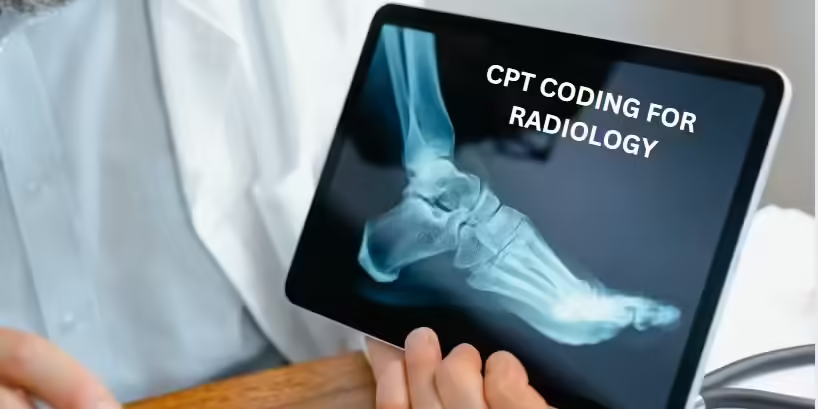
Radiology CPT codes are the 70010–79999 range of the AMA’s CPT code set, used to report imaging and radiation services such as X-rays, CT, MRI, ultrasound, mammography, nuclear medicine and radiation oncology. Most codes can be split into a professional component (modifier 26) and a technical component (modifier TC).This guide lists each subsection with its correct range, the codes billed most often, and the errors that cause radiology denials.
Current Procedural Terminology (CPT) codes serve as the standard for reporting medical procedures and services, allowing healthcare providers to communicate effectively with payers and ensure appropriate reimbursement. In radiology, the range of CPT codes from 70010 to 79999 encompasses a broad spectrum of diagnostic, interventional, and therapeutic procedures, each with its own specific coding requirements.
This guide aims to provide radiology specialists with a comprehensive understanding of CPT codes 70010-79999, emphasizing their significance in the field of radiology. By exploring the intricacies of these codes, healthcare providers can enhance their billing accuracy, reduce claim denials, and ultimately improve patient care.
Understanding CPT Codes
Definition and Purpose of CPT Codes
CPT codes are a set of medical codes use to describe the specific procedures and services performed by healthcare providers. Developed and maintained by the American Medical Association (AMA), these codes serve several purposes in the healthcare system, including:
- Facilitating accurate billing and reimbursement.
- Standardizing the language used in medical documentation.
- Enabling healthcare providers to report services consistently.
CPT codes are crucial for ensuring that providers receive appropriate payment for their services while also allowing for the tracking of healthcare utilization and outcomes.
Structure of CPT Codes
CPT codes have five characters and come in three categories:
- Category I: five digits (for example 70450). These are the codes use for payment, including all radiology codes.
- Category II: four digits plus F (for example 3008F). Optional quality-reporting codes that are not paid on their own.
- Category III: four digits plus T. Temporary codes for new technology, some of which involve imaging.
For radiology specialists, Category I codes are of primary importance, as they encompass the vast majority of imaging and therapeutic procedures performed in this field.
Overview of Radiology CPT Codes
Importance of Radiology in Healthcare
Radiology serves as a cornerstone of modern diagnostic medicine, providing critical information that aids in the evaluation and management of various medical conditions. Imaging modalities such as X-rays, computed tomography (CT), magnetic resonance imaging (MRI), ultrasound, and nuclear medicine play a crucial role in diagnosing injuries, detecting diseases, and guiding treatment decisions.
Range of CPT Codes for Radiology (70010-79999)
CPT codes in the range of 70010 to 79999 specifically pertain to radiology services. This range is organize into several subsections, each corresponding to different types of radiological services:
- Diagnostic Radiology: Codes related to imaging studies performed to diagnose medical conditions.
- Interventional Radiology: Codes for procedures that involve minimally invasive techniques to treat various conditions.
- Nuclear Medicine: Codes related to imaging techniques that utilize radioactive substances.
- Radiation Oncology: Codes for procedures and treatments involving radiation therapy for cancer patients.
The official radiology subsections
| Subsection | Code range | Examples |
| Diagnostic radiology (X-ray, CT, MRI, angiography) | 70010–76499 | 71046 chest X-ray 2 views; 70450 CT head; 72148 MRI lumbar spine |
| Diagnostic ultrasound | 76506–76999 | 76700 abdomen complete; 76856 pelvis; 76942 guidance for needle placement |
| Radiologic guidance | 77001–77022 | 77002 fluoroscopic guidance; 77012 CT guidance for needle placement |
| Breast, mammography | 77046–77067 | 77067 screening mammography, bilateral, with CAD |
| Bone and joint studies | 77071–77086 | 77080 DXA bone density, axial skeleton |
| Radiation oncology | 77261–77799 | 77263 complex treatment planning; 77401 superficial treatment delivery |
| Nuclear medicine | 78012–79999 | 78452 myocardial perfusion SPECT; 78815 PET/CT skull base to mid-thigh |
Most interventional radiology procedures are not in this range. The procedure itself is coded from the Surgery section, and the 70000-range code reports the imaging guidance, unless the procedure code already includes it
Understanding the specific codes within these subsections is essential for accurate coding and billing.
Detailed Analysis of CPT Codes 70010-79999
Diagnostic Radiology Codes (70010-76499)
Imaging Studies
Diagnostic radiology codes encompass a wide range of imaging procedures used for diagnosis. Some key codes include:
- 70250: Radiologic examination, skull; fewer than 4 views. (70010 is myelography of the posterior fossa, not a skull X-ray.)
- 70450 / 70460 / 70470: CT head or brain without contrast, with contrast, and without followed by with contrast.
- 70551 / 70552 / 70553: MRI brain without contrast, with contrast, and without followed by with contrast.
The use of modifiers is essential in radiology coding to indicate specific aspects of the procedure performed. For example, modifier 26 signifies the professional component of a service, while modifier TC indicates the technical component.
Ultrasound Codes (76506-76999)
Ultrasound procedures are essential for various diagnostic applications, particularly in obstetrics and gynecology. Key ultrasound codes include:
- 76700 / 76705: Ultrasound, abdomen, complete / limited.
- 76801 / 76805: Obstetric ultrasound, transabdominal, first trimester (under 14 weeks) / 14 weeks or more.
- 76536 and 76830: Soft tissues of the head and neck (such as thyroid), and transvaginal (non-obstetric) ultrasound.
Interventional Radiology and Imaging Guidance Codes
Interventional procedures are coded from the Surgery section, often with bundled imaging. Examples:
- 36200: Catheter placement in the aorta (Surgery section, not radiology).
- 37220 / 37221: Iliac artery revascularization with angioplasty / with stent. Imaging is included in these codes.
- 49083: Abdominal paracentesis with imaging guidance (the guidance is included).
- 49406: Image-guided percutaneous drainage of a peritoneal or retroperitoneal abscess or fluid collection.
76942 and 77012: Ultrasound guidance and CT guidance for needle placement, reported with a biopsy code when the biopsy code does not already include imaging.
Nuclear Medicine Codes (78012-79999)
Common Nuclear Medicine Procedures
Nuclear medicine utilizes radioactive substances for diagnostic imaging and treatment. Key codes include:
- 78014: Thyroid imaging with uptake measurement(s). Use 78012 for uptake only and 78013 for imaging only..
- 78815: PET scan. This code applies to positron emission tomography imaging, commonly used in oncology for assessing tumor metabolism.
Radiation Oncology Codes (77261-77799)
Procedures for Radiation Therapy
Radiation oncology is crucial in the treatment of cancer. Key codes include:
- 77401: Radiation treatment delivery, superficial. Healthcare providers use this code for the delivery of radiation therapy to superficial tumors.
- 77263: Therapeutic radiology treatment planning, complex. Simulation is reported separately (77280–77290).
Billing and Coding Challenges in Radiology
Common Coding Errors
Radiology coding and billing present unique challenges, and common errors can lead to claim denials and payment delays. Some frequent mistakes include:
- Incorrectly using CPT codes for services not provided.
- Failing to include necessary modifiers.
- Inadequate documentation to support the billed services.
The Role of Modifiers
Modifiers are essential in radiology coding, as they provide additional information about the service rendered. For instance, using modifier 26 for professional components ensures that billing accurately reflects the services provided by the interpreting physician.
Radiology Modifiers: 26, TC, LT/RT and 59
| Modifier | When to use it | Example |
| 26 | Professional component only (interpretation and report) | Radiologist reads a hospital CT: 70450-26 |
| TC | Technical component only (equipment, staff) | Imaging center bills the scan: 70450-TC |
| None | Global: same provider owns the equipment and reads | Office X-ray read in house: 71046 |
| LT / RT / 50 | Side of the body or both sides, per payer rules | 73560-RT right knee X-ray |
| 59 or XS | Distinct procedure that an NCCI edit would otherwise bundle | Separate structure imaged the same day |
Most radiology denials come from four sources: a missing 26 or TC modifier, a diagnosis the LCD does not list (see our guide to preventing medical necessity denials), missing prior authorization for CT, MRI or PET, and contrast mismatch, where the report says “without contrast” but the code billed includes contrast. More on modifier rules is in our coding modifiers guide.Worked example: A provider orders a CT abdomen and pelvis with contrast. The report confirms that the provider took images both before and after contrast. Therefore, the correct code is 74178 (without contrast followed by contrast), not 74177 (with contrast only). Billing 74177 underpays; billing 74178 without pre-contrast images in the report is an overpayment risk.
Navigating Insurance Policies
Different insurance providers have varying policies regarding coverage for radiology services. Radiology specialists must verify patient coverage and understand prior authorization requirements to ensure smooth claims processing.
Future Trends in Radiology Coding and Billing
Advances in Technology
The radiology field is experiencing significant technological advancements, including the use of artificial intelligence and machine learning for image analysis. These innovations are expected to enhance diagnostic accuracy and streamline coding processes.
Changing Regulations
Healthcare regulations are constantly evolving, impacting coding and billing practices. Radiology specialists must stay informed about changes in CMS guidelines and payer policies to ensure compliance and optimize reimbursement.
CPT changes take effect every January 1, and radiology is one of the sections most often revised. Use our CPT 2027 readiness checklist to update charge masters and payer edits before the new year.
Continuous Education for Radiology Specialists
Ongoing education is crucial for radiology professionals to remain up-to-date with coding practices. Resources such as workshops, webinars, and coding manuals can provide valuable insights into CPT codes and billing strategies.
Frequently Asked Questions
What are CPT codes?
Medical professionals use standardized CPT codes to describe medical procedures and services for billing and documentation purposes.
What is the range of CPT codes for radiology?
The range of CPT codes for radiology is from 70010 to 79999.
What types of procedures are included in the radiology CPT codes?
The range includes diagnostic imaging, interventional radiology procedures, nuclear medicine, and radiation oncology codes.
What are common diagnostic radiology procedures?
Common procedures include X-rays, CT scans, MRI scans, and ultrasounds.
What is the importance of modifiers in radiology coding?
Modifiers provide additional information about the service rendered and are essential for accurate billing.
How can radiology specialists avoid common coding errors?
Radiology specialists can avoid errors by ensuring accurate documentation, using the correct CPT codes, and applying appropriate modifiers.
What are the challenges in radiology billing and coding?
Challenges include navigating insurance policies, dealing with coding errors, and keeping up with regulatory changes.
How does technology impact radiology coding?
Technology, including AI and EHRs, improves diagnostic accuracy and streamlines coding processes.
Why is continuous education important for radiology professionals?
Continuous education helps radiology professionals stay current with coding practices, guidelines, and regulatory changes.
What resources are available for radiology coding education?
Resources include workshops, webinars, coding manuals, and professional organizations specializing in radiology.
What is the CPT code range for radiology?
Radiology CPT codes run from 70010 to 79999. The range covers diagnostic radiology (70010–76499), diagnostic ultrasound (76506–76999), radiologic guidance (77001–77022), breast imaging (77046–77067), bone and joint studies (77071–77086), radiation oncology (77261–77799) and nuclear medicine (78012–79999).
What is the CPT code for a CT of the head without contrast?
CT of the head or brain without contrast is 70450. With contrast it is 70460, and without contrast followed by contrast is 70470.
What is the difference between modifier 26 and modifier TC in radiology?
Modifier 26 reports the professional component, the radiologist’s interpretation and report. Modifier TC reports the technical component: equipment, staff and supplies. A provider who does both reports the code with no modifier, called the global service.
Are interventional radiology procedures in the 70000 range?
Mostly no. The procedure itself, such as a catheter placement or drainage, is usually coded from the Surgery section (for example 36xxx, 37xxx or 49xxx). The 70000-range codes are used for the imaging guidance or supervision and interpretation, unless the procedure code already includes the imaging.
Do radiology CPT codes change every year?
Yes. CPT is updated every January 1, and radiology codes are often added, revised or bundled. Check the new codebook and payer edits before the first claims of the year.
Final Thoughts
Radiology coding rewards precision: the right subsection, the right contrast code, and the right 26 or TC split. The code ranges in this guide come from the AMA CPT code set; the examples are common codes, not a complete list, so confirm each against the current CPT book. For imaging practices that want help with coding review, prior authorization and denial follow-up, see Zmed Solutions’ radiology billing services and our clean claim guide for imaging centers. Results vary by practice.
Key Market Player
Ready to optimize your medical billing and boost your revenue? Look no further. Zmed Solutions LLC is your trusted partner in professional Medical Billing Services.
Join our growing network of healthcare providers who have already elevated their revenue with our expert services. Don't miss out on what could be your practice's most profitable decision.
Schedule a Consultation Today!
Contact Us Now, and experience the difference. Your financial success starts here!