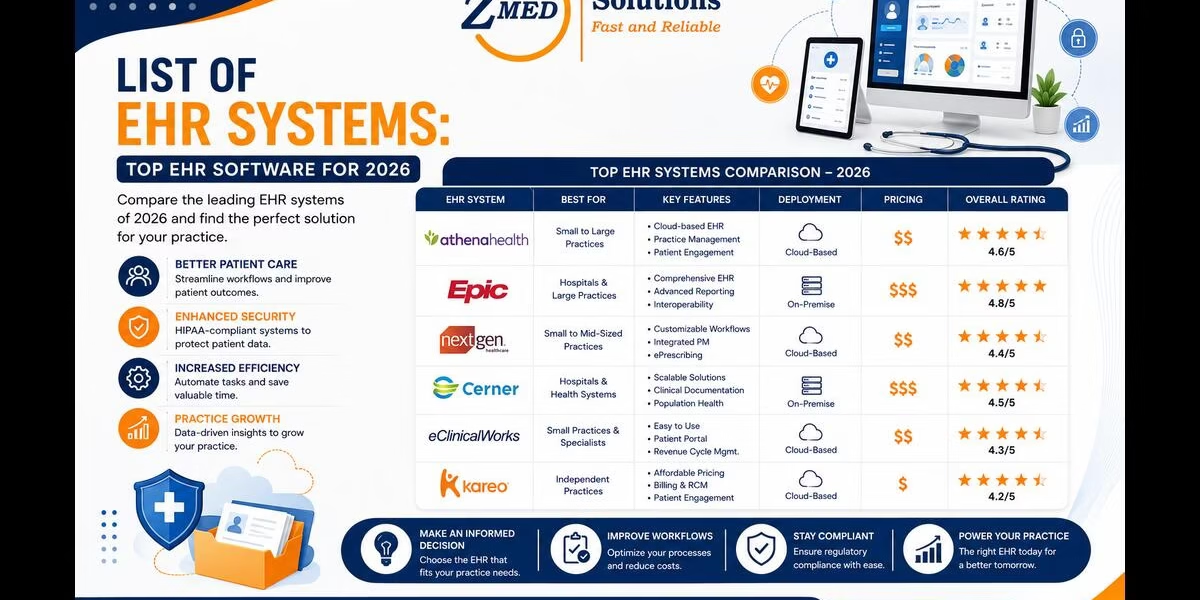
A list of EHR systems typically includes Epic, Oracle Health (Cerner), MEDITECH, athenahealth, eClinicalWorks, NextGen Healthcare, Veradigm (Allscripts), Greenway Health, Practice Fusion, Kareo, DrChrono, and CureMD. These top EHR software platforms differ by practice size, specialty focus, deployment model, and pricing, making it essential to compare features before choosing.
Choosing the right Electronic Health Record systems shapes how a clinic, hospital, or private practice runs every single day. This comprehensive list of EHR systems breaks down the best EHR systems available in 2026, compares pricing models, and highlights which EHR vendors fit hospitals, clinics, and solo practices best. Whether you need hospital EHR systems with enterprise-grade interoperability or affordable clinic EHR software for a small team, this guide covers every major option on the market today.
What Are EHR Systems?
Electronic Health Record systems are digital platforms that store, manage, and share patient health information across providers. Unlike paper charts, an EHR gives clinicians instant access to lab results, medication histories, and treatment plans. These systems support healthcare EHR software functions like scheduling, billing, and clinical documentation in a single interface.
Modern medical EHR software also connects to pharmacies, labs, and insurance networks. This connectivity reduces duplicate testing and speeds up diagnosis. Many EHR solutions for healthcare now include patient portals, telehealth modules, and mobile apps. As regulatory requirements tighten, certified EHR systems have become the standard expectation rather than an optional upgrade for providers nationwide.
Why a Reliable List of EHR Systems Matters?
Practices waste months evaluating vendors without a structured comparison. A well-organized EHR software list shortens that research phase considerably. It also helps administrators avoid systems that lack proper certification or interoperability standards.
Having a clear list of EHR systems in the USA matters because regional and federal reporting requirements vary. Some platforms specialize in behavioral health, while others serve large hospital networks exclusively. Comparing options against your practice size, budget, and specialty prevents costly mid-implementation switches.
EMR vs EHR Systems: Understanding the Difference
Many buyers confuse EMR vs EHR systems during vendor research. An electronic medical record systems platform stores clinical data specific to one practice. It functions like a digital version of a paper chart, limited to a single provider’s records.
An EHR, by contrast, is designed for interoperability across multiple providers and organizations. It follows a patient’s history beyond one clinic, supporting shared, longitudinal care coordination. This distinction affects EHR implementation decisions significantly, since interoperability standards require certified data-exchange capabilities.
Key Differences at a Glance
- Scope: EMRs are practice-specific; EHRs are patient-centered and shareable.
- Interoperability: EHRs meet federal exchange standards; EMRs often do not.
- Portability: EHR data follows patients between specialists and hospitals.
- Compliance: EHRs typically require Meaningful Use and ONC certification.
Understanding these differences helps buyers avoid selecting an outdated EMR when true interoperability is required for referrals, insurance reporting, and multi-location care coordination across a growing practice network.
Maximize Your Practice’s Financial Performance with Zmed Solutions. Stop leaving revenue on the table. Our expert medical billing, coding, and revenue cycle management services are designed to minimize claim denials, accelerate reimbursements, and keep your cash flow healthy — so you can focus on what matters most: your patients. Explore Our Professional Services or Visit Us to discover how we can transform your practice’s financial outcomes.
How to Evaluate EHR Vendors before Choosing?
Before reviewing our full EHR software list, it helps to establish evaluation criteria. Not every platform on this list suits every organization, so matching features to actual workflow needs saves time and budget during selection.
Practice Size and Specialty
Large hospital systems need hospital EHR systems capable of managing thousands of concurrent users. Smaller practices benefit more from lightweight, affordable clinic EHR software with simpler onboarding. Specialty practices, such as behavioral health or dermatology, often require templates built around specific documentation needs rather than generic charting tools.
Deployment Model
Cloud-based EHR systems dominate current purchasing decisions due to lower upfront costs and remote accessibility. On-premise systems still appeal to large hospitals wanting direct control over servers and security infrastructure. Weighing deployment models against IT staffing capacity is a critical early step.
Certification and Compliance
Certified EHR systems must meet ONC Health IT Certification Program requirements. This certification confirms the platform supports interoperability, security, and clinical quality measure reporting. Skipping this verification step risks non-compliance penalties and denied incentive payments under federal programs tied to meaningful technology adoption standards.
Comprehensive List of EHR Systems in 2026
Below is a detailed, categorized list of EHR systems in the USA, organized by practice type. Each entry includes strengths, ideal use cases, and standout features to simplify your comparison process.
Top EHR Systems for Hospitals and Health Systems
Large hospital networks require enterprise-grade platforms capable of handling massive patient volumes, multi-department workflows, and strict regulatory reporting across many facilities simultaneously.
Epic Systems
Epic remains the dominant name among hospital EHR systems, commanding the largest share of both inpatient and ambulatory markets nationwide. It supports enormous health systems with integrated modules covering surgery, oncology, and population health analytics.
Its strength lies in interoperability through Epic’s Care Everywhere network, connecting thousands of hospitals nationwide. However, Epic’s cost and implementation timeline make it impractical for small or mid-sized practices seeking a quicker rollout.
Oracle Health (formerly Cerner)
Oracle Health remains a major player among top EHR software platforms for large hospitals. Following Oracle’s acquisition, the company has been rebuilding its cloud infrastructure and rolling out an AI-native EHR platform.
While Oracle Health still serves a substantial share of acute care hospitals, recent market reports show declining customer retention. Organizations considering this vendor should evaluate current satisfaction data carefully before committing to long-term contracts.
MEDITECH
MEDITECH’s Expanse platform has become popular among community and mid-sized hospitals seeking cost-effective hospital EHR systems. It offers strong usability scores and has retained a high percentage of legacy customers migrating to its newer platform.
MEDITECH balances affordability with robust clinical documentation tools. Many rural and community hospitals prefer it over larger competitors because implementation costs remain lower while still meeting full certification and interoperability requirements.
CPSI (Computer Programs and Systems Inc.)
CPSI focuses specifically on small and rural hospitals, offering EHR solutions for healthcare facilities that need budget-conscious technology. Its Thrive platform combines EHR, financial, and patient engagement tools designed for community-based care settings.
Best EHR Systems for Small and Mid-Sized Practices
Independent practices and small clinics need EHR solutions for healthcare that balance affordability, ease of use, and fast onboarding without sacrificing essential clinical functionality.
athenahealth
athenahealth has become one of the best cloud-based EHR systems for ambulatory practices. Its athenaOne platform combines EHR, billing, and patient engagement tools with strong revenue cycle management support built directly into the workflow.
Practices choose athenahealth for its cloud-native architecture and continuous rules-engine updates for payer requirements. This reduces manual billing errors significantly. It’s a strong fit for growing outpatient groups wanting scalability without heavy IT overhead.
eClinicalWorks
eClinicalWorks serves one of the largest ambulatory installed bases among popular EHR platforms. It supports over 180,000 physicians with a comprehensive, cloud-based suite covering scheduling, billing, and clinical documentation.
The platform includes telehealth, patient portal, and population health tools. eClinicalWorks appeals to multi-specialty groups needing configurable templates. Its extensive customization options make it adaptable, though some users report a steeper learning curve initially.
NextGen Healthcare
NextGen focuses heavily on specialty practices and value-based care models. Backed by private equity investment, the company continues expanding AI-driven documentation tools and analytics dashboards aimed at improving clinical efficiency.
This platform suits mid-sized specialty groups such as cardiology, orthopedics, and behavioral health. NextGen’s interoperability tools also support accountable care organizations tracking quality metrics across distributed provider networks and value-based reimbursement arrangements.
Veradigm (formerly Allscripts)
Veradigm rebranded from Allscripts in 2023, shifting its focus toward data analytics and payer-provider collaboration. It remains one of the recognizable EHR vendors for small and medium-sized hospitals and physician practices.
Veradigm’s historical strength spans emergency department, surgery, and anesthesia modules. The company now emphasizes real-world data services alongside its traditional EHR offerings, making it a hybrid technology and analytics vendor.
Greenway Health
Greenway Health targets ambulatory and specialty practices with its Intergy platform. This medical EHR software solution emphasizes usability and integrated billing, appealing to practices wanting an all-in-one system without excessive customization complexity.
Kareo (now part of Tebra)
Kareo, now operating under the Tebra brand, targets independent practices seeking simple, budget-friendly technology. It combines EHR, billing, and patient communication tools designed specifically for solo practitioners and small clinical teams.
DrChrono
DrChrono offers a mobile-first EHR built primarily for iPad and iPhone use. Independent practices favor its intuitive interface and customizable forms. It’s frequently listed among best EHR systems for small practices due to its flexible, mobile-friendly approach.
Practice Fusion
Practice Fusion, now part of Veradigm, built its reputation offering a free, ad-supported EHR for small independent practices. It remains a recognizable option among budget-conscious solo providers exploring EHR software for medical practices.
CureMD
CureMD provides cloud-based EHR and practice management tools with strong specialty templates. It’s frequently included among certified EHR vendors in healthcare for its focus on customizable clinical workflows across multiple medical specialties.
AdvancedMD
AdvancedMD combines EHR, telemedicine, and revenue cycle management into one cloud platform. Independent and small group practices choose it for its integrated billing engine and straightforward scheduling tools that reduce administrative overhead considerably.
Cloud-Based and Specialty EHR Platforms
Beyond the broad-market vendors above, several specialty-focused platforms address niche clinical workflows that generic systems often handle poorly.
Praxis EMR
Praxis EMR uses a template-free, concept-based charting approach. Physicians who dislike rigid templates often prefer this system for its adaptive documentation style, which learns from provider behavior over time rather than forcing standardized entries.
SimplePractice and TheraNest
These platforms serve behavioral and mental health providers specifically. They include scheduling, telehealth, and specialized note templates suited to therapy and counseling workflows, which general hospital EHR systems rarely accommodate effectively.
ModMed (Modernizing Medicine)
ModMed built its reputation serving specialty practices like dermatology, ophthalmology, and orthopedics. Its adaptive learning engine customizes templates based on physician specialty, making documentation faster for procedure-heavy specialty workflows.
EHR Software Comparison Table
The table below summarizes this EHR software comparison across deployment type, ideal user, and standout capability for quick reference.
| EHR System | Best For | Deployment | Standout Feature |
| Epic | Large hospitals | Cloud/On-premise | Care Everywhere interoperability |
| Oracle Health | Enterprise hospitals | Cloud | AI-native platform rollout |
| MEDITECH | Community hospitals | Cloud | Cost-effective Expanse platform |
| athenahealth | Ambulatory practices | Cloud | Revenue cycle automation |
| eClinicalWorks | Multi-specialty clinics | Cloud | Large installed base |
| NextGen Healthcare | Specialty practices | Cloud | Value-based care analytics |
| Veradigm | Small-mid hospitals | Cloud/On-premise | Data analytics services |
| Practice Fusion | Solo practices | Cloud | Free/low-cost entry model |
| DrChrono | Mobile practices | Cloud | iPad-native interface |
This quick-reference format supports faster shortlisting before scheduling vendor demos.
Essential EHR Features to Look For
Not every platform on this list of EHR systems offers identical capabilities. Understanding core EHR features helps buyers avoid missing critical functionality during vendor selection and contract negotiation.
Interoperability and Data Exchange
True interoperability allows patient data to move securely between providers, labs, and pharmacies. Look for FHIR API support and Health Information Exchange participation. Without this, referrals and specialist coordination become manual, error-prone, and time-consuming for administrative staff.
Patient Portal and Telehealth
Modern electronic medical record systems increasingly bundle patient portals and virtual visit tools. These features improve patient engagement while reducing phone-based scheduling burdens. Telehealth integration became a near-universal expectation following widespread adoption during the pandemic years.
Billing and Revenue Cycle Management
Integrated billing reduces claim denials and speeds reimbursement. Many top EHR software platforms now include automated coding suggestions and real-time eligibility verification. This integration matters most for smaller practices lacking dedicated billing departments or outsourced revenue cycle staff.
AI-Assisted Documentation
AI-powered ambient documentation tools are rapidly becoming standard across popular EHR platforms. These tools transcribe patient visits automatically, reducing physician burnout tied to manual charting. Vendors investing heavily here include Oracle Health, NextGen, and several specialty-focused platforms.
EHR Implementation: What to Expect?
Successful EHR implementation requires more than selecting software from this list. Planning, staff training, and data migration all influence whether a rollout succeeds or creates operational disruption during the transition period.
Pre-Implementation Planning
Start by mapping current workflows before choosing configuration options. Identify which staff members need training first. Establish realistic timelines, since larger hospital EHR systems implementations can take twelve to eighteen months from contract signing to full deployment.
Data Migration Challenges
Migrating historical records from legacy systems introduces risk of data loss or formatting errors. Testing migrated data thoroughly before go-live prevents clinical documentation gaps. Many organizations run parallel systems briefly to confirm accuracy before fully retiring older platforms.
Staff Training and Adoption
Physician resistance remains one of the leading causes of failed EHR rollouts. Investing in hands-on training sessions, rather than generic video tutorials, significantly improves adoption rates. Super-user programs, where select staff become internal experts, also ease organization-wide transitions considerably.
Certified EHR Systems and Compliance Requirements
Certified EHR systems must pass ONC Health IT Certification testing to qualify for federal incentive programs. This certification verifies interoperability, security safeguards, and clinical quality measure reporting capabilities across the platform.
Buying an uncertified system risks losing eligibility for incentive payments and complicates compliance reporting. Always confirm current certification status directly through the Certified Health IT Product List before signing any vendor contract or renewal agreement.
Security and HIPAA Compliance
Every EHR vendors list should be filtered through HIPAA compliance requirements. Look for encryption standards, audit logging, and role-based access controls. Cloud vendors should also provide a signed Business Associate Agreement covering data breach responsibilities and notification timelines.
Choosing Between Cloud-Based and On-Premise EHR Systems
Cloud-based EHR systems now dominate new purchasing decisions due to lower upfront costs and simplified maintenance. Vendors handle updates, security patches, and server infrastructure, freeing internal IT staff for other operational priorities.
On-premise systems still appeal to large hospitals wanting direct infrastructure control. However, they require dedicated IT teams and higher capital investment. Most best cloud-based EHR systems now offer comparable security standards, narrowing this historical advantage considerably for enterprise buyers.
Most Widely Used EHR Systems by Care Setting
Different care settings gravitate toward different platforms based on patient volume, workflow complexity, and reporting obligations. Reviewing the most widely used EHR systems by setting clarifies which vendors dominate each niche.
Acute Care Hospitals
Large acute care hospitals overwhelmingly choose Epic or Oracle Health. Together, these two vendors account for the majority of inpatient beds nationwide. MEDITECH follows as a strong third option for community and mid-sized hospitals seeking lower total cost of ownership.
Ambulatory and Outpatient Clinics
Outpatient settings show far more vendor diversity. athenahealth, eClinicalWorks, and NextGen Healthcare lead this fragmented segment. Smaller independent practices often choose DrChrono, Kareo, or Practice Fusion instead, prioritizing simplicity and lower monthly subscription costs over enterprise-level scalability.
Behavioral and Specialty Care
Behavioral health providers frequently select purpose-built platforms like SimplePractice or TheraNest rather than generalist systems. Specialty practices such as dermatology and ophthalmology often prefer ModMed, since its adaptive templates match procedure-heavy documentation needs far better than generic medical EHR software.
EHR Pricing Models Explained
Pricing varies dramatically across this EHR software list, so understanding common pricing structures helps set realistic budget expectations before requesting formal vendor quotes.
Per-Provider Subscription Pricing
Most cloud-based EHR systems charge a monthly fee per provider, typically ranging from $200 to $700. This model suits small and mid-sized practices wanting predictable operating costs without large upfront capital investment or long-term server maintenance contracts.
Enterprise Licensing
Large hospital EHR systems like Epic and Oracle Health typically use enterprise licensing agreements. These contracts often span multiple years and include implementation services, training, and ongoing support bundled into a single negotiated package tailored to organizational size.
Free and Ad-Supported Models
A small number of vendors, historically including Practice Fusion, offered free platforms supported by advertising or data partnerships. While attractive for solo providers, these models sometimes carry trade-offs around customization limits and vendor lock-in over the long term.
Hidden Costs to Watch For
Buyers should ask specifically about implementation fees, data migration charges, and third-party interface costs. Support tiers also vary significantly. Confirming total five-year cost of ownership, not just the advertised monthly rate, prevents budget surprises after signing a long-term contract.
The Future of EHR Systems and AI Integration
Artificial intelligence is reshaping this list of EHR systems faster than any previous technology shift. Ambient listening tools now draft clinical notes automatically during patient visits, cutting documentation time substantially for physicians across specialties.
Predictive analytics embedded within top EHR software platforms increasingly flag high-risk patients before complications develop. Interoperability standards continue tightening as well, pushing vendors toward standardized FHIR-based data exchange. Buyers evaluating EHR providers today should weigh AI roadmap maturity alongside traditional features, since documentation automation is quickly becoming a baseline expectation rather than a premium add-on across the industry.
Common Mistakes When Selecting an EHR Provider
Many organizations rush vendor selection without adequate research. Below are frequent mistakes worth avoiding when comparing EHR providers for your organization’s specific clinical and administrative needs.
- Ignoring specialty fit: Generic platforms often lack templates for niche specialties.
- Underestimating training time: Staff resistance derails many otherwise solid implementations.
- Skipping reference checks: Current customer reviews reveal real-world performance issues.
- Overlooking total cost: Hidden fees for support, upgrades, and integrations add up quickly.
- Choosing based on price alone: Cheapest options sometimes lack proper certification.
Avoiding these pitfalls protects both budget and clinical workflow continuity during the critical first year following go-live deployment across your organization.
EHR Vendor Support and Customer Service Considerations
Software features matter little if support quality falls short after go-live. Evaluating EHR vendors on responsiveness and training resources is just as important as comparing clinical functionality during the initial selection process.
Onboarding and Training Resources
Leading EHR providers typically offer live training sessions, video libraries, and dedicated implementation specialists. Practices should ask how many training hours are included in the base contract, since additional sessions often carry extra fees once the standard allotment runs out.
Ongoing Technical Support
Response time guarantees vary widely across popular EHR platforms. Some vendors offer 24/7 phone support, while others rely primarily on ticketing systems with next-business-day responses. Hospitals running critical operations around the clock should prioritize vendors offering guaranteed emergency support windows.
User Community and Peer Networks
Larger vendors like Epic and athenahealth maintain active user communities and annual conferences. These networks let administrators share configuration tips and troubleshoot issues collaboratively. Smaller vendors may lack this peer infrastructure, making vendor-direct support quality even more critical to daily operations.
Checklist: Questions to Ask Before Signing an EHR Contract
Before finalizing a decision from this list of EHR systems, walk through a structured checklist to avoid overlooking critical contract details that affect long-term satisfaction and total cost.
- Is the platform currently listed as a certified EHR system under ONC standards?
- What does full implementation cost, including data migration and training?
- How many hours of training are included before additional charges apply?
- Does the vendor support FHIR-based interoperability with local labs and pharmacies?
- What is the average customer support response time for urgent issues?
- Are there contract penalties for early termination or vendor switching?
- Does pricing scale predictably as the practice adds new providers?
Working through this checklist with each finalist vendor typically surfaces gaps that marketing materials and demo presentations tend to gloss over during the sales process.
How This EHR Comparison Was Compiled?
This list of EHR systems draws on publicly available market share data, KLAS Research performance reports, and vendor-published feature documentation current as of 2026. Rankings reflect a combination of installed base size, customer retention trends, and certification status rather than vendor marketing claims alone.
Because the EHR market shifts through acquisitions, rebrands, and new AI feature rollouts, administrators should verify current pricing and certification status directly with each vendor before finalizing any purchase decision. Market conditions referenced here, including hospital market share percentages, reflect reporting available at the time of publication and may shift as new KLAS and Definitive Healthcare data becomes available throughout the year.
Final EHR Systems Comparison Guide: Matching Vendors to Your Practice
Use this quick EHR systems comparison guide as a last-step filter before requesting demos. Match your organization type to the vendor category most likely to fit your workflow and budget realistically.
Large hospital networks should prioritize Epic, Oracle Health, or MEDITECH, since these platforms handle high patient volumes and complex departmental integrations. Mid-sized ambulatory groups typically fare best with athenahealth, eClinicalWorks, or NextGen Healthcare, balancing cost with strong interoperability. Solo and small practices often find better value in DrChrono, Kareo, or CureMD, where onboarding is faster and monthly costs stay predictable.
Specialty practices should weigh purpose-built platforms like ModMed or SimplePractice over generalist systems. A mismatched specialty fit tends to create ongoing documentation friction long after go-live. Reviewing this comprehensive list of electronic health record systems alongside your specific patient volume, specialty, and budget constraints leads to a shortlist that survives vendor demos rather than falling apart under closer scrutiny.
Frequently Asked Questions
List of EHR Systems
What is the most widely used EHR system in the United States?
Epic Systems holds the largest share among hospital EHR systems, dominating both inpatient and ambulatory markets across large U.S. health systems nationwide.
What is the difference between EMR and EHR software?
An EMR stores records for a single practice, while an EHR shares patient data across multiple providers, supporting broader, coordinated electronic health record systems interoperability.
Which EHR system is best for small practices?
Platforms like DrChrono, Kareo (Tebra), and Practice Fusion rank among the best EHR systems for small practices due to affordability and simpler onboarding.
How long does EHR implementation typically take?
Small practices may complete EHR implementation in a few months, while large hospital EHR systems rollouts often take twelve to eighteen months.
Are cloud-based EHR systems more secure than on-premise systems?
Most cloud-based EHR systems now match on-premise security standards, offering encryption, audit logs, and vendor-managed compliance updates continuously.
Final Thoughts
This list of EHR systems covers the leading platforms serving hospitals, clinics, and independent practices in 2026. From enterprise giants like Epic and Oracle Health to specialty-focused tools like Praxis EMR and ModMed, the right choice depends heavily on practice size, budget, and clinical specialty. Comparing EHR features, certification status, and deployment models before committing protects your organization from costly implementation missteps.
Key Market Player
Ready to optimize your medical billing and boost your revenue? Look no further. Zmed Solutions LLC is your trusted partner in professional Medical Billing Services.
Join hundreds of satisfied healthcare providers who have already elevated their revenue with our expert services. Don't miss out on what could be your practice's most profitable decision.
Schedule a Consultation Today!
Contact Us Now, and experience the difference. Your financial success starts here!