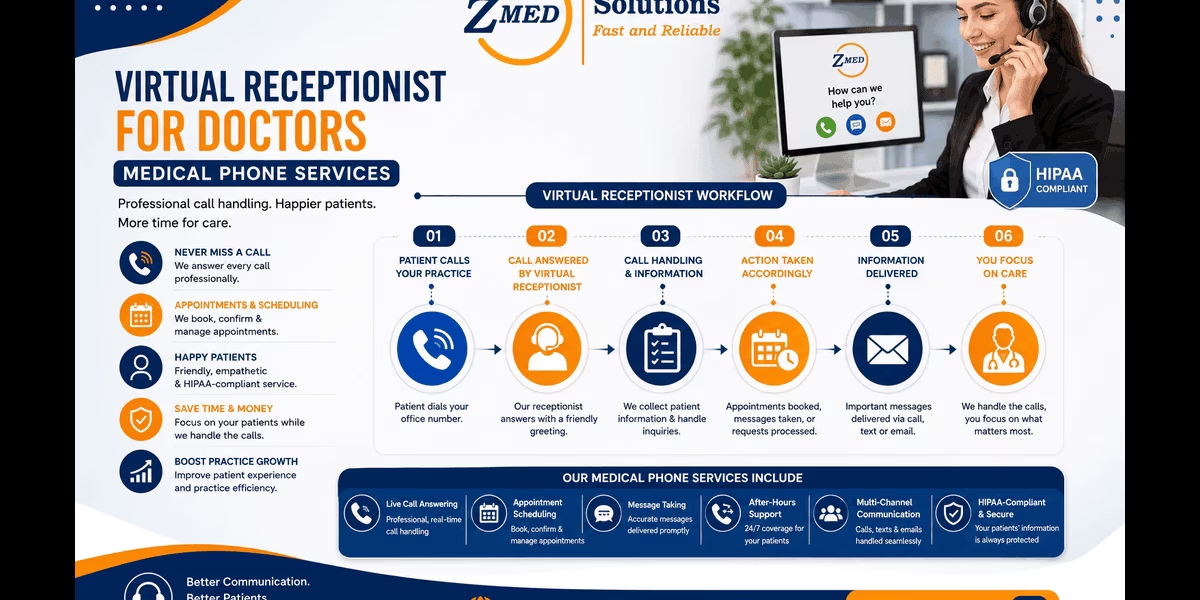
A virtual receptionist for doctors is a remote professional who manages inbound calls, schedules appointments, and handles patient inquiries for medical practices. Unlike traditional receptionists, virtual medical receptionist services operate 24/7 from secure, HIPAA-compliant facilities, reducing overhead costs by 40-60% while improving patient satisfaction and ensuring no call goes unanswered.
Managing a thriving medical practice requires more than clinical expertise. Administrative excellence directly impacts patient experiences and revenue generation. Yet many physicians struggle with staffing costs, receptionist availability, and call management efficiency. This comprehensive guide explores how a virtual receptionist for doctors can revolutionize your practice operations.
Medical virtual receptionist services have emerged as a game-changing solution for healthcare providers nationwide. These specialized professionals handle patient communication, appointment scheduling, and office management tasks remotely. By implementing virtual medical receptionist services, doctors reduce administrative overhead while enhancing patient satisfaction.
According to industry data, medical practices implementing healthcare virtual receptionist solutions experience improved patient retention and increased operational efficiency. This article provides actionable insights into selecting, implementing, and maximizing the value of professional remote medical receptionist services for your healthcare facility.
Optimizing revenue cycle performance is one of the most critical, complex and challenges facing healthcare practices today. Zmed Solutions delivers end-to-end medical billing solutions designed to reduce claim denials, accelerate reimbursements and strengthen your practice’s financial foundation. Learn more about who we are and explore our full range of specialized billing services.
Understanding Virtual Receptionists for Medical Practices
What Is a Virtual Receptionist for Doctors?
A virtual receptionist for doctors represents a modern approach to medical office administration. These trained professionals work remotely to handle critical patient-facing functions that traditionally required on-site staff. Unlike basic medical answering services, comprehensive doctor office virtual receptionist solutions integrate seamlessly into existing practice workflows.
Healthcare virtual receptionists combine technology with human expertise. They answer patient calls professionally, capture detailed messages, and process appointment requests accurately. Modern virtual front desk for doctors services utilize advanced call routing, CRM software, and secure patient databases to maintain HIPAA compliance. This dual approach ensures both technological efficiency and personalized human interaction.
The distinction between standard medical office call answering and premium virtual receptionist for medical practices lies in service depth. Basic answering services simply relay messages. Comprehensive solutions include two-way appointment coordination, patient intake support, billing inquiries handling, and after-hours emergency triage.
Key Differences Between Virtual and Traditional Receptionists
Traditional in-office receptionists require significant infrastructure investment. Practices must provide physical workspace, equipment, benefits packages, and ongoing employment management. These costs often exceed $35,000 annually per employee before training and replacement expenses.
Medical virtual receptionist services eliminate these overhead burdens. Your practice pays only for services used. Remote receptionists receive specialized healthcare training, background verification, and HIPAA certification. They’re typically available across all business hours, providing consistent service without vacation or sick day gaps.
The flexibility of virtual medical receptionist services accommodates practice growth organically. As your patient base expands, service capacity scales accordingly. Conversely, during slower periods, you adjust services downward without severance obligations or HR complications.
Critical Benefits of Virtual Receptionist Services for Doctors
Cost Reduction and Financial Efficiency
Implementing remote medical receptionist services delivers immediate financial benefits. Traditional receptionists cost practices $35,000-$55,000 annually including salary, benefits, taxes, and training. Virtual receptionist for doctors services typically cost $800-$2,500 monthly, representing 60% savings for many practices.
Additional financial advantages include eliminated workspace costs, reduced training investment, and prevention of turnover-related expenses. Practices no longer absorb costs during employee absences or when terminating underperforming staff members. Healthcare virtual receptionist solutions operate on flexible service agreements, allowing budget adjustments based on patient volume.
Revenue protection represents another critical financial benefit. Missed calls directly decrease appointment bookings and patient revenue. Doctor office virtual receptionist services ensure appointment capture rates approaching 98%, effectively adding revenue without increasing clinical capacity. Studies show practices recover investment costs within 60-90 days through improved appointment scheduling efficiency.
Enhanced Patient Experience and Satisfaction
Patient communication forms the foundation of modern healthcare satisfaction. Medical virtual receptionist services provide professional, warm interactions that reflect positively on your practice brand. Patients value responsive communication, efficient scheduling, and personalized attention—services excellently delivered through virtual medical receptionist professionals.
Healthcare virtual receptionist teams handle patient inquiries with compassion and competence. They answer clinical questions appropriately, schedule urgent appointments efficiently, and escalate concerns to clinical staff when necessary. This layered approach improves patient satisfaction while protecting clinical autonomy.
Appointment no-show rates decrease significantly with professional virtual front desk for doctors services. Dedicated staff send appointment reminders via SMS and email, reschedule cancellations immediately, and maintain detailed patient communication histories. This reduces wasted appointment slots by 25-40%, directly improving practice revenue.
24/7 Availability and Emergency Response
Modern patients expect round-the-clock healthcare access. Virtual receptionist for medical practices delivers this expectation reliably. Unlike office-based staff limited to business hours, remote medical receptionist services operate continuously, managing after-hours emergencies, urgent patient concerns, and voicemail overflow.
Medical office call answering through virtual services includes emergency triage capabilities. Specially trained representatives distinguish between routine appointments and urgent medical situations. They follow your protocols for escalating emergencies, contacting on-call physicians, and directing patients to emergency services when appropriate.
This availability advantage particularly benefits multi-location practices, specialty clinics requiring extended hours, and practitioners serving geographically dispersed patient populations. Healthcare virtual receptionist solutions adapt to your specific hours, ensuring coverage exactly when needed.
HIPAA Compliance and Patient Data Security
HIPAA-compliant receptionist services represent non-negotiable requirements in healthcare. Regulatory violations result in substantial fines ($100 to $50,000 per violation) and reputational damage. Professional virtual medical receptionist services prioritize security through comprehensive protocols.
Reputable doctor office virtual receptionist providers implement multi-level security measures. These include encrypted communications, secure databases, regular compliance audits, and staff background verification. All representatives receive mandatory HIPAA training covering patient privacy protection, confidentiality agreements, and proper data handling.
Healthcare virtual receptionist professionals understand medical terminology, patient confidentiality requirements, and state-specific healthcare regulations. This specialized training differentiates them from general virtual assistants, ensuring legal compliance and protecting your practice from liability exposure.
Reduced Administrative Burden on Clinical Staff
Clinical staff members’ primary responsibility involves patient care, not phone management. Yet traditional office structures burden physicians and nurses with administrative tasks. Virtual receptionist for doctors services redirect focus to clinical excellence.
Medical virtual receptionist services eliminate phone interruptions, message taking, and appointment coordination from clinical workflows. This reduction allows providers to see additional patients, spend more time with each patient, and improve diagnostic quality. Studies indicate practices gain approximately 45 minutes daily per provider through effective virtual receptionist implementation.
Nursing staff particularly benefit from healthcare virtual receptionist services handling patient questions, appointment requests, and routine inquiries. This reduces unnecessary clinical interruptions, allowing nurses to focus on patient care coordination, chart management, and provider support activities.
Essential Features of Quality Virtual Receptionist Services
Advanced Call Routing and Message Management
Superior medical office call answering services include intelligent call routing capabilities. Incoming calls route based on clinical urgency, patient history, and practice protocols. Emergency calls access on-call physicians immediately; routine inquiries receive comprehensive handling from trained receptionists.
Virtual receptionist for medical practices utilizes sophisticated CRM software integrating with your existing practice management systems. Every patient interaction logs automatically, creating comprehensive communication histories. Providers access complete records when patients call, improving service personalization and continuity.
Voicemail management through virtual front desk for doctors services ensures no message disappears. Professional representatives transcribe voicemails, prioritize by urgency, and deliver to appropriate staff members. This systematic approach prevents critical messages from being overlooked or misplaced.
Appointment Scheduling Integration
Medical appointment scheduling through virtual receptionists for doctors syncs directly with your scheduling software. Representatives view real-time availability, coordinate with multiple locations, and consider provider preferences when booking appointments. This seamless integration prevents double-booking and scheduling errors.
Doctor office virtual receptionist professionals understand your practice’s specific protocols, preferred patient distribution, and provider schedules. They book appointments strategically, sometimes suggesting alternative providers or earlier appointments that better serve patients. This intelligence differentiates professional virtual medical receptionist services from automated scheduling systems.
Advanced systems allow patients to receive appointment confirmations via email or text. Healthcare virtual receptionist teams follow up on cancellations immediately, filling slots with waiting patients. This optimization reduces appointment waste and improves practice revenue by 15-25%.
Patient Intake and Information Collection
Comprehensive medical virtual receptionist services handle patient intake responsibilities. When new patients call, representatives collect detailed information including medical history, insurance details, current medications, and emergency contacts. This pre-visit preparation streamlines clinical appointments.
Virtual front desk for doctors services gather information systematically using standardized forms. Representatives ask appropriate follow-up questions, ensure complete data collection, and flag relevant medical conditions for provider attention. This thorough approach eliminates appointment delays from incomplete patient information.
Healthcare virtual receptionist teams recognize when patients require clinical guidance versus scheduling assistance. They appropriately escalate complex medical questions to clinical staff while handling routine information collection independently. This judgment differentiates quality services from basic answering services.
After-Hours and Emergency Coverage
After-hours answering services represent critical components of modern medical practices. Virtual receptionist for doctors maintains coverage during evenings, weekends, and holidays. Patients reach human representatives rather than impersonal automated systems, improving satisfaction and care quality.
Emergency protocols vary by practice specialty. Medical virtual receptionist services implement your specific guidelines for emergency triage, physician contact procedures, and patient referrals. Representatives understand when situations require immediate clinical intervention versus routine office scheduling.
Doctor office virtual receptionist services coordinate with your on-call system, physician schedules, and emergency protocols. They maintain updated contact information, follow decision trees for emergency classification, and document all interactions comprehensively for clinical review.
Selecting the Right Virtual Receptionist Provider
Evaluating Provider Credentials and Experience
Choosing optimal virtual medical receptionist services requires careful evaluation of provider qualifications. Investigate whether companies specialize in healthcare or operate as general virtual assistant firms. Healthcare-specific providers understand medical terminology, patient communication protocols, and industry regulations.
Verify HIPAA compliance certifications, security audit results, and compliance frameworks. Request detailed information about representative training, background verification processes, and ongoing quality assurance. Reputable medical virtual receptionist services maintain extensive documentation of their compliance infrastructure.
Industry experience matters significantly. Providers with established relationships with practices understand healthcare workflows, practice management software, and medical office culture. Ask for references from established practices within your specialty to assess service quality and integration success.
Technology Integration Capabilities
Your virtual receptionist for doctors must integrate seamlessly with existing systems. Evaluate compatibility with your practice management software (Epic, Athenahealth, Medidata, etc.). Seamless integration eliminates manual data entry, reduces errors, and ensures information flows automatically.
Advanced healthcare virtual receptionist services offer secure cloud platforms accessible to your entire team. Providers view call logs, patient messages, and scheduling updates in real-time. This transparency ensures everyone stays informed and responds appropriately to patient needs.
Ask about integration with your phone system, email platform, and patient portal. Superior virtual front desk for doctors services coordinate across multiple communication channels, providing unified patient experience regardless of contact method. This omnichannel approach better serves modern patient expectations.
Customization and Scalability
Your practice is unique, requiring customized virtual receptionist for medical practices solutions. Evaluate whether providers allow custom protocols, specific language preferences, or specialized training for your particular specialty. One-size-fits-all approaches often disappoint.
Scalability proves essential for growing practices. Remote medical receptionist services should accommodate increased call volume, multiple locations, and expanded services as your practice grows. Confirm that service expansion occurs without disrupting existing operations or requiring system migrations.
Flexible service agreements allow adjustments based on seasonal patient volume fluctuations. Discuss how your virtual medical receptionist services provider accommodates temporary increases during peak seasons or permanent expansion as your practice scales.
Quality Assurance and Performance Metrics
Reputable medical office call answering providers maintain transparent quality assurance processes. Request access to performance metrics including call answer rates, average wait times, appointment capture rates, and customer satisfaction scores. Specific measurable commitments indicate quality confidence.
Regular call monitoring and feedback constitute essential quality assurance components. Ask how healthcare virtual receptionist services monitor representative performance, provide training for improvement, and address service deficiencies. Quality providers conduct routine call reviews and maintain training programs.
Request case studies or performance data from established clients. Documented improvements in appointment booking rates, patient satisfaction scores, and operational efficiency validate service effectiveness for your specific needs.
Implementation Strategy and Best Practices
Smooth Transition and Staff Training
Implementing virtual receptionist for doctors requires thoughtful transition planning. Begin with limited service scope—perhaps evening and weekend coverage only—allowing your team to adjust gradually. Medical virtual receptionist services work best when integrated incrementally rather than through abrupt total replacement.
Train your clinical and administrative staff on working effectively with healthcare virtual receptionist solutions. Establish clear communication protocols, message prioritization, and escalation procedures. Ensure everyone understands how virtual front desk for doctors services operate and their responsibilities in the new workflow.
Introduce your patient base to doctor office virtual receptionist services gradually. Explain that calls route to professionally trained representatives rather than office staff. Emphasize that this enhancement ensures 24/7 availability and improves service quality. Most patients appreciate the responsiveness and professionalism these services provide.
Establishing Effective Communication Protocols
Clear protocols ensure virtual medical receptionist services align with your practice’s standards. Document specific procedures for appointment scheduling, message handling, emergency triage, and patient communication. Provide detailed information about your practice’s specialties, common patient concerns, and provider preferences.
Medical office call answering protocols should specify call greeting scripts reflecting your practice’s brand voice. Define which questions receptionists can answer independently and which require clinical staff escalation. Create decision trees for common scenarios, enabling representatives to handle interactions consistently.
Establish feedback mechanisms allowing your team to communicate preferences to healthcare virtual receptionist providers. Regular feedback cycles improve service quality and alignment with your practice’s evolving needs. Most quality providers adjust protocols based on your input.
Monitoring Performance and Optimization
Track key metrics after implementing virtual receptionist for medical practices services. Monitor appointment booking rates, patient satisfaction scores, message accuracy, and call handle times. Compare metrics to baseline periods to quantify service impact on practice operations.
Request regular performance reports from remote medical receptionist service providers. Quality reports include call volume trends, peak call periods, common inquiry types, and patient satisfaction feedback. Analyze this data to identify optimization opportunities.
Conduct monthly review meetings with medical virtual receptionist services representatives discussing performance metrics, protocol refinements, and emerging practice needs. This collaborative approach ensures services evolve with your practice’s changing requirements and patient populations.
Advanced Applications of Virtual Receptionist Services
Multi-Location Practice Coordination
Larger practices managing multiple locations benefit significantly from virtual receptionist for doctors services. Centralized healthcare virtual receptionist teams coordinate across locations, optimizing appointment distribution and resource allocation. This coordination improves patient access and reduces location-based appointment backlogs.
Virtual front desk for doctors services create consistent patient experiences across all practice locations. Every patient receives the same professional service standards regardless of calling location. This consistency strengthens practice brand reputation and improves overall patient satisfaction.
Unified doctor office virtual receptionist systems allow practices to balance demand across locations strategically. When one location experiences high call volume, overflow routes to colleagues at other locations, reducing wait times and improving patient experience across the entire practice.
Specialty-Specific Solutions
Different medical specialties require specialized virtual receptionist for medical practices expertise. Dermatology practices benefit from photo submission capabilities and appointment coordination. Orthopedic practices require pre-appointment assessment for injury severity and urgency.
Medical virtual receptionist services tailored for specific specialties streamline patient interactions. Cardiology representatives understand cardiac terminology, recognize urgency indicators, and follow specialty-specific protocols. Healthcare virtual receptionist expertise in your specialty area accelerates patient triage and improves clinical outcomes.
Behavioral health practices particularly benefit from specialized virtual medical receptionist services trained in mental health sensitivity. Representatives recognize crisis situations requiring immediate intervention and access appropriate emergency resources while maintaining patient confidentiality.
Integration with Telemedicine and Digital Health
Modern healthcare increasingly incorporates telemedicine and digital patient interactions. Virtual receptionist for doctors services coordinate seamlessly with telehealth platforms, scheduling virtual appointments and managing pre-visit technology orientation. This integration improves telehealth adoption and patient satisfaction.
Healthcare virtual receptionist teams handle technology troubleshooting, guiding patients through login procedures and ensuring they successfully connect for virtual visits. This support reduces no-show rates for telehealth appointments while improving patient experience.
Medical office call answering through virtual services connects naturally to digital health platforms. Receptionists may schedule telehealth visits, collect patient information through patient portals, and follow up on previous appointments through electronic communications, creating seamless omnichannel healthcare experiences.
Cost-Benefit Analysis and ROI
Understanding Pricing Models
Virtual receptionist for medical practices pricing varies based on service scope and features. Basic packages cost $800-$1,200 monthly for evening and weekend coverage. Comprehensive 24/7 services with appointment scheduling integration range from $1,500-$3,500 monthly.
Most medical virtual receptionist services operate on per-call or per-hour billing models. Per-call billing charges $2-$5 per call, ideal for practices with unpredictable call volumes. Per-hour models cost $15-$35 hourly for dedicated receptionist time, better for consistent demand patterns.
Premium healthcare virtual receptionist services offering specialized expertise, custom integration, or multi-location coordination typically command higher rates ($3,000-$5,000+ monthly). These investments deliver proportionally greater returns through improved patient experiences and operational efficiency.
Calculating Return on Investment
The average practice replacing one full-time receptionist with virtual receptionist for doctors services saves $20,000-$40,000 annually. Additional revenue generation through improved appointment capture typically adds $5,000-$15,000 more in annual benefit.
Reduced appointment no-shows represent another significant financial benefit. Comprehensive healthcare virtual receptionist services decrease no-show rates by 25-35%, effectively recovering 3-4 additional patient appointments weekly. At typical consultation fees of $100-$300, this represents $15,600-$46,800 in annual recovered revenue.
Virtual front desk for doctors services also reduce time clinical staff spends on administrative tasks. Valuing this time at typical nursing salaries ($28-$35/hour), the practice gains 20-45 additional hours monthly for patient care activities. This translates to $6,700-$18,900 annual value.
Common Challenges and Solutions
Initial Integration Difficulties
Some practices experience communication gaps when implementing virtual receptionist for doctors initially. Representatives may misunderstand protocols, or staff may struggle with new workflows. Medical virtual receptionist services providers address these challenges through intensive onboarding and ongoing training.
Regular feedback and protocol refinement during the first 30-60 days accelerates adjustment. Identify specific issues and communicate them clearly to your healthcare virtual receptionist provider. Quality providers view these early challenges as optimization opportunities rather than service failures.
Patient and Staff Acceptance
Some patients initially resist speaking with virtual representatives rather than office staff. Doctor office virtual receptionist services overcome this through professional, knowledgeable interactions that demonstrate genuine care and competence. Transparency about why virtual services are used builds acceptance.
Staff members accustomed to handling calls may initially resist changes to established workflows. Address resistance through clear communication about service benefits, comprehensive training, and acknowledgment of the adjustment period. Most staff members quickly appreciate reduced administrative burden.
Maintaining Service Quality
Service quality may fluctuate if providers inadequately train representatives or fail to maintain quality assurance standards. Address declining quality by requesting immediate attention from your provider, accessing specific call recordings demonstrating issues, and discussing corrective action plans.
Regular performance monitoring prevents quality degradation before it significantly impacts patients. Most virtual medical receptionist services maintain high standards when practices actively monitor performance and maintain open communication about service expectations.
Future Trends in Virtual Receptionist Services
Artificial Intelligence and Automation Integration
Emerging virtual receptionist for doctors services increasingly incorporate AI and automation. Chatbots handle routine inquiries, appointment confirmations, and patient intake information. When complex issues arise, calls seamlessly transfer to human representatives, combining efficiency with personal touch.
Healthcare virtual receptionist AI learns your practice’s patterns, patient preferences, and common inquiries over time. This intelligence enables increasingly personalized interactions and more efficient call routing. Natural language processing allows chatbots to understand medical terminology and patient concerns more accurately.
These technological advances won’t replace human representatives but rather enhance their capabilities. Virtual medical receptionist services combining AI efficiency with human empathy represent the future of patient communication.
Enhanced Remote Healthcare Access
Virtual front desk for doctors services will increasingly include patient education components, health information delivery, and wellness coordination. As healthcare shifts toward preventive care and patient engagement, receptionists provide more valuable support beyond appointment scheduling.
Medical office call answering services may expand to include health coaching, appointment preparation, and post-visit follow-up. This evolution transforms receptionists into patient experience managers, deeply impacting healthcare outcomes and satisfaction.
Expanded International and Multilingual Services
Remote medical receptionist services increasingly provide multilingual support, enabling practices to serve diverse patient populations. Bilingual and multilingual representatives enhance patient access and satisfaction for non-English-speaking patients, expanding practice reach.
Global provider networks allow virtual receptionist for medical practices to offer more time zones and language combinations. This accessibility enables small practices to provide international-level service while maintaining affordability.
Industry Benchmarks and Standards
Performance Metrics to Monitor
Quality medical virtual receptionist services maintain specific performance benchmarks. Call answer rates should exceed 95% within 3 rings. Average message delivery time should not exceed 30 minutes. Appointment booking success rates should approach 90%.
Customer satisfaction scores (measured through post-call surveys) should exceed 4.5 out of 5 stars. These metrics provide objective evaluation of service quality and justify continued investment in healthcare virtual receptionist services.
Compliance Standards and Certifications
Leading virtual receptionist for doctors providers maintain formal HIPAA compliance certifications, undergo regular security audits, and maintain SOC 2 Type II certifications. These credentials verify that providers meet stringent security and privacy standards.
Medical office call answering providers should carry appropriate liability insurance and maintain documented compliance with state-specific healthcare regulations. Ask for evidence of these credentials during provider evaluation.
Frequently Asked Questions
Are Virtual Receptionist Services HIPAA Compliant?
Yes, reputable virtual receptionist for doctors services maintain comprehensive HIPAA compliance. Quality providers implement encrypted communications, secure databases, regular compliance audits, and mandatory staff training. When selecting medical virtual receptionist services, request evidence of HIPAA certifications and compliance protocols. Verify that representatives undergo background checks and sign confidentiality agreements. Leading healthcare virtual receptionist providers undergo annual security audits and maintain detailed compliance documentation. Your practice should never partner with providers unable to demonstrate formal HIPAA compliance credentials.
How Do Virtual Receptionists Handle Emergencies?
Specialized doctor office virtual receptionist services implement emergency triage protocols aligned with your practice. Representatives receive training to recognize urgent situations, differentiate medical emergencies from routine inquiries, and escalate appropriately. Medical virtual receptionist services maintain updated physician contact information, follow your specific emergency escalation procedures, and document all interactions. When emergencies are identified, representatives either contact on-call physicians immediately or direct patients to emergency departments. This specialized training differentiates quality virtual front desk for doctors services from general answering services.
Can Virtual Receptionists Integrate with Our Practice Management Software?
Yes, quality virtual receptionist for medical practices providers offer integration with major practice management systems including Epic, Athenahealth, and Practice Fusion. Integration enables real-time access to patient information, appointment availability, and provider schedules. Healthcare virtual receptionist representatives book appointments directly into your system, eliminating manual data entry and preventing scheduling errors. When evaluating medical office call answering providers, confirm that they support your specific software platform and can complete integration within your preferred timeframe.
What’s the Typical Cost of Virtual Receptionist Services?
Remote medical receptionist services typically cost $800-$3,500 monthly depending on service scope and coverage hours. Basic evening and weekend coverage costs $800-$1,200 monthly. Comprehensive 24/7 services with appointment scheduling integration range from $1,500-$3,500 monthly. Some providers offer per-call billing ($2-$5 per call) ideal for unpredictable call volumes. Premium virtual receptionist for doctors services with specialized expertise command higher rates. Most practices recover service costs through improved appointment capture within 60-90 days.
How Long Does It Take to Implement Virtual Receptionist Services?
Implementation timelines vary based on provider and practice complexity. Basic setup typically requires 2-3 weeks including onboarding, protocol documentation, and system integration. More complex implementations with multiple locations or specialized software integration may require 4-6 weeks. Quality virtual receptionist for medical practices providers dedicate implementation specialists to ensure smooth transitions. Your team should expect intensive onboarding during initial weeks, with ongoing optimization during the first 60-90 days. Most practices transition to full service within 6 weeks and realize immediate benefits in call management and appointment booking efficiency.
Final Thoughts
Virtual receptionist for doctors services represent transformative solutions for modern medical practices. By combining professional expertise, advanced technology, and specialized healthcare knowledge, these services enhance patient experiences while reducing administrative burden and costs.
Medical virtual receptionist services deliver measurable benefits: improved appointment capture rates, enhanced patient satisfaction, reduced administrative costs, and 24/7 availability. Whether you’re seeking evening coverage, weekend support, or comprehensive around-the-clock solutions, quality healthcare virtual receptionist services adapt to your specific needs.
The transition from traditional office receptionists to remote medical receptionist solutions requires thoughtful planning and partner selection. By choosing reputable virtual receptionist for medical practices providers and implementing thoughtful integration strategies, your practice gains significant competitive advantages.
Consider implementing virtual front desk for doctors services as strategic investments in patient experience, operational efficiency, and practice profitability. The healthcare industry increasingly recognizes that excellent patient communication drives both satisfaction and revenue. Doctor office virtual receptionist services deliver this excellence reliably and affordably.
Your practice’s patients deserve professional, responsive communication. Virtual receptionist for doctors ensures this quality while allowing your clinical team to focus entirely on providing exceptional care. Explore solutions today and discover how medical office call answering services can transform your practice operations.
Key Market Player
Ready to optimize your medical billing and boost your revenue? Look no further. Zmed Solutions LLC is your trusted partner in professional Medical Billing Services.
Join our growing network of healthcare providers who have already elevated their revenue with our expert services. Don't miss out on what could be your practice's most profitable decision.
Schedule a Consultation Today!
Contact Us Now, and experience the difference. Your financial success starts here!