
Home dialysis and in-center hemodialysis both filter waste and fluid from the blood for people with kidney failure, but they differ in where treatment happens, how often it occurs, and how much control the patient has over scheduling. Home dialysis, including home hemodialysis and peritoneal dialysis, is performed by the patient after training, while in-center hemodialysis takes place at a dialysis facility under clinical staff supervision. The right choice depends on medical condition, home support, and lifestyle.
A new diagnosis of kidney failure comes with an overwhelming list of decisions, and choosing a dialysis setting is one of the biggest. Patients are often handed a binder of information during an already difficult appointment and asked to decide within days whether to dialyze at home or at a center. Home Dialysis vs. In-Center Hemodialysis see this confusion constantly, and it affects far more than comfort. The setting a patient chooses shapes their daily routine, their clinical outcomes, and the way their care gets billed.
This guide compares home dialysis and in-center hemodialysis side by side, covering how each works, the benefits and challenges of both, and what the cost and insurance picture looks like. Practice owners and office managers will also find a section on how treatment setting affects nephrology billing, since coding and reimbursement differ meaningfully between the two paths.
What Is Home Dialysis?
Home dialysis allows a patient to receive treatment in their own home after completing a structured training program. It comes in two main forms: home hemodialysis, which filters blood using a machine similar to the ones used in clinics, and peritoneal dialysis, which uses the lining of the abdomen to filter waste internally. Both approaches shift day-to-day treatment away from a facility and into the patient’s own hands, with remote monitoring and regular check-ins from the care team.
Types of Home Dialysis
Home hemodialysis uses a portable or compact machine, and patients can choose a conventional three-times-a-week schedule or shorter, more frequent sessions. Peritoneal dialysis works differently: a cleansing fluid is introduced into the abdominal cavity through a catheter, left in place for a set period, then drained, often overnight while the patient sleeps. Both options require a physician’s assessment of home suitability, including space, plumbing, and a reliable water supply for hemodialysis.
How Home Dialysis Works Day to Day?
A typical week includes several treatment sessions built around the patient’s own schedule rather than a clinic’s appointment book. Supplies are delivered directly to the home, and a nurse or technician checks in regularly by phone or video to review technique and troubleshoot problems. Training generally takes three to eight weeks, and a care partner is often recommended, particularly for home hemodialysis, though many patients manage independently after enough practice.
What Is In-Center Hemodialysis?
In-center hemodialysis takes place at a certified hemodialysis center, where trained clinical staff operate the dialysis machines and monitor each patient throughout treatment. This is the most common setting for dialysis in the United States, particularly for patients who are newly diagnosed, live alone, or prefer not to manage equipment themselves. Treatment removes waste and excess fluid over a few hours per session, several times a week, following a fixed appointment schedule set by the facility.
The In-Center Treatment Schedule
Most patients attend three sessions per week, each lasting roughly three to five hours, at set appointment times. This structure offers predictability and does not require the patient to manage supplies, equipment, or troubleshooting at home. It does mean building daily life, including work and travel, around a fixed treatment calendar that leaves less room for spontaneous scheduling changes.
Staff and Equipment Involved
Registered nurses, dialysis technicians, and a supervising nephrologist are present throughout each session, ready to respond immediately if a complication arises. The facility owns and maintains all equipment, so patients are not responsible for machine upkeep, water treatment systems, or supply storage. This built-in support is one of the main reasons some patients and families prefer the in-center setting, especially early in treatment.
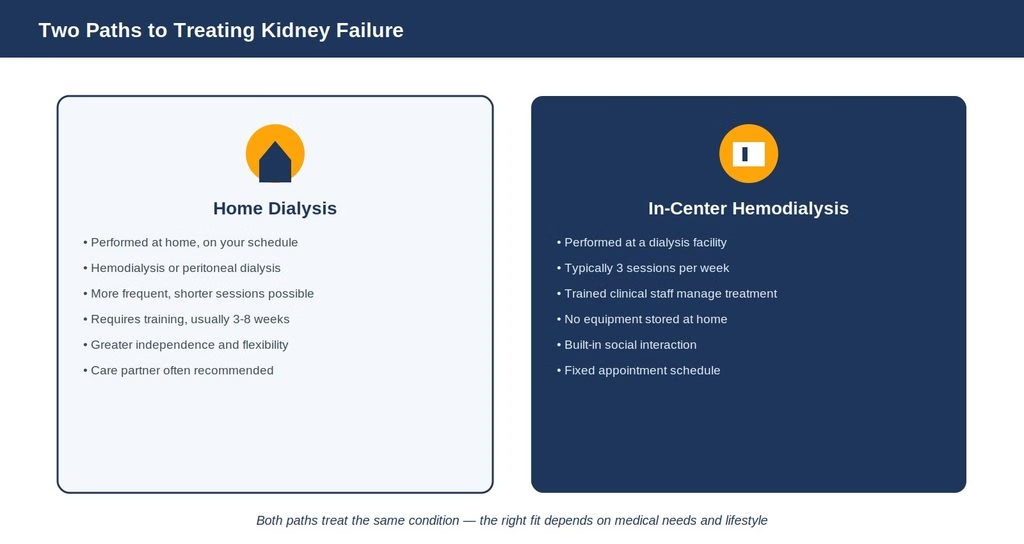
Home Dialysis vs. In-Center Hemodialysis: Key Differences
The clinical goal is the same in both settings: remove waste and fluid that failing kidneys can no longer filter. Where they diverge is in schedule, setting, level of independence, and typical clinical outcomes. The table below summarizes the most commonly cited differences based on published patient guidance and Medicare coverage information.
| Factor | Home Dialysis | In-Center Hemodialysis |
| Treatment location | Patient’s home | Certified dialysis facility |
| Typical frequency | 3–7 sessions per week | 3 sessions per week |
| Who performs treatment | Patient or care partner | Clinical staff |
| Schedule flexibility | High | Fixed appointment slots |
| Training required | 3–8 weeks | None for the patient |
| Social interaction | Limited, more clinical check-ins | Built-in peer and staff contact |
What the Data Shows?
Published patient guidance from the National Kidney Foundation notes that peritoneal dialysis has been associated with a meaningfully lower mortality rate compared with in-center treatment, and that home hemodialysis patients are more likely to remain employed than those treating at a center. These outcomes are not guaranteed for every patient, since suitability depends on individual health status, but they help explain why home-based therapies are gaining attention as a treatment option worth discussing early after diagnosis.
Benefits and Challenges of Each Option
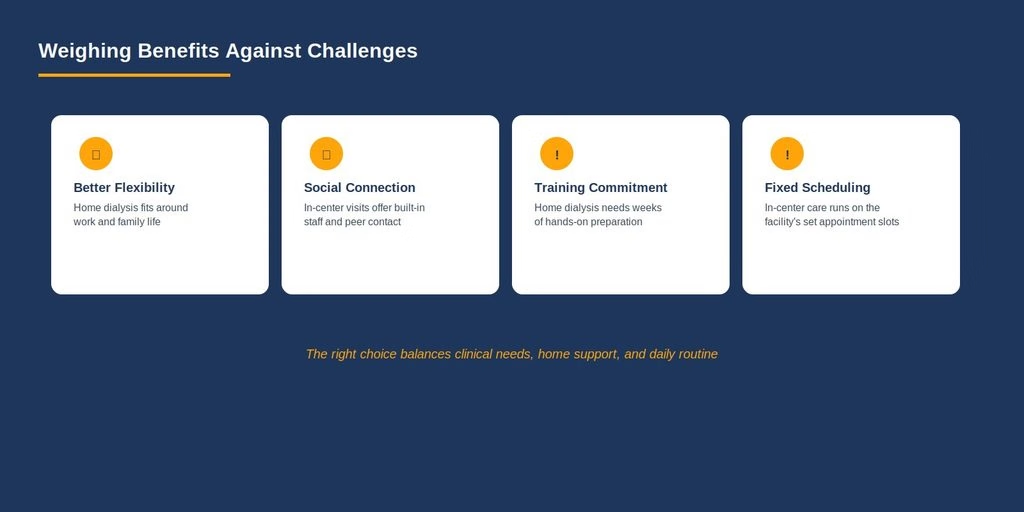
Neither setting is universally better; each comes with trade-offs that matter differently depending on a patient’s health, home environment, and personal preferences. Reviewing these honestly, rather than defaulting to whichever option a patient first hears about, leads to better long-term adherence and satisfaction with treatment.
Advantages of Home Dialysis
Patients gain control over timing, can often work more normal hours, and avoid regular travel to a facility. More frequent, shorter sessions are also associated with better blood pressure control and fewer dietary restrictions for some patients, since gentler, more frequent filtering more closely mimics natural kidney function.
Advantages of In-Center Hemodialysis
Facility-based care removes the burden of managing equipment and supplies, and immediate clinical support is always present. For patients who live alone, have limited home space, or feel more reassured with hands-on staff nearby, this structure reduces anxiety around self-managing a serious medical treatment.
Challenges to Consider
Home dialysis requires a real commitment to training, ongoing self-monitoring, and often a designated space for supplies and equipment. In-center care, meanwhile, means less flexibility, required travel several times a week, and a set schedule that can complicate employment or caregiving responsibilities. Discussing dialysis treatment options with a full care team, including a social worker, helps patients weigh these trade-offs against their actual daily life rather than in the abstract.
Cost and Insurance Considerations
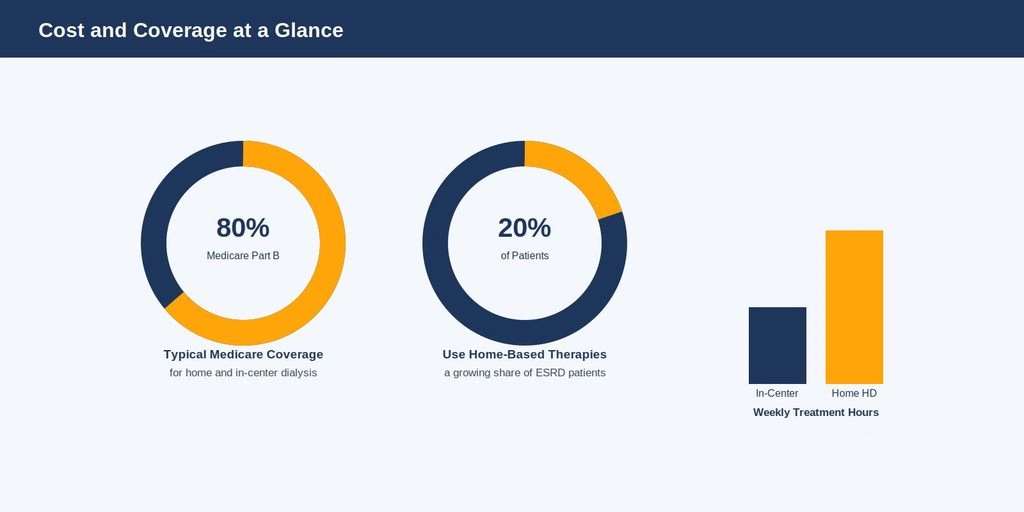
Cost is rarely the deciding factor on its own, since Medicare and most private insurers cover both settings for patients with end-stage renal disease (ESRD), but the details differ enough to matter for financial planning. Medicare Part B generally covers a substantial share of outpatient dialysis costs regardless of setting, and it also covers home dialysis training for eligible candidates.
Medicare Coverage for Dialysis
Original Medicare typically requires both Part A and Part B for full ESRD benefits, covering inpatient dialysis under Part A and outpatient treatment, whether at a facility or at home, under Part B. Home hemodialysis patients may also receive help covering minor home modifications needed for equipment and water access, subject to plan specifics and documentation requirements.
Billing Differences for Nephrology Practices
For nephrology practices, the setting affects far more than the patient experience; it changes how claims are coded and submitted. Home dialysis involves additional training and equipment-related billing codes, along with monthly capitated payment structures that differ from the per-session billing common in facility-based care. Getting this wrong is one of the most common sources of denials in nephrology billing services, particularly when a patient transitions between settings mid-treatment and codes are not updated to match.
How to Choose the Right Option?
Home Dialysis vs. In-Center Hemodialysis-The decision ultimately belongs to the patient and their care team, made after weighing medical readiness against day-to-day realities. A structured conversation, rather than a rushed one, produces a choice patients are more likely to stick with long term.
Medical Factors
A nephrologist evaluates vascular access options, remaining kidney function, other health conditions, and a patient’s ability to safely learn and perform self-care tasks before recommending a setting. Some patients start in-center and transition to home dialysis later once they feel ready, which is a common and clinically supported path.
Lifestyle Factors
Work schedule, home space, availability of a care partner, and personal comfort with medical equipment all factor into the decision. Patients who travel frequently or have unpredictable schedules often find home dialysis, particularly peritoneal dialysis, easier to sustain, while patients who value routine and built-in support may prefer the structure of a center.
Getting Nephrology Billing Right for Both Settings
Zmed Solutions provides Home Dialysis vs. In-Center Hemodialysis/nephrology medical billing services built to handle both home and in-center dialysis claims, including the training and equipment codes unique to home-based care. For practices already dealing with a backlog, this guide on navigating nephrology billing denials covers many of the same root causes discussed here.
Since dialysis is a long-term condition, it also fits within a broader revenue cycle management strategy, and practices managing multiple chronic conditions may find this overview of medical billing in chronic disease management useful for coordinating billing across a patient’s full care plan.
For patients and families researching treatment options directly, Medicare’s dialysis coverage page outlines what Part A and Part B cover, while the National Kidney Foundation’s guidance on hemodialysis walks through the pros and cons of each setting in more clinical detail than this guide covers.
Quick Summary
- Home dialysis and in-center hemodialysis both treat kidney failure but differ in setting, schedule, and independence.
- Home dialysis includes home hemodialysis and peritoneal dialysis, both requiring several weeks of training.
- In-center hemodialysis offers built-in clinical support on a fixed, facility-based schedule.
- Medicare covers both settings, though billing codes and payment structures differ meaningfully.
- Nephrology practices need setting-specific billing accuracy to avoid claim denials.
Final Thoughts
Choosing between home dialysis and in-center hemodialysis is a deeply personal decision shape in by medical readiness, home life, and individual comfort with self-care. Neither option is inherently superior; each serves different patients well depending on their circumstances. What matters most is an honest conversation with a nephrology care team, one that revisits the choice over time as health and life circumstances change.
For nephrology practices, supporting that decision well means more than clinical guidance. It also means getting the billing right, since home and in-center dialysis follow different coding and payment structures. Practices that align their revenue cycle processes with each patient’s treatment setting avoid unnecessary denials and keep focus on patient care rather than administrative rework.
Zmed Solutions works with nephrology practices to keep dialysis billing accurate across both settings, from training codes to monthly capitated claims. Practices unsure whether their current billing setup reflects the mix of home and in-center patients they serve can request a claims performance review to identify any gaps.
Frequently Asked Questions
Home Dialysis vs. In-Center Hemodialysis
Is home dialysis as safe as in-center hemodialysis?
For appropriately screened patients, research has shown comparable or better outcomes with home dialysis, particularly with peritoneal dialysis and more frequent home hemodialysis schedules. Safety depends on proper training, ongoing support from the care team, and a suitable home environment.
Can a patient switch between home dialysis and in-center hemodialysis?
Yes. Many patients start in one setting and move to the other as their health, confidence, or life circumstances change. A nephrologist can help coordinate the transition, including any additional training needed.
Does Medicare cover home dialysis training?
Medicare Part B generally covers home dialysis training for eligible candidates, along with related equipment and supplies, though coverage details can vary based on individual plan and documentation.
How many hours a week does each option typically require?
In-center hemodialysis usually totals nine to fifteen hours across three weekly sessions. Home hemodialysis schedules vary widely, from a similar total to more frequent, shorter sessions that can add up to more total weekly treatment time.
Why do dialysis billing codes differ by treatment setting?
Home dialysis involves distinct codes for training, equipment, and monthly capital payments, while in-center treatment are typically bill per session. Payers require the correct code set for the setting where care was actually deliver.
How can a nephrology practice reduce dialysis-related claim denials?
Practices benefit from verifying a patient’s current treatment setting before each billing cycle, since a mismatch between documented setting and submitted codes is a common and avoidable cause of denials. Partnering with a billing team experienced in nephrology-specific coding also helps catch these issues early.
Key Market Player
Ready to optimize your medical billing and boost your revenue? Look no further. Zmed Solutions LLC is your trusted partner in professional Medical Billing Services.
Join our growing network of healthcare providers who have already elevated their revenue with our expert services. Don't miss out on what could be your practice's most profitable decision.
Schedule a Consultation Today!
Contact Us Now, and experience the difference. Your financial success starts here!