Medical practice management is the coordinated system of operational, financial, clinical, and compliance functions that keeps a healthcare practice running efficiently. It includes scheduling, billing, staffing, credentialing, and regulatory oversight, all working together so providers can focus on patient care while the business side stays financially healthy and compliant.
A medical practice management today runs on far more than clinical skill alone. Behind every patient visit sits a web of scheduling logistics, billing rules, staffing decisions, and compliance obligations that determine whether the practice actually thrives. When any one of these pieces breaks down, the effects ripple outward quickly.
Practice owners often discover this the hard way. A missed eligibility check turns into a denied claim. A credentialing delay turns into weeks of unbillable visits. An overworked front desk turns into frustrated patients who do not come back. None of these problems start in the exam room, yet all of them affect it eventually.
This guide breaks down what medical practice management actually involves, how to build systems that hold up under pressure, and where outside expertise like Zmed Solutions can help close the gaps that quietly drain time and revenue from an otherwise well-run practice.
Optimizing revenue cycle performance is one of the most critical, complex and challenges facing healthcare practices today. Zmed Solutions delivers end-to-end medical billing solutions designed to reduce claim denials, accelerate reimbursements and strengthen your practice’s financial foundation. Learn more about who we are and explore our full range of specialized billing services.
What Is Medical Practice Management?
Medical practice management refers to the administrative and operational backbone of a healthcare organization. It is everything that happens outside the exam room but still shapes whether a practice succeeds: scheduling systems, billing accuracy, staff performance, and regulatory compliance.
Put simply, it is the discipline of running the business side of medicine well enough that clinicians never have to think about it. When practice management works, providers spend their energy on patients instead of paperwork, and the practice generates steady, predictable revenue.
The Core Functions That Make Up Practice Management
Every well-run practice, regardless of size, relies on a handful of interconnected functions working in sync.
Front-office operations cover scheduling, check-in, and the first impression a patient gets of the practice. Financial operations include billing, coding, collections, and reporting. Human resources covers hiring, training, and retaining staff who can actually execute the practice’s systems. Regulatory compliance protects the practice from audits, penalties, and legal exposure. Patient experience ties all of it together, since a smooth financial and operational process is often what keeps patients coming back.
Core Functions of Medical Practice Management
| Function Area | Primary Responsibility | Common Failure Point |
| Front-Office Operations | Scheduling, check-in, patient flow | Long wait times, scheduling errors |
| Financial Operations | Billing, coding, collections | Denied claims, slow payment posting |
| Human Resources | Hiring, training, retention | High turnover, undertrained staff |
| Regulatory Compliance | HIPAA, payer rules, audits | Missed documentation, expired credentials |
| Patient Experience | Communication, billing clarity | Confusing statements, poor follow-up |
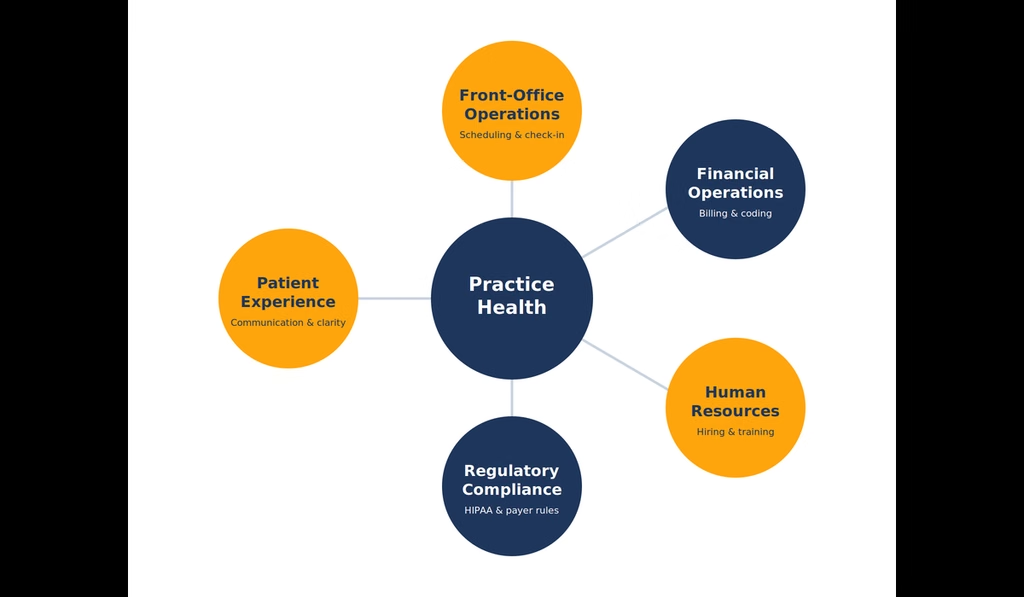
The five core functions of medical practice management work together to support overall practice health.
Why These Functions Cannot Operate in Isolation?
A practice where departments work in silos almost always underperforms, even if each department looks fine on paper. The billing team might be excellent, but if the front desk is not verifying insurance eligibility before visits, denials will still pile up. Clinical documentation might be thorough, yet if coders were never trained on updated payer requirements, claims will still get rejected.
The strongest practices treat management as one connected system rather than a set of separate departments. A decision made in scheduling affects billing. A decision made in compliance affects staffing. Recognizing these connections is often the first step toward meaningfully better performance.
Building a Generous Approach to Practice Management
Following the Patient Journey
One of the clearest ways to evaluate practice management is to trace what a patient actually experiences, step by step. A patient discovers the practice, books an appointment, receives care, gets billed, and then either returns or does not. Every transition point in that sequence is a place where things can go right or wrong.
A confusing online scheduling tool loses patients before they ever arrive. A rushed intake process creates registration errors that surface weeks later as denied claims. An unclear bill, arriving with no explanation or payment options, damages trust and reduces the odds of collection. Strong practice management for medical practices means paying close attention to each of these handoffs, not just the ones that are easiest to measure.
Key Metrics That Reveal Practice Health
Numbers tell a more honest story than instinct does. Tracking the right metrics consistently is one of the simplest ways to catch problems before they become expensive.
Practices should watch their clean claim rate, ideally above 95 percent, along with days in A/R, which healthy practices typically keep under 35 days. A first-pass claim acceptance rate below 90 percent usually signals a coding or eligibility problem worth investigating. Patient no-show rates, staff turnover, and patient satisfaction scores round out a fuller picture of operational health.
Benchmark Metrics for Medical Practice Management
| Metric | Healthy Benchmark | What It Signals |
| Clean Claim Rate | 95% or higher | Accuracy of registration, coding, and charge entry |
| Days in A/R | Under 35 days | Speed and consistency of collections |
| First-Pass Claim Acceptance | 90% or higher | Overall billing process efficiency |
| Denial Rate | Under 5% | Strength of eligibility checks and coding accuracy |
| Patient No-Show Rate | Under 10% | Effectiveness of scheduling and reminders |
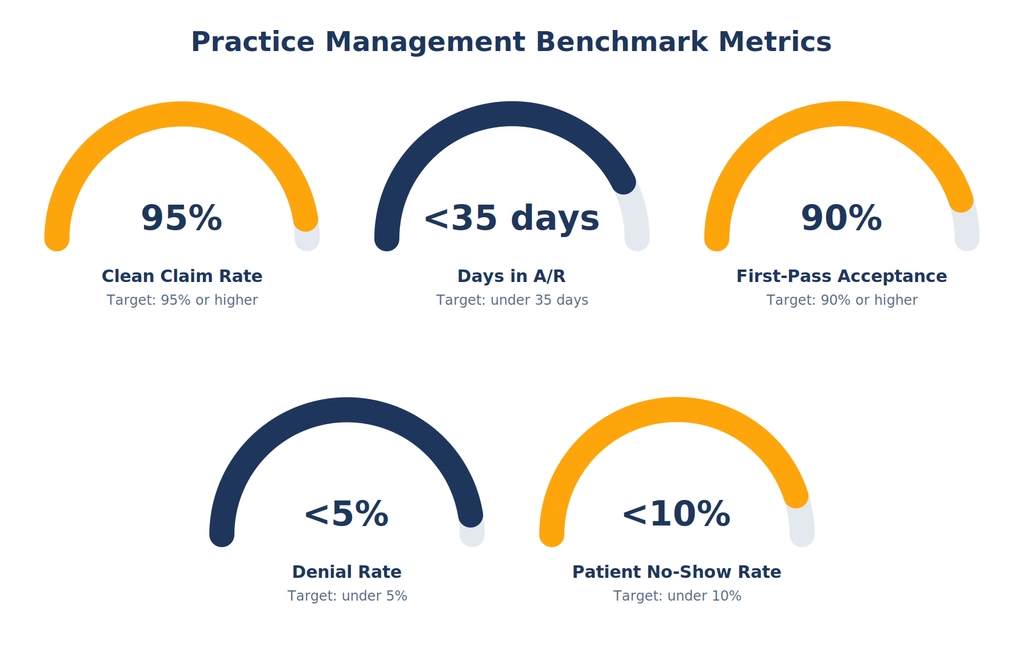
Key benchmark metrics that signal the health of a medical practice’s billing and operations.
Practice Management Software: What to Look For
Choosing software is one of the most consequential decisions a practice makes, yet it is often rushed. Before comparing platforms, it helps to get specific about what the practice actually needs rather than chasing every feature a vendor advertises.
Must-Have Capabilities
Start with how well a platform integrates with the practice’s electronic health record. Systems that do not communicate well with each other create duplicate data entry and reconciliation headaches that eat up staff time daily.
Beyond integration, prioritize scheduling flexibility, built-in billing and coding tools, real-time reporting, and room to scale as the practice grows. A platform that works well for five providers may buckle under the weight of twenty, so scalability deserves real consideration upfront.
Cloud-Based vs. On-Premise Systems
Cloud-based practice management systems have become the standard choice for most practices, largely because they offer lower upfront costs, automatic updates, and easier remote access for staff working across locations. On-premise systems still make sense for larger organizations with dedicated IT teams and specific data-control requirements, but they represent a shrinking share of new installations.
Questions Worth Asking Before Signing a Contract
No software solves management problems by itself. Implementation quality, staff training, and ongoing support usually matter more than the feature list. Before committing to any vendor, it is worth asking direct questions about support responsiveness, data migration plans, and what happens if a key contact leaves the vendor’s team partway through onboarding.
A thoughtful evaluation process here saves months of frustration later. The right software should reduce administrative friction, not simply relocate it.
Revenue Cycle Management for Medical Practices
Revenue cycle management is the financial engine of any practice. It is the process that turns clinical work into collected revenue, and when it runs smoothly, cash flow becomes predictable rather than a source of constant stress.
Where Revenue Typically Leaks?
Most practices lose more revenue than they realize, often without a clear picture of where it is going. Common culprits include skipped or rushed eligibility and benefits verification, services performed but never captured on a claim, coding errors, claims submitted without proper scrubbing, and denials that simply never get worked.
None of these issues are dramatic on their own. Together, they add up to a meaningful percentage of lost revenue every single month.
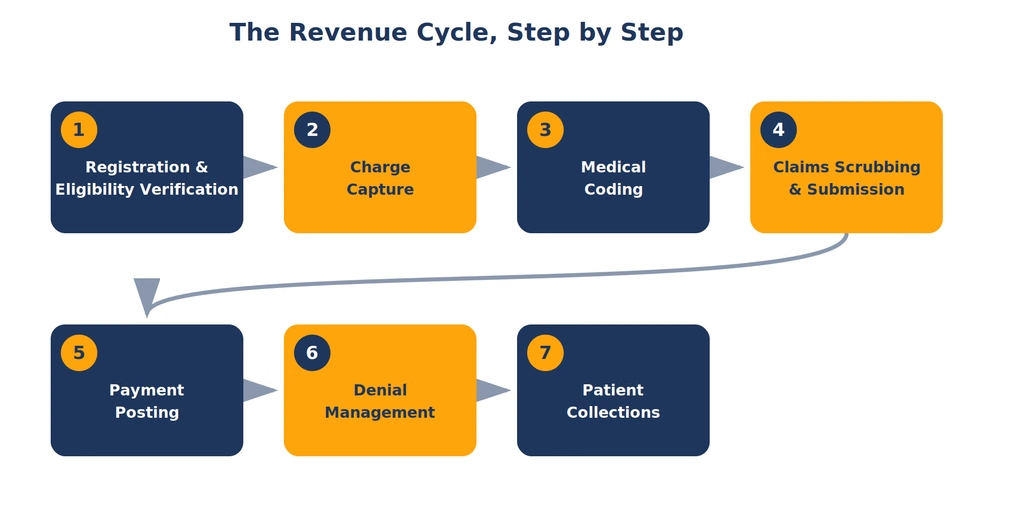
The Revenue Cycle, Step by Step
Patient registration and eligibility verification should happen well before the appointment, not while the patient waits at the front desk. Confirming coverage in advance prevents a large share of downstream denials.
Charge capture ensures every service performed gets recorded and billed. A missed charge, even a small one, represents revenue that is simply gone once the visit ends.
Medical coding translates clinical documentation into billable codes. This step requires trained coders who understand current payer rules, since undercoding leaves money unclaimed while overcoding invites compliance risk.
Claims scrubbing and submission catch errors, missing modifiers, and mismatched codes before a claim ever reaches the payer, protecting the practice’s clean claim rate.
Payment posting records what actually comes in, flagging underpayments and discrepancies early rather than letting them hide in the numbers.
Denial management works every rejected claim systematically, correcting root causes and filing appeals within payer deadlines.
Patient collections wrap up the cycle, and with patient financial responsibility rising steadily, clear statements and flexible payment options matter more than ever.
In-House vs. Outsourced Revenue Cycle Management
Keeping revenue cycle management in-house offers direct oversight and immediate visibility into every step of the process. It also demands trained staff, consistent oversight, and ongoing investment in billing technology, resources that smaller practices do not always have to spare.
Outsourcing revenue cycle management to a specialized partner like Zmed Solutions brings dedicated expertise, particularly around denial management and payer-specific billing rules, often at a lower overall cost than maintaining an equivalent in-house team. The tradeoff is less day-to-day control, which is why clear reporting and defined accountability matter so much in any outsourcing relationship.
Many practices land somewhere in between, keeping charge capture in-house while handing off denial management or credentialing to an outside partner who specializes in exactly that work.
Provider Credentialing: The Often-Overlooked Revenue Driver
Credentialing rarely gets the attention it deserves until it causes a problem, and by then, the cost is already mounting. A provider who has not completed payer credentialing cannot bill that payer for care delivered, no matter how skilled or busy they are.
Credentialing vs. Provider Enrollment
These two terms get used interchangeably, but they describe different steps. Credentialing verifies a provider’s education, training, licensure, and malpractice history against primary sources. Provider enrollment registers that already-credentialed provider with a specific payer so billing can actually begin.
Avoiding Costly Credentialing Delays
New provider credentialing should start 90 to 120 days before their expected start date, not the week before. Keeping CAQH profiles current, organizing documentation early, and following up proactively with payers rather than waiting passively all shrink the window where a new hire is seeing patients but generating no reimbursement.
Re-credentialing deserves the same attention. Licenses and certifications expire on their own timelines, and a lapsed credential can quietly interrupt billing for weeks before anyone notices the pattern in the numbers.
When to Bring In a Practice Management Consultant?
Certain warning signs suggest it may be time to bring in outside expertise. Collections that decline despite steady or growing patient volume. Staff turnover that keeps climbing without an obvious cause. A compliance gap that feels bigger than internal resources can handle. Rapid growth that has outpaced the practice’s existing systems.
What a Consultant Brings to the Table?
A skilled consultant looks at how a practice actually functions day to day, not how leadership assumes it functions, and identifies the gap between the two. That process might involve a financial review, a workflow audit, or a deep look at compliance exposure.
The real value lies in outside perspective. Patterns that are invisible from inside daily operations often become obvious to someone examining the practice fresh, without years of accumulated assumptions clouding the view.
Specialty-Specific Considerations in Practice Management
General principles apply broadly, but the details shift significantly depending on specialty. A cardiology practice manages device clinics and MIPS reporting. An orthopedic practice deals heavily with implant billing and workers’ compensation claims. A gastroenterology practice lives and dies by colonoscopy scheduling efficiency and the preventive-versus-diagnostic coding distinction.
Recognizing these nuances matters because a generic approach to medical revenue cycle management services rarely captures the specific coding rules, documentation requirements, and payer quirks that define each specialty. Practices benefit most when their billing and operational partners understand these differences rather than applying one uniform playbook everywhere.
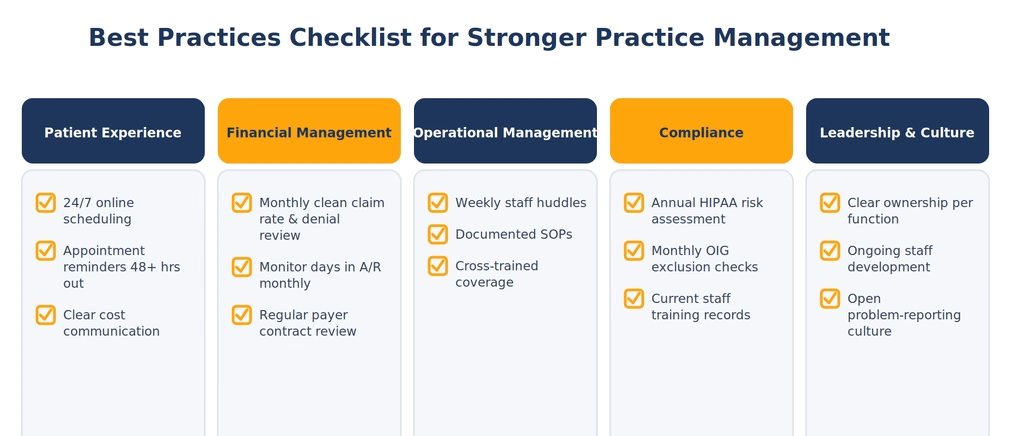
Best Practices Checklist for Stronger Practice Management
Patient Experience
Offer online scheduling around the clock, send automated appointment reminders at least 48 hours out, and communicate expected costs clearly before the visit happens.
Financial Management
Review clean claim rate, denial trends, and days in A/R monthly, not quarterly. Revisit payer contracts on a regular cycle to confirm fee schedules still reflect current market rates.
Operational Management
Hold brief weekly staff huddles to surface problems early. Document standard operating procedures for recurring administrative tasks so knowledge does not live only in one person’s head.
Compliance
Conduct annual HIPAA risk assessments, run monthly OIG exclusion checks, and keep training records current for every employee.
Leadership and Culture
Assign clear ownership for each management function, invest consistently in staff development, and build an environment where employees feel comfortable flagging problems early rather than letting them fester.
How Zmed Solutions Supports Complete Practice Management?
At Zmed Solutions, practice management support is built around the idea that clinical, financial, and operational functions should work as one connected system rather than separate silos. Our team helps practices strengthen every stage of the patient and revenue lifecycle, from front-desk registration through final collections.
We combine experienced billing specialists, dedicated credentialing coordinators, and modern reporting tools to help practices reduce denials, shorten days in A/R, and keep compliance risk under control. Whether a practice needs full revenue cycle management outsourcing or targeted support in one area like credentialing or denial management, our approach adapts to what the practice actually needs rather than pushing a one-size-fits-all package.
Frequently Asked Questions
What does medical practice management actually include?
Medical practice management covers scheduling, billing, staffing, compliance, and patient experience. It is the combination of systems that keep a healthcare practice running smoothly outside of direct clinical care.
How is practice management different from revenue cycle management?
Practice management is the broader operational function, while revenue cycle management is one specific piece of it, focused on turning clinical services into collected payment through billing, coding, and collections.
What is a healthy clean claim rate for a medical practice?
Most well-run practices aim for a clean claim rate of 95 percent or higher, meaning the large majority of claims are accepted by payers without errors on the first submission.
Why does provider credentialing take so long?
Provider credentialing involves verifying education, licensure, and malpractice history directly with issuing institutions, then enrolling the provider with each individual payer. This process typically takes 90 to 120 days when started early.
When should a practice consider outsourcing its revenue cycle management?
Practices often benefit from outsourced revenue cycle management when denial rates climb, in-house staff lack specialized billing expertise, or growth has outpaced the practice’s current administrative capacity.
Final Thoughts
Strong medical practice management is not a single fix or a single software purchase. It is the ongoing coordination of scheduling, billing, staffing, and compliance, all working together so that clinical care and financial health support each other instead of pulling in opposite directions.
Practices that invest in clear systems, track the right metrics, and know when to bring in specialized outside support consistently perform better than those that let each department operate on its own. Whether that means upgrading practice management software, tightening up revenue cycle management, or fixing gaps in provider credentialing, small structural improvements tend to compound into meaningful financial results over time.
Key Market Player
Ready to optimize your medical billing and boost your revenue? Look no further. Zmed Solutions LLC is your trusted partner in professional Medical Billing Services.
Join our growing network of healthcare providers who have already elevated their revenue with our expert services. Don't miss out on what could be your practice's most profitable decision.
Schedule a Consultation Today!
Contact Us Now, and experience the difference. Your financial success starts here!