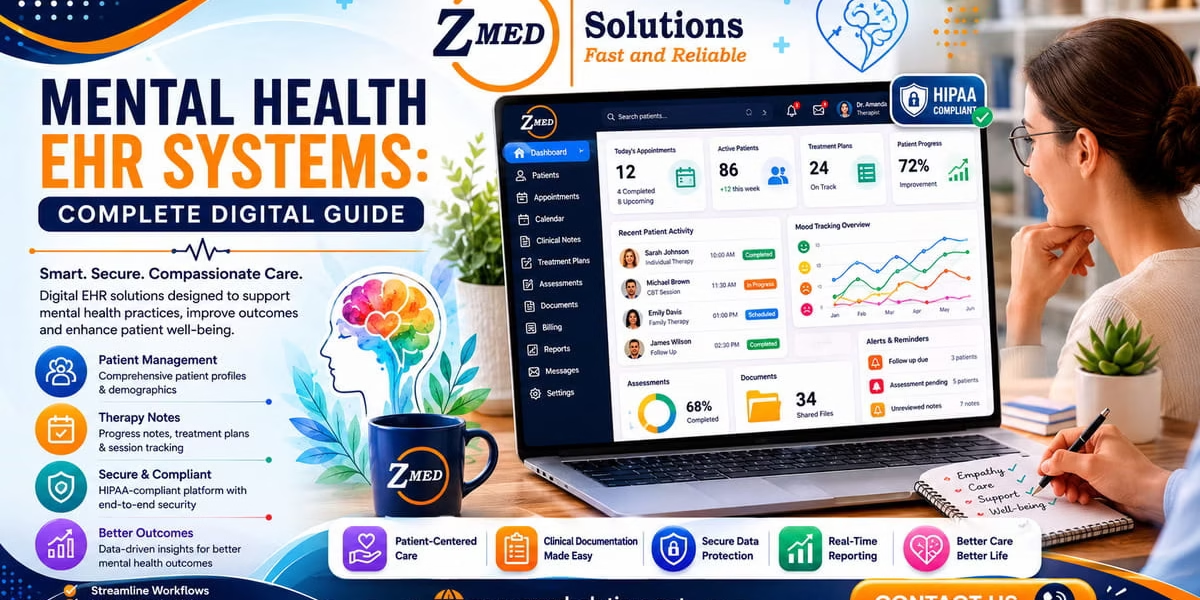
Mental health EHR (Electronic Health Record) systems are specialized healthcare IT platforms designed specifically for behavioral health providers. These integrated solutions combine therapy session notes management, psychiatric assessment tools, treatment planning software, and secure patient confidentiality features. Modern mental health EHR platforms provide HIPAA-compliant mental health records storage, clinical decision support, and seamless appointment scheduling. They enable therapists, counselors, and psychiatrists to streamline documentation while maintaining the highest standards of patient privacy and data security.
The mental healthcare landscape is experiencing unprecedented digital transformation. Mental health EHR systems have become indispensable tools for behavioral health providers. These specialized platforms revolutionize how clinicians document, organize, and manage patient information. Traditional paper-based systems create inefficiencies, security vulnerabilities, and compliance challenges. Modern behavioral health EHR systems address these limitations comprehensively.
Healthcare organizations increasingly recognize that mental health records require specialized solutions. Generic healthcare IT platforms don’t address unique therapy documentation needs. Mental health practice management software designed specifically for behavioral health providers offers superior functionality. These platforms integrate therapy session notes, psychiatric assessments, and treatment planning seamlessly. Organizations adopting advanced digital mental health records systems report significant improvements in clinical outcomes and operational efficiency.
The transition to integrated behavioral health EHR platforms represents a fundamental shift in mental healthcare delivery. Providers gain real-time access to complete patient histories. Decision-making becomes faster and more informed. Patient care quality improves substantially. Simultaneously, administrative burdens decrease dramatically across therapeutic practices.
Optimizing revenue cycle performance is one of the most critical, complex and challenges facing healthcare practices today. Zmed Solutions delivers end-to-end medical billing solutions designed to reduce claim denials, accelerate reimbursements and strengthen your practice’s financial foundation. Learn more about who we are and explore our full range of specialized billing services.
Understanding Mental Health EHR Technology
What Defines Modern Mental Health EHR Systems?
Mental health EHR systems represent purpose-built digital solutions for behavioral health providers. Unlike general medical EHRs, these platforms address unique clinical documentation requirements. Mental health providers need specialized tools for therapy session notes management. They require systems supporting diverse treatment modalities and therapeutic approaches.
Psychiatric EHR platforms must accommodate varied assessment frameworks and diagnostic tools. Clinicians use multiple standardized instruments throughout treatment journeys. The system must support flexible documentation structures. Traditional medical record templates insufficient for mental health documentation complexity. Behavioral health EHR systems offer customizable templates addressing this need.
Cloud-based mental health EHR solutions deliver accessibility advantages to distributed practices. Therapists access patient records from any secure location. Teletherapy providers manage sessions and documentation seamlessly. Staff members collaborate efficiently regardless of physical location. Cloud infrastructure ensures continuous availability and automatic backup protection.
Security considerations distinguish HIPAA-compliant mental health records systems from standard solutions. Mental health data requires heightened confidentiality protections. Patients seek assurance their sensitive behavioral information remains completely protected. Regulatory requirements demand robust encryption and access controls. Leading platforms implement military-grade security standards exceeding baseline HIPAA requirements.
Core Technology Components
Mental health records software comprises several integrated technology layers. Patient management systems form the foundation. These track scheduling, demographics, insurance information, and contact details. Communication tools enable secure messaging between providers and patients. Document management systems organize clinical notes, assessments, and treatment plans.
Behavioral health documentation systems capture detailed clinical encounters. Providers document therapy sessions using structured or narrative formats. The system generates progress notes automatically from clinical assessments. Treatment goals and objective measurements track patient improvement systematically. Integration with outcome measurement tools demonstrates clinical effectiveness.
Clinical decision support for mental health functions guide provider decision-making. The system flags potential drug interactions and contraindications. Evidence-based treatment recommendations appear contextually during documentation. Risk assessment tools evaluate suicide and danger to others indicators. Care coordination features ensure appropriate emergency notification and safety planning.
Data analytics capabilities distinguish advanced mental health informatics platforms. Providers access real-time dashboards showing patient progress metrics. Aggregate reporting demonstrates treatment effectiveness across populations. Billing data integration tracks revenue and payer performance. These analytics drive continuous improvement in clinical and business operations.
Essential Features of Modern Behavioral Health EHR
Therapy Session Notes and Clinical Documentation
Therapy session notes represent the foundation of behavioral health documentation. Modern systems provide flexible templates accommodating diverse therapeutic modalities. Cognitive-behavioral therapy documentation differs from psychodynamic approaches. Dialectical behavior therapy requires specific tracking mechanisms. Psychotherapy records management systems adapt to practitioner preferences and theoretical orientations.
Providers document session content, client progress, and treatment plan adjustments efficiently. Structured data fields enable outcome measurement and progress tracking. Narrative sections allow clinical richness and nuance. Templates guide comprehensive documentation while preserving clinical flexibility. Voice-to-text capabilities accelerate documentation processes significantly.
Mental health progress tracking integrates with clinical notes seamlessly. Measurement-based care becomes standard practice with proper tools. Providers track symptom severity, functional improvement, and goal achievement quantitatively. Clients view their progress graphically through patient portals. This transparency enhances motivation and therapeutic alliance.
Assessment and Diagnostic Tools
Psychiatric assessment tools streamline diagnostic evaluation processes. Standardized instruments become readily available within clinical workflows. Providers administer validated screening tools during appointments. The system scores assessments automatically and generates interpretive reports. Results integrate directly into treatment planning and progress monitoring.
Depression, anxiety, trauma, and substance use screening instruments appear contextually. Behavioral health EHR systems include libraries of evidence-based assessment tools. Providers customize which instruments appear for different patient populations. Automated scoring eliminates calculation errors and saves documentation time. Historical comparisons reveal treatment response trajectories clearly.
Risk assessment functionality evaluates suicide, self-harm, and danger to others indicators. The system prompts providers regarding safety evaluation completion. Red flags trigger alerts ensuring appropriate clinical response. Documentation of risk assessment and safety planning becomes systematic. Crisis mental health documentation captures detailed emergency response information.
Treatment Planning and Goal Setting
Treatment planning software enables collaborative goal-setting between providers and clients. Specific, measurable, achievable, relevant, and time-bound objectives structure treatment. The system tracks progress toward each treatment goal quantitatively. Progress notes reference specific goals, maintaining treatment focus and direction.
Mental health appointment scheduling integrates seamlessly with treatment plans. The system suggests appointment frequency based on clinical indicators. Providers identify which appointments address specific treatment goals. Cancellation patterns trigger alerts regarding engagement concerns. Documentation of no-shows and cancellations informs clinical decision-making.
Medication management integration documents psychiatric medications and monitoring. Side effect tracking prevents adverse outcomes. Drug interaction checking with psychiatric comorbidity considerations occurs automatically. Providers maintain detailed medication histories and adjustment rationales. Lab value monitoring supports safe psychopharmacology practice.
Specialized Applications for Different Mental Health Settings
Counseling Practice EHR Solutions
Independent counseling practices require streamlined counseling practice EHR solutions. Psychology practice management combines scheduling, billing, and clinical documentation. Therapists manage caseloads efficiently using therapist software designed for small practices. Many counselors operate with minimal administrative support requiring intuitive interfaces.
Therapist software includes client relationship management features. Patient portals enable appointment booking and secure messaging. Automated appointment reminders reduce no-show rates significantly. Intake form completion occurs online before first appointments. Electronic consent forms collect required authorizations efficiently.
Billing integration streamlines revenue processes for independent practitioners. Superbill generation occurs automatically from clinical documentation. Insurance verification ensures claim accuracy before submission. Payment posting occurs efficiently reducing accounts receivable cycles. Profit and loss reporting provides practice financial visibility.
Psychiatrist EHR and Psychopharmacology
Psychiatrist EHR platforms accommodate medication-focused clinical practices. Psychiatric EHR platforms include comprehensive psychopharmacology modules. Medication prescribing occurs within secure, structured workflows. Dosage recommendations align with evidence-based guidelines. Drug interactions receive automatic verification preventing adverse events.
Psychiatric practitioners maintain detailed medication histories documenting changes. Side effect profiles inform medication selection decisions. Patient response monitoring occurs systematically through measurement-based care. Lab monitoring for medications requiring regular testing occurs automatically. Consultation documentation captures specialist input on complex cases.
Substance Abuse Treatment Documentation
Substance abuse treatment records require specialized documentation approaches. Treatment programs track intake assessments, drug screening results, and addiction severity ratings. Group therapy attendance documentation occurs efficiently. Individual counseling session notes address addiction-specific content areas. Progress monitoring tracks abstinence, relapse episodes, and recovery milestones.
Medication-assisted treatment programs document methadone or buprenorphine dosing. Urine drug screen results integrate directly into patient records. Behavioral interventions receive detailed documentation. Discharge planning captures aftercare recommendations and community resource referrals. Recovery support services documentation ensures comprehensive wraparound care.
Teletherapy EHR Integration
Teletherapy EHR platform functionality supports remote behavioral health delivery. Video conferencing integrates directly within clinical documentation systems. Session recording occurs with appropriate consent and privacy protections. Virtual waiting rooms manage appointment flow efficiently. Technical troubleshooting documentation captures connectivity issues affecting care.
Remote providers access complete patient information from any location. Prescription transmission occurs securely to pharmacies. Secure messaging maintains therapeutic relationships between sessions. Virtual whiteboard features enable interactive treatment interventions. Phone session documentation captures audio-only therapeutic encounters.
Group Therapy and Crisis Services
Group therapy software tracks attendance and individual participant progress. Providers document group content themes and individual interactions. Attendance records inform treatment plan adjustments and billing. Individual progress notes capture each participant’s response to group interventions.
Crisis mental health documentation captures emergency evaluations and safety planning. Providers document suicidal ideation assessments and imminent danger determinations. Emergency contacts receive notification when safety concerns arise. Crisis stabilization measures receive detailed documentation. Hospitalization or referral information becomes part of permanent records.
Compliance, Security, and Data Protection
HIPAA Compliance Framework
HIPAA-compliant mental health records systems implement comprehensive privacy protections. Mental health data sensitivity requires enhanced privacy safeguards. Secure therapy documentation maintains patient confidentiality throughout system lifecycles. Access controls limit information availability to authorized personnel only. Audit trails document every record access for compliance verification.
Administrative safeguards protect system security through policies and procedures. Physical safeguards secure servers and equipment against unauthorized access. Technical safeguards encrypt data in transit and at rest. Breach notification procedures activate immediately when security incidents occur. Regular risk assessments identify and remediate vulnerabilities proactively.
Patient Confidentiality and Privacy
Patient confidentiality EHR systems exceed minimum HIPAA requirements. Granular access controls specify exactly which providers access which patient information. Patients authorize specific information disclosures to family members and other providers. Mental health data security becomes top organizational priority. Encryption keys remain strictly separated from protected health information.
Privacy impact assessments precede technology implementations. Staff training ensures understanding of confidentiality obligations. Consequences for unauthorized access include termination and legal action. Incident response plans address breaches systematically and transparently. Third-party vendors sign business associate agreements ensuring compliance.
Data Encryption and Security Measures
Encrypted patient records employ advanced cryptographic standards. Data encryption occurs at rest using AES-256 standards. Transmission encryption uses TLS 1.2 or higher protocols. End-to-end encryption protects sensitive communications between providers and patients. Encryption key management follows industry best practices strictly.
Multi-factor authentication prevents unauthorized system access. Password complexity requirements exceed standards. Session timeouts prevent unattended access to patient information. Single sign-on reduces password management burdens while enhancing security. Biometric authentication adds additional security layers for mobile access.
Intrusion detection systems monitor for suspicious network activity. Vulnerability scanning identifies potential security weaknesses regularly. Penetration testing simulates attacks revealing security gaps. Regular security updates patch identified vulnerabilities promptly. Disaster recovery systems ensure data availability following catastrophic events.
Selecting Mental Health Technology Solutions
Evaluation Criteria and Selection Process
Organizations selecting behavioral health documentation systems must evaluate multiple vendors. Functionality assessment reviews clinical features thoroughly. Mental health records software must support organization-specific workflows. User interface intuitiveness affects staff adoption rates significantly. Mobile access capabilities support teletherapy and remote work.
Integration capabilities determine whether new systems work with existing infrastructure. Interoperability with pharmacy systems, hospitals, and other providers enhances care coordination. API availability enables custom integrations addressing unique requirements. Data portability ensures information accessibility throughout patient care journeys.
Cost analysis compares licensing, implementation, training, and support expenses. Subscription models provide predictable expenses versus perpetual licensing. Implementation timelines affect disruption and opportunity costs. Vendor stability and financial health affect long-term viability. Reference calls with similar organizations reveal actual performance.
Vendor Comparison and Implementation Partnership
Comprehensive vendor evaluation prevents costly implementation mistakes. Feature comparison matrices document functionality across candidates. Demonstrations reveal user interface design and workflow alignment. Trial periods enable staff feedback on real-world effectiveness. Contract negotiations address concerns and establish clear expectations.
Implementation partnerships require clear communication and defined responsibilities. Project timelines specify milestones and deliverables. Change management support addresses organizational adoption challenges. Training program quality affects ultimate success. Post-implementation support sustains success beyond go-live.
Future Trends in Mental Health Technology
Artificial Intelligence and Automation
Mental health technology increasingly incorporates artificial intelligence capabilities. Chatbots provide initial intake information collection and appointment scheduling. Symptom tracking automation collects data between therapy sessions. Natural language processing extracts relevant information from clinical notes. Predictive algorithms identify intervention opportunities and risk factors.
AI-assisted documentation accelerates the note-writing process. Voice recognition transcribes therapy session content automatically. Automated coding suggests appropriate diagnostic and procedure codes. Spell-check and grammar tools improve documentation quality. Template suggestions accelerate clinical note generation.
Integration and Interoperability Advancement
Healthcare IT for behavioral health increasingly emphasizes integrated care coordination. Behavioral health integration with primary care improves patient outcomes. Shared electronic health records enable comprehensive care understanding. Care coordination tools facilitate communication between providers. Reference laboratory results from medical providers inform mental health treatment.
Health information exchanges enable secure data sharing between organizations. Statewide and national HIE networks support emergency access to critical information. API standards enable seamless third-party application integration. FHIR standards enable consistent data formatting across systems.
Mobile-First and Patient Engagement
Mobile-first mental health informatics platforms enhance patient engagement. Patient portals enable appointment management and secure messaging. Symptom tracking apps collect real-time data. Medication reminder notifications improve medication adherence. Psychoeducational content delivers targeted information supporting treatment.
Wearable device integration enables continuous health monitoring. Heart rate variability tracking reveals stress responses. Sleep tracking identifies rest quality issues. Physical activity monitoring encourages healthy lifestyle changes. Integration with clinical systems incorporates objective data into treatment planning.
Success Stories and Best Practices
Real-World Implementation Examples
Organizations implementing integrated behavioral health EHR systems report significant benefits. Community mental health centers improved patient outcomes through clinical decision support for mental health. Measurement-based care implementation revealed treatment effectiveness. Provider satisfaction increased due to streamlined documentation.
Private therapy practices using therapist software reduced administrative burden significantly. Scheduling automation reduced scheduling staff positions. Automated billing increased revenue while reducing billing errors. Patient portals reduced front-office calls substantially. Staff productivity improvements enabled practice growth without hiring.
Psychiatric hospital systems implementing psychiatrist EHR platforms improved clinical safety. Medication interaction checking prevented adverse events. Suicide risk assessments became systematic and comprehensive. Crisis response documentation improved patient safety outcomes. Quality metrics demonstrated clinical effectiveness improvements.
Optimization Strategies
Organizations achieving maximum ROI from mental health practice management software follow specific strategies. Super-user development creates expert resources supporting staff. Ongoing training maintains skill levels and system knowledge. Workflow customization aligns systems with organization-specific processes. Change management addresses resistance proactively. Regular audits identify optimization opportunities.
Dashboard development provides visibility into performance metrics. Goal-setting based on data-driven insights drives improvement. Comparative benchmarking identifies performance gaps. Continuous process improvement becomes organizational culture. Recognition of high performers motivates excellence.
Addressing Common Implementation Challenges
Overcoming Resistance to Change
Staff resistance to new behavioral health EHR systems requires thoughtful change management. Involving stakeholders in selection processes increases buy-in. Training addresses concerns about workflow disruption. Success stories demonstrate benefits clearly. Ongoing support reduces frustration during transitions.
Leadership communication emphasizing benefits motivates adoption. Vision statements articulate long-term improvement goals. Quick wins celebrate early successes. Honest discussion of challenges builds credibility. Listening to concerns demonstrates respect and responsiveness.
Technical Integration Issues
Legacy system integration presents technical challenges. Data migration planning prevents information loss. Parallel system operation maintains continuity during transitions. Custom integration development addresses unique workflow needs. API standards enable third-party application integration.
Interoperability challenges require vendor collaboration. Health information exchange enablement requires planning. External data integration may require custom development. HL7 and FHIR standards facilitate data consistency. Technical support teams address integration issues systematically.
Cost Management and ROI
Implementation costs may exceed initial budgets. Comprehensive project planning identifies costs completely. Contingency reserves address unexpected expenses. Phased implementation spreads costs across budget cycles. ROI analysis demonstrates financial benefits over time.
Efficiency improvements reduce operational costs. Billing optimization increases revenue. Reduced staffing needs offset implementation expenses. Patient satisfaction improvements support retention. Outcome improvements support payer reimbursement optimization.
Frequently Asked Questions
What makes mental health EHR systems different from general medical EHR systems?
Answer: Mental health EHR systems include specialized features for behavioral health documentation. Therapy session notes require flexible formatting accommodating diverse therapeutic modalities. Psychiatric assessment tools integrated into workflows support standardized measurement. Clinical decision support for mental health addresses behavioral health-specific safety concerns. General medical EHRs lack these behavioral health specializations. Mental health-specific systems provide superior functionality for behavioral health providers.
How do mental health EHR systems ensure patient confidentiality and HIPAA compliance?
Answer: HIPAA-compliant mental health records systems implement multiple security layers. Encrypted patient records protect information using military-grade encryption. Multi-factor authentication prevents unauthorized access. Granular access controls limit information availability. Audit trails document every record access. Patient confidentiality EHR systems exceed HIPAA minimum requirements. Regular security audits and vulnerability scanning identify weaknesses. Staff training ensures confidentiality understanding. Breach response procedures activate immediately.
What are the main benefits of transitioning to cloud-based mental health EHR systems?
Answer: Cloud-based mental health EHR systems provide multiple advantages. Accessibility enables provider access from any location supporting teletherapy. Automatic backups protect against data loss. Scalability accommodates practice growth without infrastructure investment. Automatic updates maintain current functionality without IT burden. Reduced IT staffing needs decrease operational costs. Disaster recovery capabilities ensure business continuity. Remote work support enables flexible workforce arrangements. Providers experience immediate benefits without infrastructure management.
How long does mental health EHR implementation typically take?
Answer: Implementation timelines vary based on organizational size and complexity. Small counseling practice EHR implementations may complete in two to three months. Larger psychiatrist EHR or hospital system implementations may require six to twelve months. Phased approaches extend timelines but reduce disruption. Parallel operations maintain continuity during transitions. Data migration complexity affects overall timelines. Staff training requirements vary based on organization size. Planning comprehensively prevents delays and ensures smooth transitions.
What ROI should organizations expect from mental health EHR implementation?
Answer: Return on investment varies by organization type and implementation strategy. Administrative cost reduction typically occurs within first year. Billing optimization often generates revenue increases of 10-15%. Reduced staffing needs due to automation offset implementation expenses. Patient satisfaction improvements support retention and referral growth. Clinical outcome improvements may support payer reimbursement optimization. Quality metric improvements demonstrate effectiveness to stakeholders. Most organizations achieve cost recovery within 18-24 months. Long-term benefits continue accruing throughout system lifecycle.
Final Thoughts
The evolution of mental health EHR systems represents transformative progress for behavioral healthcare. Modern platforms combine clinical sophistication with operational efficiency. Psychiatric EHR platforms specifically designed for behavioral health deliver superior outcomes. Organizations transitioning to these solutions experience measurable improvements in clinical quality, staff satisfaction, and financial performance.
Mental health practice management software has become essential infrastructure for contemporary behavioral health practices. Whether independent therapist software operations, large psychiatrist EHR systems, or specialized substance abuse treatment records programs, purpose-built solutions drive success. Cloud-based mental health EHR technology enables geographic flexibility supporting teletherapy growth.
Implementation success requires careful planning, stakeholder engagement, and ongoing support. HIPAA-compliant mental health records protection builds patient trust essential for therapeutic relationships. Staff training and change management ensure adoption. Continuous improvement using mental health informatics analytics optimizes outcomes.
The future of behavioral healthcare belongs to organizations embracing digital mental health records transformation. Behavioral health documentation excellence supports clinical outcomes. Clinical decision support for mental health enhances decision-making. Encrypted patient records protection ensures confidentiality. Mental health technology advances continue accelerating.
Organizations considering healthcare IT for behavioral health solutions should prioritize selection carefully. Evaluate vendors thoroughly. Plan implementations comprehensively. Invest in staff training. Commit to ongoing improvement. The benefits justify the effort involved.
Mental health EHR adoption represents not merely technological change but paradigm shift in behavioral healthcare delivery. Patient-centered care improves measurably. Provider satisfaction increases significantly. Operational efficiency gains translate to financial sustainability. Clinical outcomes improve through systematic measurement and improvement. The transition to digital-first behavioral healthcare is not optional but essential for contemporary practice success.
Key Market Player
Ready to optimize your medical billing and boost your revenue? Look no further. Zmed Solutions LLC is your trusted partner in professional Medical Billing Services.
Join our growing network of healthcare providers who have already elevated their revenue with our expert services. Don't miss out on what could be your practice's most profitable decision.
Schedule a Consultation Today!
Contact Us Now, and experience the difference. Your financial success starts here!