
Patient acquisition is the process of attracting, engaging, and converting prospective patients into scheduled appointments for a medical practice. It combines digital marketing for medical practices, local outreach, and patient engagement strategies to build a steady, predictable pipeline of new patients while keeping the cost of acquisition sustainable.
Every medical practice depends on a consistent flow of new patients to stay financially healthy and clinically active. Yet many physicians and practice administrators still rely on outdated tactics, word-of-mouth alone, or scattered digital efforts that produce inconsistent results. Patient acquisition has become a structured discipline, blending healthcare marketing, technology, and patient experience into one connected system.
This guide breaks down what patient acquisition means, the most effective patient acquisition strategies for medical practices, how to build a repeatable acquisition funnel, and how to measure whether your investment is actually paying off. Whether you run a solo practice or a multi-location health system, the principles below apply directly to your growth plan.
Why Patient Acquisition Is a Top Priority for Every Practice?
Healthcare is more competitive than it has ever been, with patients comparing providers online before ever picking up the phone. A deliberate patient acquisition strategy gives practices control over their growth trajectory instead of leaving new patient volume to chance or seasonal fluctuation. Practices that plan ahead consistently outperform reactive competitors.
Rising patient acquisition costs across paid channels have also made efficiency more important than raw spend. Healthcare marketing strategies built around organic visibility, referrals, and retention tend to produce a lower blended cost per patient over time than paid advertising alone. This makes strategic planning, not just budget size, the real differentiator between practices that grow steadily and those that stall.
What Is Patient Acquisition?
Patient acquisition refers to every step a practice takes to turn a stranger into a booked, paying patient. It starts the moment someone searches for a provider online and ends when that person completes their first visit. The process sits at the intersection of healthcare marketing strategies, sales conversion, and operational readiness.
Unlike a one-time advertising campaign, patient acquisition is an ongoing system. It requires visibility, trust-building content, a frictionless scheduling process, and a front desk that can convert inquiries into confirmed appointments. Practices that treat it as a single tactic, rather than a full pipeline, usually see inconsistent patient volume.
Why Patient Acquisition Matters for Medical Practices?
Patient volume directly determines revenue, provider utilization, and long-term practice viability. A medical practice growth plan without a deliberate acquisition strategy leaves growth to chance. Practices that actively manage acquisition consistently outperform those relying solely on referrals.
Beyond revenue, acquisition strategy affects care access. Communities need visible, reachable providers. When a practice invests in new patient marketing, it is also closing gaps in local healthcare access. This makes acquisition both a business function and a public health contribution.
Three outcomes typically follow a structured acquisition strategy:
- Predictable, measurable new patient appointments each month
- Lower dependence on physician referrals alone
- Stronger brand recognition across the local service area
Patient Acquisition vs Patient Retention: What Is the Difference?
Patient acquisition brings new patients into the practice, while patient retention and acquisition together sustain long-term revenue. Acquisition focuses on first-time visits; retention focuses on repeat visits, adherence, and loyalty. Both functions rely on different metrics and different marketing tactics.
Confusing the two often leads practices to overspend on advertising while under-investing in the patient experience that keeps people coming back. A balanced strategy treats acquisition as the entry point and retention as the mechanism that protects the return on that initial investment.
| Function | Primary Goal | Key Metric | Typical Channel |
| Patient Acquisition | Convert prospects into first-time patients | Cost per new patient | SEO, PPC, referrals |
| Patient Retention | Keep existing patients engaged | Patient lifetime value | Email, portals, reminders |
What Are the Most Effective Patient Acquisition Strategies for Medical Practices?
Effective patient acquisition strategies for medical practices combine digital visibility with local trust-building. No single channel works in isolation; instead, practices layer multiple tactics so prospective patients encounter the brand repeatedly before booking. This repetition builds the confidence needed for a healthcare decision.
The strategies below fall into two broad categories: digital-first tactics that scale across a wide audience, and local, relationship-driven tactics that build community trust. Most successful practices use a blend of both, adjusted for specialty, budget, and competitive market.
Digital Patient Acquisition Strategies
Online patient acquisition now accounts for the majority of new patient discovery, since most patients begin their provider search on a search engine or social platform. A strong digital presence is no longer optional for medical practice marketing; it is the primary entry point for new patient relationships.
Search Engine Optimization for Medical Practices
Local healthcare marketing starts with ranking for the searches patients actually run, such as “doctor near me” or condition-specific queries. Optimizing your website, Google Business Profile, and location pages improves visibility precisely when intent is highest. This is one of the most cost-efficient patient acquisition methods available long term.
Search visibility compounds over time, unlike paid ads that stop the moment spend stops. Practices that consistently publish accurate, helpful content tend to outrank competitors who rely only on paid promotion.
Pay-Per-Click and Paid Social Advertising
Paid search and social ads deliver faster results than organic SEO, making them useful for filling appointment gaps or launching a new service line. Healthcare lead generation campaigns on Google Ads and Meta platforms can target by location, condition, insurance type, and demographics. Paid channels work best alongside, not instead of, organic strategy.
Budget discipline matters here. Without conversion tracking, paid campaigns can drain spend on clicks that never convert into booked visits. Pairing ad campaigns with a clear patient conversion strategies framework ensures every dollar is measured against actual appointments, not just traffic.
Content Marketing and Patient Education
Educational content, such as symptom guides, treatment explainers, and FAQ pages, builds authority while answering the exact questions prospective patients are searching for. This approach supports both new patient acquisition and long-term SEO performance. Content marketing also positions physicians as trusted authorities within their specialty.
Well-structured content earns featured snippets, voice search results, and repeat organic traffic. Practices that publish consistently, even a single well-optimized article per month, typically see measurable increases in organic new-patient inquiries within two to three quarters.
Online Reviews and Reputation Management
Patient reviews function as digital word-of-mouth, directly influencing patient conversion strategies at the decision stage. Most patients read reviews before booking, and star ratings influence both click-through rates and map-pack rankings. Reputation management is therefore a core piece of any acquisition plan, not an afterthought.
A simple, automated review request sent after each visit meaningfully increases review volume over time. Responding to reviews, positive and negative, also signals active practice management to prospective patients browsing your profile.
Traditional and Local Patient Acquisition Strategies
Digital channels dominate discovery, but local healthcare marketing still relies on community presence and relationships. These traditional methods build trust that digital ads alone cannot replicate, particularly for family medicine, pediatrics, and other community-anchored specialties.
Physician and Community Referral Networks
Referral relationships with other physicians remain one of the highest-converting patient acquisition methods, since a peer recommendation carries built-in trust. Structured referral programs, including easy-to-use referral forms and prompt communication back to referring providers, strengthen these partnerships over time.
Community partnerships extend this same principle outward. Health fairs, employer wellness programs, and local sponsorships put the practice name in front of residents who may not yet be searching online, seeding future demand.
Patient Referral and Loyalty Programs
Existing patients are a practice’s most credible marketing channel. A structured referral program, paired with patient engagement strategies like follow-up messaging, encourages satisfied patients to recommend the practice to friends and family. This channel typically produces the lowest cost per new patient of any strategy.
Simple incentives, such as small discounts on future services or charitable donations made on the patient’s behalf, tend to outperform aggressive cash incentives, which can feel transactional in a healthcare context.
How Specialty Affects Patient Acquisition Strategy?
Not every specialty acquires patients the same way. Primary care and pediatrics tend to rely heavily on local healthcare marketing, insurance panel visibility, and family referrals, since patients often choose a provider for long-term, ongoing care. Elective and cosmetic specialties, by contrast, often see stronger results from paid social advertising and before-and-after content that builds visual trust.
Specialists who receive most of their volume through physician referrals still benefit from a direct-to-patient acquisition layer. Patients increasingly research a specialist independently, even after a referral, and a weak online presence can cause them to seek a second opinion elsewhere. Blending referral relationships with strong online patient acquisition fundamentals protects against this leakage.
How Do You Build a Patient Acquisition Marketing Funnel?
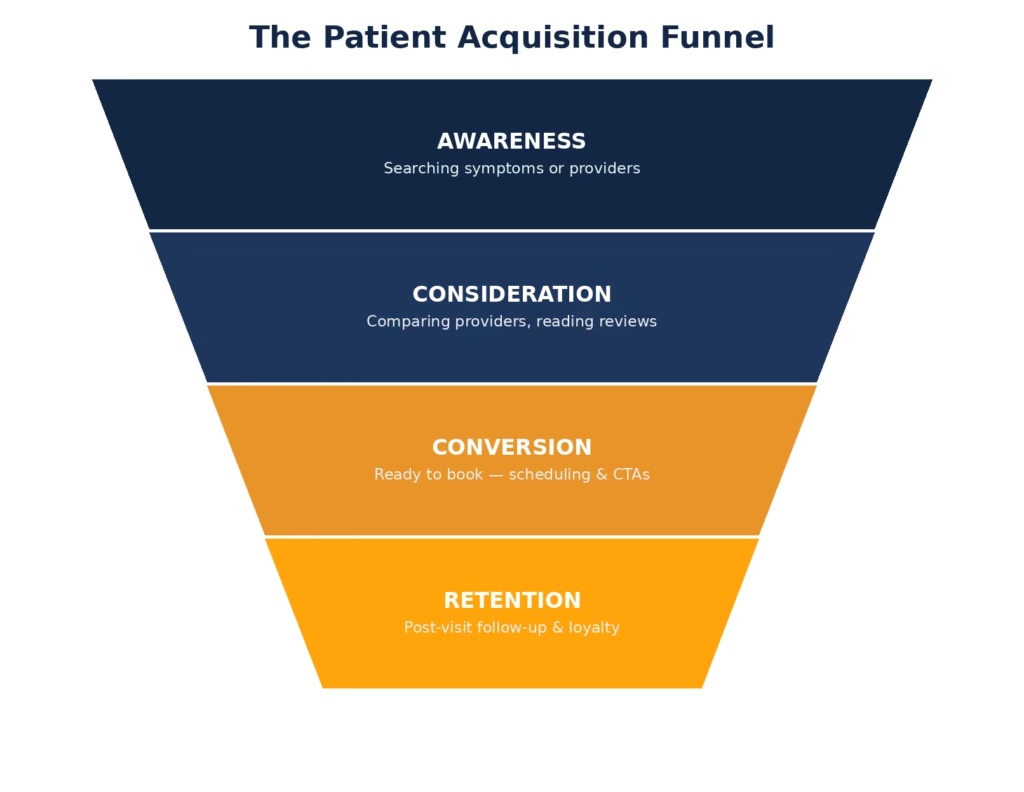
A patient acquisition funnel maps the journey from first awareness to a completed appointment. Structuring this journey helps practices identify exactly where prospective patients drop off, so marketing spend can be redirected toward the stages that need the most support. This is central to any serious patient acquisition marketing plan.
The funnel typically includes four stages: awareness, consideration, conversion, and retention. Each stage requires different content and different calls to action, and treating them identically is a common reason acquisition campaigns underperform.
| Funnel Stage | Patient Behavior | Practice Action | Example Channel |
| Awareness | Searching symptoms or providers | Educational content, SEO | Blog, Google Search |
| Consideration | Comparing providers | Reviews, service pages | Website, reviews |
| Conversion | Ready to book | Easy scheduling, clear CTAs | Online booking, phone |
| Retention | Post-visit follow-up | Reminders, education | Email, patient portal |
Awareness Stage: Building Visibility
At the awareness stage, prospective patients are researching symptoms or general health topics rather than a specific provider. Healthcare lead generation at this stage depends on ranking for informational search queries and showing up consistently on social platforms. The goal is visibility, not an immediate booking.
Content here should answer broad questions clearly and link naturally toward more specific service pages. This gradual guidance keeps the funnel moving without pushing an appointment before the prospective patient is ready.
Consideration Stage: Building Trust
Once a prospective patient narrows their search to specific providers, trust signals become the deciding factor. Reviews, physician bios, credentials, and clear service descriptions all support patient conversion strategies at this stage. This is where attract new patients efforts either succeed or lose the prospect to a competitor.
Website clarity matters enormously here. A confusing navigation structure or missing insurance information can cause a prospective patient to abandon the search entirely, even after finding the practice through strong SEO work.
Conversion Stage: Removing Booking Friction
The conversion stage is where interest becomes a scheduled visit. Removing friction, through online scheduling, live chat, or fast phone response, directly increases the percentage of visitors who become patients. Practices focused on increase new patient appointments should audit this step first, since even excellent marketing fails if booking is difficult.
Response time is critical. Studies on healthcare lead response consistently show that practices responding within minutes convert significantly more inquiries than those responding hours later.
Retention Stage: Turning New Patients Into Long-Term Relationships
The funnel does not end at booking. The retention stage determines whether a new patient becomes a long-term, recurring source of revenue and referrals. Follow-up communication, satisfaction surveys, and proactive scheduling for future visits all reinforce the relationship built during onboarding.
Practices that treat the first visit as the finish line miss significant long-term value. A structured post-visit sequence, even a simple thank-you message paired with a review request, meaningfully increases both retention and future referral volume from that same patient.
What Digital Marketing Tactics Increase New Patient Appointments?
Practices looking to increase new patient appointments should prioritize tactics with measurable, trackable outcomes rather than broad brand awareness alone. The following tactics directly influence appointment volume and are commonly used across our clients’ medical practice marketing programs.
Website Optimization for Conversions
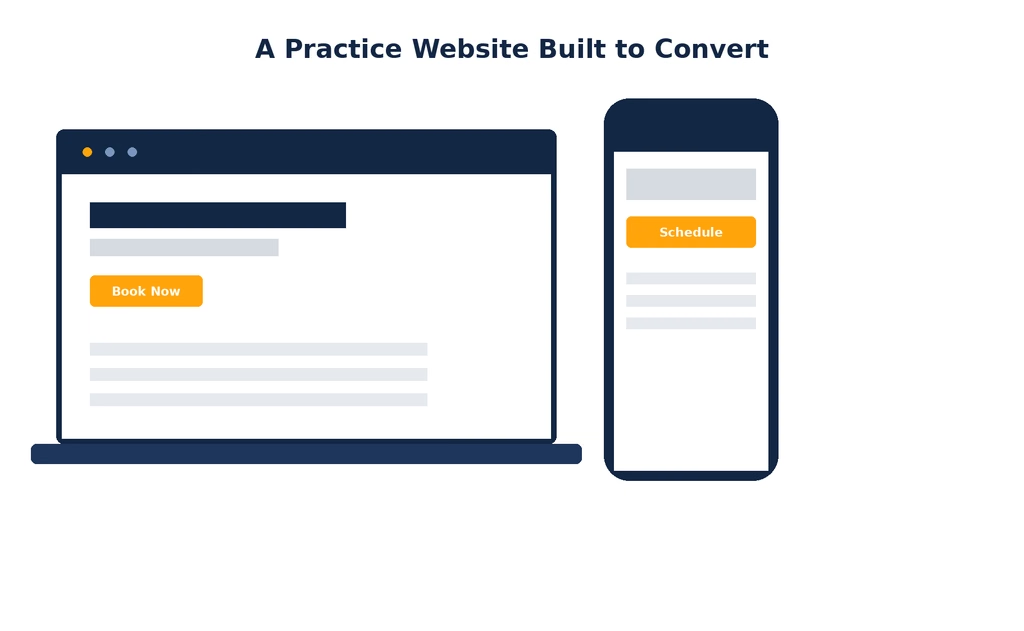
A practice website should function as a 24/7 acquisition tool, not a static brochure. Fast load times, mobile responsiveness, and clear calls to action all influence whether a visitor books an appointment. Every service page should answer what the condition is, how it’s treated, and how to schedule, in that order.
Trust elements such as physician credentials, insurance logos, and patient testimonials should appear near booking buttons. This proximity reduces hesitation at the exact moment a decision is being made.
Local SEO and Google Business Profile Optimization
Local healthcare marketing hinges on an optimized Google Business Profile, since it appears prominently in local search and map results. Accurate hours, categories, photos, and regularly updated posts all improve visibility for “near me” searches, which carry strong booking intent.
Consistency across directories, insurance panels, and review platforms also strengthens local rankings. Inconsistent name, address, or phone data across the web is one of the more overlooked barriers to strong local SEO performance.
Online Scheduling and Telehealth Access
Offering online patient acquisition tools like self-scheduling removes a major barrier for patients who prefer not to call during business hours. Telehealth options further expand reach to patients who might otherwise choose a more accessible competitor. Both tactics directly support patient growth strategies by widening the practical entry points into care.
Email and SMS Nurture Campaigns
Not every website visitor books immediately. Capturing contact information through a newsletter signup or symptom checker allows practices to nurture prospective patients with follow-up content until they’re ready to schedule. This approach supports healthcare customer acquisition without relying solely on paid advertising to recapture interest.
How Can Medical Practices Measure Patient Acquisition Cost and ROI?
Measuring cost per acquisition is essential to knowing whether a patient acquisition marketing program is actually working. Without this data, practices often continue funding underperforming channels simply because they generate activity, even if that activity rarely converts into booked visits.
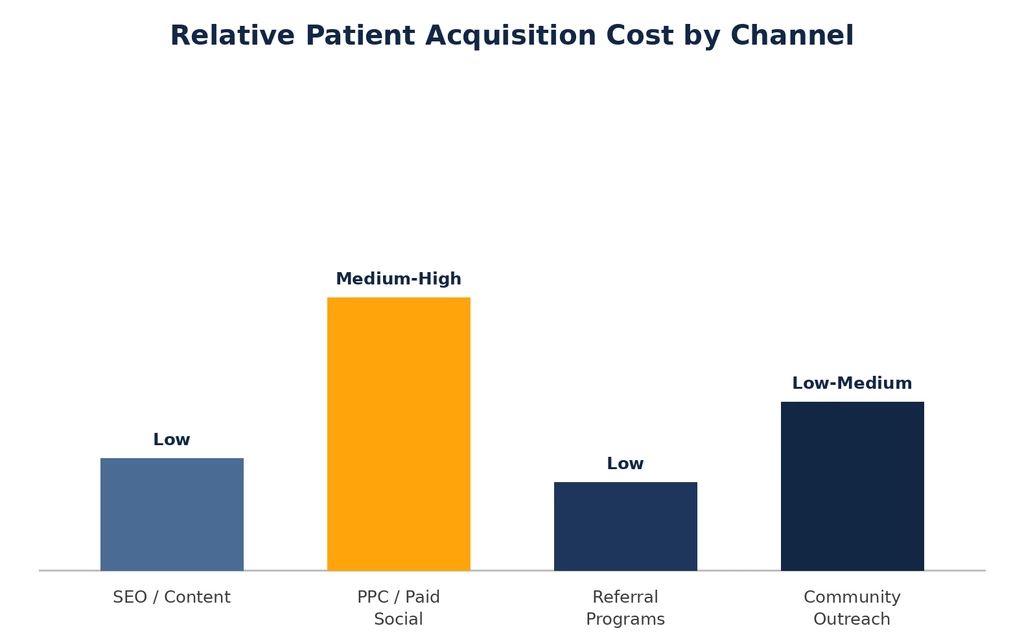
Patient Acquisition Cost (PAC) is calculated by dividing total marketing spend on a channel by the number of new patients that channel produced. Comparing this figure against average patient lifetime value determines whether the investment is sustainable.
| Channel | Typical Cost Range | Conversion Speed | Best For |
| SEO / Content | Low, long-term | Slow (3–6 months) | Sustainable organic growth |
| PPC / Paid Social | Medium to high | Fast | Filling immediate gaps |
| Referral Programs | Low | Moderate | High-trust, low-cost patients |
| Community Outreach | Low to medium | Slow | Local brand building |
Key Metrics to Track for Patient Acquisition
Tracking the right metrics separates data-driven patient acquisition strategies from guesswork. Practices should monitor new patient volume by channel, cost per acquisition, appointment show rate, and lifetime value per patient. Reviewing these monthly allows for faster budget reallocation.
Attribution can be difficult in healthcare, since patients often research across multiple channels before booking. Using call tracking numbers, UTM parameters, and new-patient intake forms that ask “how did you hear about us” all improve attribution accuracy without requiring complex software.
Calculating Return on Investment
ROI calculation compares total revenue generated by new patients against total acquisition spend for that period. Because healthcare patients often generate revenue across multiple future visits, ROI should be evaluated over a patient’s expected lifetime value, not just their first appointment.
This longer view often justifies channels that appear expensive in the short term, such as paid search for high-value specialties, once repeat visits and referrals are factored into the calculation.
Building a Realistic Patient Acquisition Budget
Budgeting for patient acquisition marketing works best when practices separate spend by funnel stage rather than by channel alone. Allocating a portion to awareness-building content, a portion to conversion-focused website improvements, and a portion to paid campaigns keeps the funnel balanced instead of over-investing in one stage.
Many practices default to increasing ad spend when new patient numbers dip, without first checking whether the website or scheduling process is the actual bottleneck. Reviewing funnel performance before adjusting budget prevents wasted spend on traffic that was never going to convert in the first place.
What Are Common Mistakes in Patient Acquisition Marketing?
Even well-funded acquisition campaigns can underperform when a few common mistakes go unaddressed. Recognizing these patterns early helps practices correct course before significant budget is wasted on channels or tactics that were never likely to convert.
- Relying on a single channel, such as referrals alone, without diversifying patient acquisition methods
- Ignoring online patient acquisition tools like scheduling software that reduce booking friction
- Failing to track cost per acquisition, making budget decisions based on assumptions
- Neglecting physician practice marketing basics like an updated, mobile-friendly website
- Treating acquisition and retention as separate strategies instead of one connected system
Why Inconsistent Branding Hurts Patient Acquisition?
Inconsistent messaging across a website, social profiles, and directory listings confuses prospective patients and weakens trust. A cohesive brand voice and visual identity reinforce credibility at every touchpoint in the acquisition funnel. This consistency becomes especially important for multi-location grow medical practice strategies, where messaging must scale without fragmenting.
Why Ignoring Mobile Experience Costs New Patients?
The majority of healthcare searches now happen on mobile devices, so a slow or poorly formatted mobile site directly suppresses new patient acquisition. Mobile friction, including hard-to-find phone numbers or scheduling buttons, causes prospective patients to abandon the site before ever making contact.
How Does Patient Retention Support Long-Term Patient Acquisition?
Patient retention and acquisition are deeply connected, since retained patients become the referral engine that lowers future acquisition costs. A practice with strong retention naturally generates word-of-mouth growth, reducing dependence on paid channels over time. This is why mature patient engagement strategies should be built alongside, not after, acquisition campaigns.
Retention also protects the return on acquisition spend. A patient acquired through an expensive paid campaign who never returns represents a poor investment, while the same patient staying engaged for years multiplies the value of that original spend many times over.
Patient Engagement Tactics That Support Retention
Automated appointment reminders, patient portals, and post-visit follow-up messages all strengthen the relationship after the first visit. These touchpoints keep the practice visible without requiring additional acquisition spend. Consistent engagement also increases the likelihood of positive reviews, which feed back into future acquisition efforts.
Patient Acquisition Rules to Ensure Sustainable Practice Growth
Sustainable medical practice growth depends on a few consistent habits rather than one-off campaigns. The rules below summarize the highest-impact practices covered throughout this guide.
- Diversify across patient acquisition strategies rather than depending on one channel
- Track cost per acquisition and lifetime value for every marketing channel
- Optimize the entire funnel, not just top-of-funnel advertising spend
- Pair every acquisition campaign with a retention plan to protect ROI
- Keep the website, scheduling, and Google Business Profile consistently updated
- Respond to inquiries and reviews quickly to maximize conversion
Following these rules consistently, rather than sporadically, is what separates practices with predictable growth from those experiencing unpredictable patient volume swings.
How Technology Is Changing Patient Acquisition?
Practice management software, AI-driven chat tools, and automated review requests have made patient acquisition marketing more measurable than it was even a few years ago. Automation now handles much of the follow-up work that used to require manual front-desk effort, freeing staff to focus on patients already in the building rather than chasing inquiries by hand.
AI-powered scheduling assistants and chatbots can answer basic questions and book appointments outside business hours, capturing leads that would otherwise go to a same-day competitor. These tools do not replace a strong marketing strategy, but they close the gap between initial interest and a confirmed appointment, which is often where practices lose the most prospective patients.
Data integration is another shift worth noting. Connecting website analytics, call tracking, and practice management systems gives administrators a single, accurate view of which patient acquisition strategies are actually producing booked visits. This level of visibility used to require enterprise-level resources; it is now accessible to practices of nearly any size.
Frequently Asked Questions
What is patient acquisition in healthcare?
Patient acquisition is the process of attracting prospective patients and converting them into scheduled, first-time appointments through marketing, outreach, and a streamlined booking experience.
What are the best patient acquisition strategies for doctors?
The best strategies combine local SEO, an optimized Google Business Profile, online scheduling, reputation management, referral programs, and targeted paid advertising for immediate gaps.
How much should a medical practice spend on patient acquisition?
Spending varies by specialty and market, but most practices benchmark budget against cost per acquisition and patient lifetime value rather than a fixed percentage of revenue alone.
How can a practice increase new patient appointments quickly?
Improving response time to inquiries, enabling online scheduling, and running targeted paid search campaigns typically produce the fastest increase in new patient appointments.
Is patient retention part of patient acquisition strategy?
Yes, retention supports acquisition by generating referrals and repeat visits, which lowers long-term acquisition costs and increases the return on every marketing dollar spent.
Final Thoughts
Patient acquisition is no longer a single marketing tactic; it is a connected system spanning SEO, paid advertising, reputation management, referrals, and patient retention. Practices that build a structured funnel, from awareness through conversion and beyond, consistently outperform those relying on scattered or reactive marketing efforts.
The strategies outlined here, from local healthcare marketing to digital marketing for medical practices, work best when layered together and measured consistently. Start by auditing your current channels, tracking cost per acquisition, and closing the biggest gaps in your funnel first. Sustainable medical practice growth follows naturally once acquisition and retention work as one coordinated strategy rather than two separate efforts.
Key Market Player
Ready to optimize your medical billing and boost your revenue? Look no further. Zmed Solutions LLC is your trusted partner in professional Medical Billing Services.
Join our growing network of healthcare providers who have already elevated their revenue with our expert services. Don't miss out on what could be your practice's most profitable decision.
Schedule a Consultation Today!
Contact Us Now, and experience the difference. Your financial success starts here!