


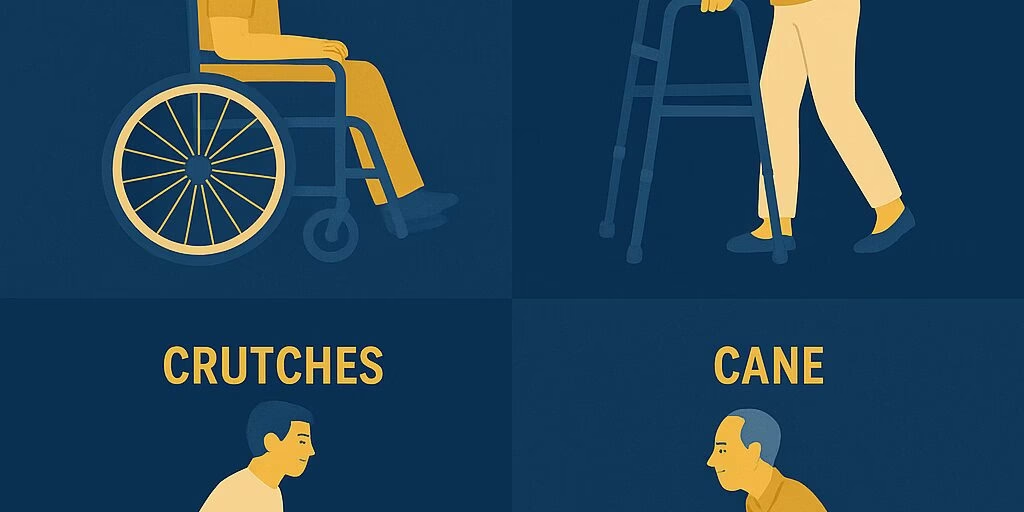
Mobility impairment affects millions of people worldwide, stemming from various causes such as aging, injuries, neurological disorders, or congenital conditions. It can significantly limit an individual’s ability to move independently, impacting daily activities, social interactions, and overall quality of life. Fortunately, assistive devices for mobility impairment have evolved dramatically, offering solutions that restore autonomy and enhance well-being. These devices range from simple tools like canes to advanced technologies like AI-powered exoskeletons, catering to diverse needs and severity levels.
According to the WHO and UNICEF Global Report on Assistive Technology, more than 2.5 billion people need at least one assistive product, a number expected to reach 3.5 billion by 2050 as populations age. Access varies enormously between countries. This guide covers the main types of mobility devices, how to choose and maintain them, and, for practices, how Medicare covers and bills them.
Mobility impairment can be temporary, like post-surgery recovery, or permanent, such as in cases of spinal cord injuries or arthritis. Assistive devices not only facilitate physical movement but also prevent secondary complications like pressure sores, muscle atrophy, and depression. For instance, proper use of a wheelchair can improve access to education and employment, reducing healthcare costs. For practices, mobility devices also carry specific documentation and coverage rules, covered in the billing section below.
In this comprehensive guide, we’ll cover traditional and innovative devices, drawing from expert sources and recent advancements. Whether you’re a caregiver, healthcare professional, or someone experiencing mobility challenges, understanding these tools can empower informed decisions. Let’s explore how these devices are transforming lives.
Types of Assistive Devices for Mobility Impairment
Wheelchairs and Scooters
Wheelchairs are cornerstone assistive devices for mobility impairment, providing seated mobility for those unable to walk or with limited endurance. Manual wheelchairs, propelled by the user or a caregiver, are lightweight and customizable, often featuring adjustable seats and armrests for comfort. They suit indoor use and short distances, promoting upper body strength. Power wheelchairs, powered by batteries, offer independence for users with upper body limitations, controlled via joysticks or alternative interfaces like sip-and-puff systems.
Scooters, akin to wheelchairs but with handlebars and a foot platform, are ideal for outdoor use and longer distances. They come in three- or four-wheeled models, with features like swivel seats for easy transfers. In 2025, smart wheelchairs integrate AI for obstacle detection and navigation, as seen in NDIS-supported models in Australia. These devices can adapt to terrain, adjusting speed automatically for safety.
Newer power wheelchairs add features such as obstacle sensing and alternative controls. Prices vary widely by type and features, and coverage depends on documented medical need (see the billing section below).
Walking Aids: Canes, Crutches, and Walkers
For milder mobility impairments, walking aids provide stability and support without full replacement of ambulation. Canes, the simplest, come in single-point, quad, or offset designs, aiding balance for conditions like arthritis or post-stroke weakness. They reduce weight on affected limbs by up to 20%, with ergonomic grips preventing hand fatigue.
Crutches, used in pairs, support non-weight-bearing scenarios, like after leg fractures. Axillary crutches fit under arms, while forearm models offer better maneuverability. Proper fitting is crucial to avoid nerve damage. Walkers, with four legs, provide maximum stability, ideal for older adults. Rollators add wheels and brakes for smoother movement, often including seats for rest.
Walking aids support rehabilitation by encouraging muscle use, and correctly fitted aids can reduce fall risk. A physical therapist should fit the device and train the patient, because a poorly fitted cane or walker can make balance worse.
Selection involves assessing gait, strength, and environment. For example, a quad cane suits uneven terrain. Maintenance includes checking tips for wear. Costs are low, from $20 for canes to $100 for rollators.
Prosthetics and Orthotics
Prosthetics replace missing limbs, restoring mobility for amputees. Lower-limb prosthetics, like below-knee models, use sockets, pylons, and feet for natural gait. Advanced versions feature microprocessor knees that adjust to walking speed, reducing stumble risk. Lower-limb prostheses range from basic designs to microprocessor-controlled knees that adjust to walking speed. Fitting requires a certified prosthetist and gait training, and Medicare coverage depends on the patient’s documented functional level (K-level) in the medical record.
Orthotics support or correct limb function, such as ankle-foot orthoses (AFOs) for foot drop in stroke patients. They improve alignment and energy efficiency. Custom 3D-printed orthotics offer precise fit.
Fitting requires prosthetists, with rehabilitation focusing on gait training. Benefits include enhanced confidence and reduced pain. In 2025, robotic prosthetics with AI predict movements, as in peripheral nervous system interfaces.
Costs vary from $5,000 for basic to $50,000 for high-tech. Insurance coverage is common, but access in low-income areas remains limited.
Home Modifications and Advanced Technologies
Home aids like ramps, railings, and stair lifts make environments accessible. Ramps enable wheelchair entry, while grab bars support transfers. Hoists lift users safely, reducing caregiver strain.
Stair lifts, fixed to stairs, transport users upstairs, with models for wheelchairs. Bathroom transfers integrate chairs for shower-to-toilet mobility.
Powered exoskeletons for walking are available in rehabilitation settings and, for some patients, at home; coverage is limited and decided case by case.
Smart home assistants control lights and doors hands-free. In 2025, integrated systems communicate via AI.
Benefits and How to Choose Assistive Devices
Assistive devices enhance independence, reduce fall risks, and improve mental health. They lower caregiver burden and healthcare costs by preventing complications.
Choosing involves assessing needs via professionals, considering lifestyle, budget, and trials. Factors: durability, ease of use, portability. User involvement ensures acceptance.
Maintenance and Care
Regular checks for wear, cleaning, and professional servicing extend life. For wheelchairs, inspect tires; for prosthetics, monitor sockets. Storage in dry areas prevents damage.
Future Trends in Assistive Devices
Expect more sensors, smarter power wheelchairs, lighter materials and wider use of exoskeletons in rehabilitation. Coverage rules tend to lag behind new technology, so documentation of medical need remains the key to payment.
Medicare Coverage and Billing for Mobility Devices
Medicare Part B covers mobility aids as durable medical equipment (DME) when they are medically necessary for use in the home, ordered by a treating practitioner and supplied by an enrolled DMEPOS supplier. The practice’s role is the order and the documentation; the supplier bills the device.
| Device | Common HCPCS codes | Key requirement |
| Canes | E0100 (cane), E0105 (quad or three-prong cane) | Order and documented need |
| Walkers | E0130 (rigid), E0135 (folding), E0143 (folding, wheeled) | Order and documented need |
| Manual wheelchairs | K0001 (standard) to K0005 (ultralightweight) | Mobility limitation documented in the home |
| Scooters (POVs) | K0800–K0812 | Face-to-face exam and written order before delivery |
| Power wheelchairs | K08xx codes by group and features | Face-to-face exam, written order before delivery; many need prior authorization |
| Orthotics and prostheses | L-codes | Detailed records; functional level for prostheses |
Common modifiers include NU (new purchase), RR (rental), UE (used), KX (documentation requirements met) and RT/LT (side). Many items are paid as capped rentals over 13 months. For home-based care see our home health billing guidelines, and for rehabilitation services our physical therapy CPT codes guide.What the practice’s note should show: the specific mobility limitation, how it affects daily activities in the home, why a simpler device will not work, and that the patient can safely use the device ordered.
Frequently Asked Questions
What are the most common assistive devices for mobility impairment?
Common devices include wheelchairs, canes, crutches, walkers, and prosthetics, chosen based on impairment severity.
How do I choose the right wheelchair?
Consider user needs, environment, and features like power vs. manual. Consult professionals for fittings.
Are there advanced tech options in 2025?
Yes, AI-powered exoskeletons and smart wheelchairs with navigation are emerging.
What maintenance is needed for walking aids?
Check for wear, clean regularly, and replace tips to ensure safety.
How can home modifications help?
Ramps, lifts, and grabs enhance accessibility, reducing injury risks.
Does Medicare cover mobility devices?
Medicare Part B covers canes, walkers, manual and power wheelchairs and scooters as durable medical equipment when they are medically necessary for use in the home, prescribed by a treating practitioner and supplied by a Medicare-enrolled supplier. The patient usually pays 20% coinsurance after the Part B deductible.
What documentation is needed for a power wheelchair?
Medicare requires a face-to-face examination by the treating practitioner that documents the mobility limitation and why a cane, walker or manual wheelchair is not enough, followed by a written order before delivery. Many power mobility devices also need prior authorization.
What HCPCS codes are used for walkers and wheelchairs?
Walkers use E-codes such as E0130, E0135 and E0143, and manual wheelchairs use K-codes such as K0001 (standard) through K0005 (ultralightweight). Scooters are billed with K0800–K0812 and power wheelchairs with other K08xx codes by group.
Who pays for home modifications like ramps?
Medicare generally does not cover home modifications such as ramps or stair lifts. Some Medicaid waiver programs, Veterans Affairs benefits and state programs may help.
Final Thoughts
Assistive devices for mobility impairment are vital for empowerment and inclusion. From basic canes to AI exoskeletons, they bridge gaps in ability. Addressing access barriers is crucial for equity. Embrace these tools for a fuller life.
Coverage rules summarized here are Medicare’s; other payers vary. Zmed Solutions’ revenue cycle management services help practices with documentation, orders and claim follow-up. Results vary by practice.
Key Market Player
Ready to optimize your medical billing and boost your revenue? Look no further. Zmed Solutions LLC is your trusted partner in professional Medical Billing Services.
Join our growing network of healthcare providers who have already elevated their revenue with our expert services. Don't miss out on what could be your practice's most profitable decision.
Schedule a Consultation Today!
Contact Us Now, and experience the difference. Your financial success starts here!
